



Firms activate emergency plans amid Mideast tensions
Mar 03, 2026, 09:30 am


 |
South Korea’s government and major corporations have activated emergency response systems amid concerns over potential disruptions to Middle Eastern crude oil imports following escalating military clashes involving Iran, Israel and the United States.
Tensions surged after Iran formally moved to block the Strait of Hormuz, a critical maritime chokepoint through which roughly 27 percent of global oil trade passes annually. The waterway connects key oil producers including Iran, Saudi Arabia and the United Arab Emirates to global markets.
Industry officials warned that a prolonged blockade could extend shipping times by three to five days and drive maritime freight rates up by 50 to 80 percent.
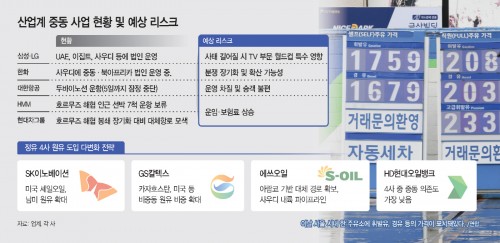
National shipping carrier HMM reported that one container vessel and six bulk carriers were stalled near the strait, with the company reviewing possible route diversions.
Hyundai Glovis, which handles automobile exports, said it is preparing contingency plans including alternative ports and routes should the closure continue.
South Korea imports about 70 percent of its crude oil from the Middle East, with more than 95 percent of that volume passing through the Strait of Hormuz. Refiners are closely monitoring developments and have formed joint task forces to minimize potential impact.
The country holds approximately 100 million barrels of strategic petroleum reserves. According to the Korea National Oil Corporation, stockpiles amount to roughly 206 days of supply, exceeding the International Energy Agency’s 90-day recommendation.
SK Innovation has increased imports of North American shale oil and South American crude to reduce reliance on Middle Eastern sea routes. S-Oil benefits from alternative supply routes secured by its major shareholder, Saudi Aramco, including pipelines crossing Saudi Arabia to Red Sea ports. Other refiners have also diversified procurement sources to cushion supply risks.
Major conglomerates with operations in the region are reinforcing safety protocols for employees.
Samsung Electronics operates sales subsidiaries in the United Arab Emirates and manufacturing facilities in Egypt, while LG Electronics runs production plants in Egypt and Saudi Arabia as well as sales offices across the UAE. Both companies said no casualties had been reported and that evacuation plans are being prepared in line with embassy guidelines.
Hanwha Group, which conducts defense, finance and machinery businesses in Saudi Arabia, the UAE, Qatar and Kuwait, also instructed local staff to prioritize safety.
Economists cautioned that if attacks near the strait continue, rising marine insurance premiums could effectively mirror the impact of a blockade, pushing global oil prices higher. While the government maintains that immediate economic effects remain limited, prolonged instability could disrupt exports to Europe and strain supply chains across industries.
Authorities and corporations alike are now preparing for the possibility that the crisis may extend beyond the short term.
#Strait of Hormuz #Iran #Israel #United States #SK Innovation
Copyright by Asiatoday
Most Read
-
1
Kia Sportage outperforms Mazda CX-5 in German auto..

-
2
Houthis launch successive attacks on Saudi airport..

-
3
Saudi Arabia, Iran hold first diplomatic talks to..

-
4
U.S. deploys carrier, 10,000 more troops to Middle..

-
5
Saudi airport in Riyadh struck again, leaving at l..

-
6
Putin's ally visits China on the 8th ahead of APEC..

-
7
Chinese military support and training center opens..

PEOPLE






HEADLINE NEWS

-
Address : In-Young Bldg., 34, Uisadang-daero 1-gil, Yeongdeungpo-gu, Seoul
Copyright by ASIATODAY CO., LTD. All rights resereved