



Trump announces Israel-Lebanon truce, invites leaders, says Iran deal is near
Apr 17, 2026, 09:15 am


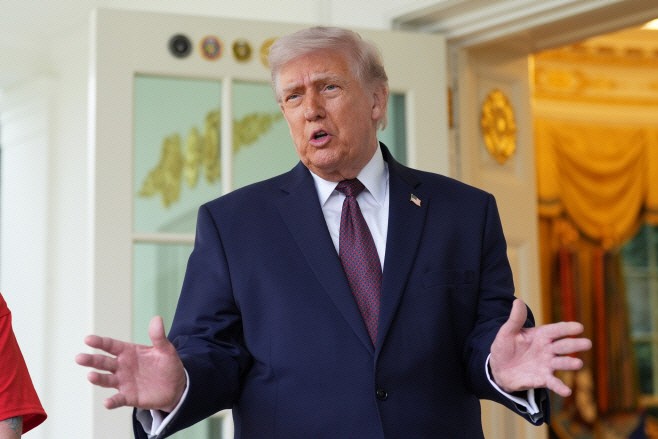 |
| U.S. President Donald Trump answers questions from reporters outside the Oval Office at the White House in Washington, D.C., on April 13. / AP-Yonhap |
U.S. President Donald Trump said on April 16 that negotiations with Iran are “very close” to reaching an agreement, signaling the possibility of further talks over the weekend.
Israel and Lebanon agreed to a 10-day official ceasefire starting at 5 p.m. Eastern Time on the same day (6 a.m. April 17 in Korea). Trump also said he would invite the two countries’ leaders to the White House for the first meaningful talks since 1983, indicating a shift in the Middle East toward a negotiation phase.
However, the presence of Israeli troops in southern Lebanon, warnings from the militant group Hezbollah about exercising its right to resist, and the upcoming expiration of the U.S.-Iran ceasefire on April 21 all point to continued, multilayered uncertainty surrounding broader peace negotiations.
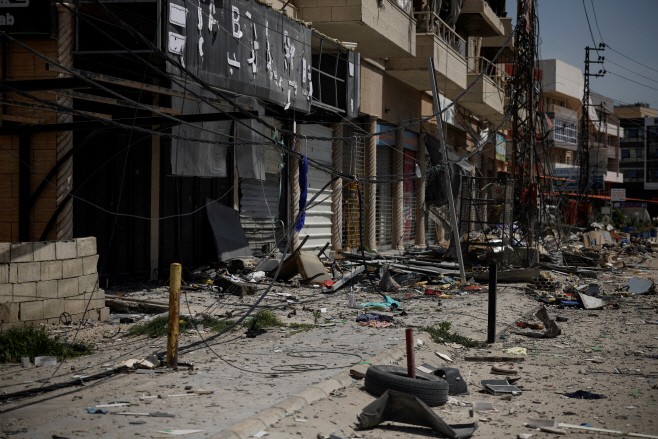 |
| A view of Tyre in southern Lebanon on April 16, showing destruction caused by Israeli airstrikes. / Reuters-Yonhap |
Trump: Israel, Lebanon agree to 10-day ceasefire, invites leaders to White House
Trump announced via his social media platform Truth Social that Israel and Lebanon have agreed to a 10-day official ceasefire, set to take effect at 5 p.m. on the same day.
In a separate post, he said, “For the first meaningful talks between the two countries since 1983, I will invite both leaders to the White House,” adding, “Both sides want peace, and I believe it will happen quickly.”
Earlier, on April 14 in Washington, D.C., talks were held between the two countries’ ambassadors to the United States under the mediation of Secretary of State Marco Rubio. Trump described the meeting as “the first contact in 34 years,” while foreign media reported it as the first high-level talks since 1993.
Trump said he had instructed Vice President J.D. Vance, Secretary Rubio, and Joint Chiefs Chairman Dan Caine to work together to achieve “lasting PEACE.”
“It is my honor to have resolved nine wars around the world, and this will be the 10th (GET IT DONE),” he added.
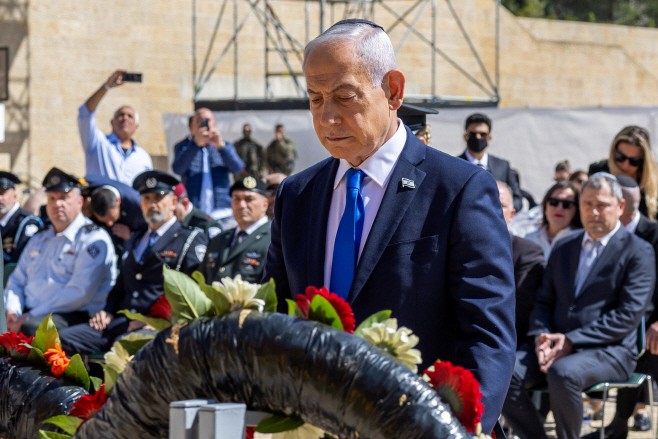 |
| Israeli Prime Minister Benjamin Netanyahu lays a wreath at Yad Vashem, the World Holocaust Remembrance Center in Jerusalem, on April 14, Holocaust Remembrance Day. / Reuters-Yonhap |
Netanyahu accepts truce, keeps troop deployment
Following Trump’s announcement, Netanyahu convened an emergency security cabinet meeting and accepted the ceasefire without a formal vote, according to local media reports.
He reportedly told ministers that Israeli forces would remain stationed at key strategic locations in southern Lebanon and along the Syrian border during the truce period.
Some cabinet members objected to the process, saying they learned of the ceasefire through media reports. Netanyahu later promised to hold further discussions at the cabinet level.
Hezbollah warns of resistance
The Lebanese militant group Hezbollah issued a statement shortly after the announcement, warning that the presence of Israeli forces in Lebanese territory would justify continued resistance.
“No ceasefire agreement should allow Israel freedom of action,” the group said.
While Trump claimed Hezbollah is included in the ceasefire, the group immediately pushed back, warning it would exercise its right to resist if Israeli forces remain. This has exposed structural tensions that could undermine implementation of the truce.
Israel has continued its attacks on Lebanon, citing efforts to push back Hezbollah, even after the United States and Iran agreed on a two-week ceasefire on April 7. Iran has argued that such actions violate the ceasefire agreement.
Nabih Berri, Lebanon’s parliamentary speaker and a key political figure aligned with Hezbollah, urged displaced residents to delay returning home “until the situation becomes clearer after the ceasefire takes effect,” publicly acknowledging ongoing uncertainty. Given that the clashes in Lebanon involve Israel’s regular forces and Hezbollah, observers note that a separate agreement with Hezbollah would be necessary for the ceasefire to hold in practice.
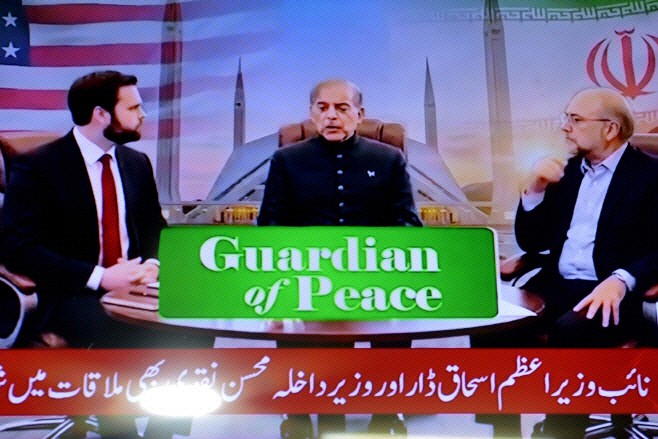 |
| U.S. Vice President J. D. Vance (left) and Iranian Parliament Speaker Mohammad Bagher Ghalibaf (right) hold ceasefire talks under the mediation of Pakistani Prime Minister Shehbaz Sharif at a hotel in Islamabad, Pakistan, on April 11, in this image captured from a TV screen. / EPA-Yonhap |
Trump signals progress in Iran talks
Trump said negotiations with Iran have made significant progress and are “very close” to reaching an agreement, adding that further talks could take place as early as this weekend.
He claimed Iran has agreed not only to forgo nuclear weapons but also to transfer its enriched uranium to the United States.
Asked whether the current two-week ceasefire between the United States and Iran would be extended beyond its April 21 deadline, Trump said, “I don’t know.”
The temporary halt in fighting along the Lebanon front is being closely watched for its potential impact on broader U.S.-Iran negotiations following the collapse of talks in Pakistan earlier this month.
#Trump #Israel Lebanon ceasefire #Iran negotiations #Hezbollah #Netanyahu
Copyright by Asiatoday
Most Read
-
1
Celltrion’s Omlyclo gains ground in major European..

-
2
Trump demands rates fall below 1% as Fed hikes for..

-
3
Trump makes $1 trillion bet ahead of midterm elect..

-
4
Iran resumes ballistic missile production, assembl..

-
5
Samsung Electronics, Mistral AI to jointly develop..

-
6
Trump warns countries not helping U.S. must pay re..

-
7
Apple launches first foldable, 1 million won prici..

PEOPLE






HEADLINE NEWS
- Trump to roll out ‘unprecedented welcome’ for Xi with B-2 bombers, F-22 fighters
- S. Korea, U.S., and Japan form united front on Taiwan and economic coercion..
- Trump administration moves to impose sweeping sanctions on International Cr..
- Xi to make state visit to U.S. Sept. 23-25, dispelling rumors over his heal..

-
Address : In-Young Bldg., 34, Uisadang-daero 1-gil, Yeongdeungpo-gu, Seoul
Copyright by ASIATODAY CO., LTD. All rights resereved