



Abacus craze grips children in Kazakhstan even in the era of AI
Nov 16, 2026, 03:04 pm


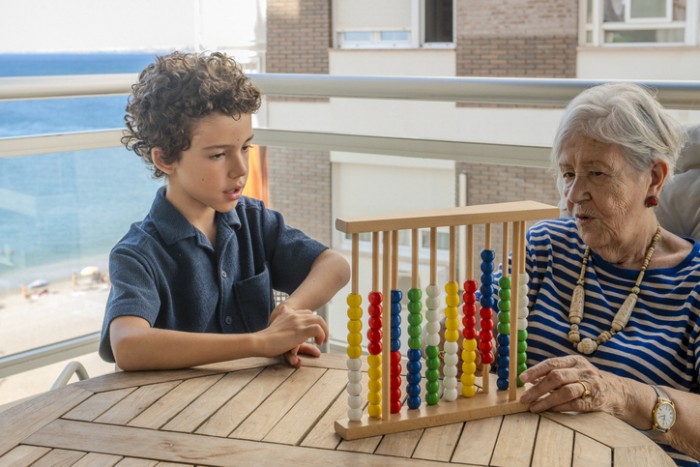 |
| The image is unrelated to the article. /Getty Images Bank |
At a time when smartphones and artificial intelligence (AI) can handle even complex calculations, the abacus, a traditional calculating tool that involves flicking beads with one's fingers, is gaining popularity among children in Kazakhstan as a way to train their brains.
According to Kazakhstan's state news agency Kazinform on Nov. 15, abacus-based mental arithmetic education for children is drawing growing interest from parents across the country. Asem Shadenova, an instructor at the international arithmetic education institution UCMAS, explained that abacus education began spreading in Kazakhstan about 15 years ago.
The teaching method is also interesting. At first, children learn addition, subtraction and other arithmetic operations by physically moving beads on an abacus with their fingers. Once they become familiar with the process, the abacus is taken away. Instead, they perform calculations by visualizing the abacus and the movement of its beads in their minds. In other words, although there is nothing in front of them, the abacus beads are moving in their imagination.
Shadenova argues that this training offers benefits beyond simply improving calculation skills. "Moving one's fingers while using an abacus helps develop concentration, thinking speed, logical reasoning and visual perception," she explained.
The popularity of the abacus is also evident outside the classroom. Kazakhstan holds nationwide abacus and mental arithmetic competitions for children. In June last year, a competition involving approximately 300 children aged five to 15 was held in the capital, Astana.
Dozens of education centers offering abacus-based mental arithmetic and calculation training operate in major cities such as Almaty and Astana. UCMAS also began offering abacus education in Kazakhstan in 2011 and continues to run related educational programs.
The continued popularity of abacus education, even in an era when AI can solve difficult calculations in seconds, appears to reflect parents' ongoing interest in the training process itself, which aims to develop concentration and thinking skills rather than simply produce correct answers.
Kim Min-kyu
Most Read
-
1
AMD's Lisa Su floated as potential Nvidia successo..

-
2
U.S. links Myanmar peace efforts to rare earth acc..

-
3
Alice Huang, affair partner of Jensen Huang, repor..

-
4
Hegseth rejects calls for impeachment over Iran wa..

-
5
Xi secures fourth term as China reshuffles next-ge..

-
6
Democrats flip U.S. Congress in historic midterm s..

-
7
Nvidia executive Kimberly Powell at center of Jens..

PEOPLE







-
Address : In-Young Bldg., 34, Uisadang-daero 1-gil, Yeongdeungpo-gu, Seoul
Copyright by ASIATODAY CO., LTD. All rights resereved