



Southeast Asia's AI industry on edge over Jensen Huang's resignation
Nov 16, 2026, 09:42 am


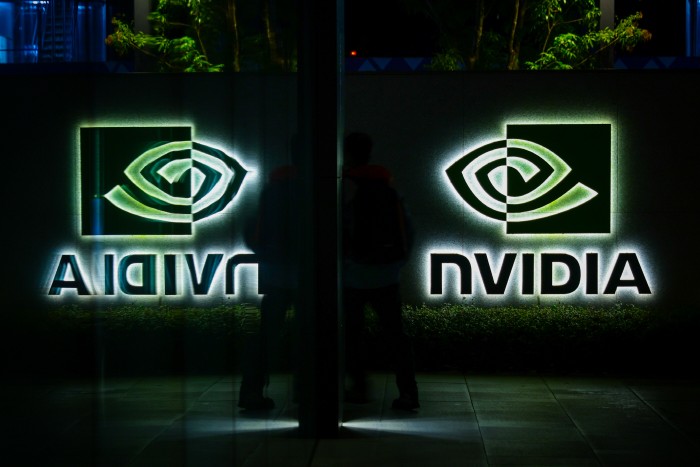 |
| A pedestrian walks past an Nvidia logo sign outside the company's headquarters in Taipei, Taiwan, on Nov. 9 (local time). /EPA-Yonhap News Agency |
The fallout from the scandal that led to the resignation of former Nvidia Chief Executive Officer (CEO) Jensen Huang is spreading to Southeast Asia's semiconductor and data center industries, which have prospered amid the artificial intelligence (AI) investment boom.
As U.S. lawmakers move to block not only Chinese companies' physical acquisition of advanced AI chips but also their remote access to the chips through overseas data centers, operators in countries such as Singapore and Malaysia are expected to face requirements to prove not just where the chips are installed but also who their actual end users are.
According to Reuters on Nov. 15 (local time), calls for tighter regulations aimed at completely blocking China's access to advanced AI chips have been growing in the United States, including among lawmakers from both the Democratic and Republican parties, since the affair between Huang and Alice Huang, a Chinese businesswoman suspected of being a Chinese spy, came to light.
The Wall Street Journal (WSJ) reported that the proposed regulatory measures could include new export rules and licensing requirements for four Southeast Asian countries: Malaysia, Thailand, Indonesia and Singapore.
Alice Huang, who is at the center of the controversy, was an executive at Megaspeed, a Singapore-based cloud computing company with subsidiaries in Malaysia, Thailand and Indonesia, among other countries.
Singaporean authorities have been investigating Megaspeed and individuals associated with the company since February last year over possible false declarations in connection with server purchases and other matters. Amid the controversy, Huang stepped down from both his CEO and board positions at Nvidia on Nov. 12.
Behind the U.S. Congress's growing scrutiny of Southeast Asia's data center industry are concerns that the declared export destinations of advanced chips may differ from their actual end users.
The United States currently imposes strict restrictions on exports of Nvidia's most advanced AI chips to China. However, Chinese companies have been renting computing capacity from overseas data centers and remotely accessing systems equipped with those chips.
U.S. lawmakers are seeking to close this alternative route, which allows Chinese companies to use high-performance computing power without physically importing the chips into mainland China.
Ke Yan, head of research at Singapore-based investment research firm Shenton Research, told Reuters that the incident would lead to expectations that every operator involved in the supply chain identify the ultimate end users.
He explained that Southeast Asian operators would still be able to obtain Nvidia chips, but demonstrating the exact location of each chip and identifying the users served by it would become an essential requirement for doing business.
Governments across the region are also moving quickly to tighten oversight.
On Nov. 12, the Malaysian government announced that it was considering legislation that would allow it to oversee data center operations as a whole, including monitoring the use of high-performance chips, to ensure that chips subject to U.S. export restrictions are used only within Malaysia rather than re-exported to other countries.
The following day, Malaysia's Ministry of Investment, Trade and Industry (MITI) announced that it was working with customs authorities to determine whether chips imported by Speedmatrix, the Malaysian affiliate of Megaspeed, had been re-exported to other countries and whether any such transactions complied with Malaysian law.
Currently, importing AI chips into Malaysia does not require a separate permit. However, since July last year, government authorization has been mandatory for exporting, re-exporting, transshipping or transiting U.S.-origin high-performance AI chips from or through the country.
Southeast Asia's data center industry, which has attracted large-scale investment by positioning the region as a new growth engine, is concerned that tighter scrutiny could complicate chip import procedures and delay delivery schedules.
Malaysia has approved 385.7 billion ringgit (approximately 126.444 trillion won) in data center-related investments since 2021. Singapore, meanwhile, raised its economic growth forecast for this year in August from the previous range of 2.0–4.0 percent to 4.5–5.5 percent, citing factors including favorable conditions in the AI industry.
The CEO of an Asian AI cloud company, who requested anonymity, told Reuters that the executive had been discussing possible responses in calls with U.S. lawyers.
"I'm worried that tougher scrutiny will make it take longer to bring in chips," the CEO said.
Gary Goh, CEO of Malaysia-based data center consultancy Sprint DC, also assessed that new regulations could impose additional restrictions on countries such as Malaysia and cause a short- to medium-term shock to the country's data center market.
However, some observers believe tighter oversight will not prevent Southeast Asian businesses from securing advanced chips altogether.
Jarick Seet, head of small- and mid-cap research at Maybank, told Reuters, "Both Singapore and the United States will tighten their regulations, but I don't think this will undermine the ability of Singapore and Malaysia to purchase chips."
Jeong Ri-na
Most Read
-
1
AMD's Lisa Su floated as potential Nvidia successo..

-
2
Southeast Asian auto parts makers hit hard by Chin..

-
3
U.S. links Myanmar peace efforts to rare earth acc..

-
4
Alice Huang, affair partner of Jensen Huang, repor..

-
5
Hegseth rejects calls for impeachment over Iran wa..

-
6
Democrats flip U.S. Congress in historic midterm s..

-
7
Xi secures fourth term as China reshuffles next-ge..

PEOPLE







-
Address : In-Young Bldg., 34, Uisadang-daero 1-gil, Yeongdeungpo-gu, Seoul
Copyright by ASIATODAY CO., LTD. All rights resereved