



U.S., China delay shipbuilding penalties, clouding outlook for Korean shipbuilders
Nov 12, 2026, 10:10 am


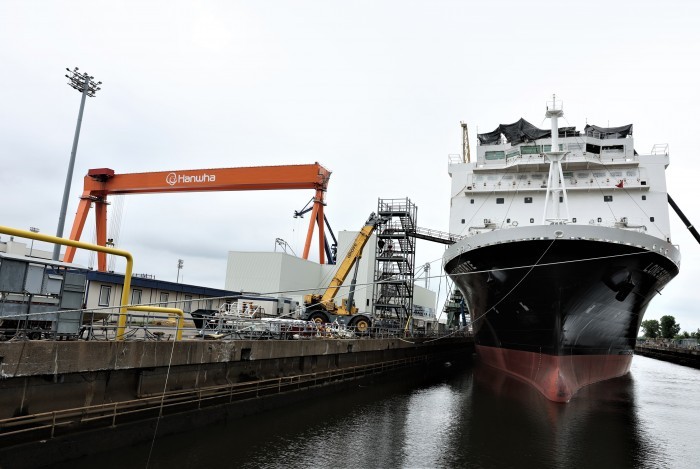 |
| Hanwha Philly Shipyard. /Hanwha |
The United States and China have simultaneously extended the suspension of retaliatory measures involving the shipping and shipbuilding industries until January next year. China has delayed the reinstatement of its ban on transactions involving Hanwha Ocean's U.S. subsidiaries, but the immediate impact on their operations is limited because they conduct relatively little business with Chinese companies. The expected policy benefits of improving South Korean shipbuilders' competitiveness in securing orders by imposing disadvantages on Chinese vessels have also been delayed.
According to shipbuilding and shipping industry sources on Nov. 11, the Office of the United States Trade Representative (USTR) has further suspended its Section 301 measures under the Trade Act targeting China's maritime, logistics and shipbuilding industries until Jan. 10, 2027. During the suspension, vessels owned or operated by Chinese shipping companies or built in China will not be subject to U.S. port entry fees. Additional tariffs on certain port equipment, including Chinese-made ship-to-shore cranes, will also remain suspended.
China has also extended its suspension of a ban on transactions and cooperation involving five U.S.-related subsidiaries of Hanwha Ocean, including Hanwha Shipping, Hanwha Philly Shipyard and Hanwha Ocean USA International, for another two months starting Nov. 10. The subsidiaries have not been removed from the sanctions list, meaning the restrictions could take effect again in January next year depending on the outcome of U.S.-China negotiations.
However, no direct losses that Hanwha Ocean has avoided as a result of the extended suspension have been identified. The sanctions target five U.S. subsidiaries, not Hanwha Ocean's headquarters or its Chinese manufacturing subsidiary. When the sanctions were announced last year, South Korea's presidential office also said, "The immediate impact is limited because there are few transactions between the companies concerned and Chinese companies." No actual contract cancellations or delays in vessel deliveries have been publicly disclosed.
Hanwha Ocean operates Hanwha Ocean Shandong, which manufactures ship blocks and components in China's Shandong Province. The subsidiary recorded revenue of 302.3 billion won and assets of 451.1 billion won last year, but most of its revenue came from internal transactions involving the supply of ship blocks to Hanwha Ocean's Geoje shipyard. The Shandong subsidiary was not included in the sanctions, and there is no confirmed evidence that it directly supplied components to U.S. subsidiaries such as Hanwha Philly Shipyard.
A Hanwha Ocean official said, "We welcome the Chinese government's decision to extend the suspension." The official added, "We will continue our global business operations without disruption while strictly complying with international standards and relevant laws and regulations."
The direct benefits for South Korean shipping companies are also limited. This is because they had already adjusted their fleets, including removing Chinese-built vessels from U.S. routes, after Washington announced the planned port fees in advance.
An HMM official said, "We own vessels built not only at South Korean shipyards but also in China, but we have not deployed Chinese-built vessels on U.S. routes since the U.S. measures were announced." The official added, "This suspension does not bring any particular benefits, and we understand that other shipping companies have also been preparing for the implementation of the measures."
The shipbuilding industry also does not expect the suspension of measures targeting China to translate directly into indirect gains. An HD Hyundai Heavy Industries official said, "The indirect benefits to South Korea's shipbuilding industry from this suspension are not clear." However, the official added, "It reaffirms the United States' policy direction of countering China's shipbuilding industry and rebuilding its own."
Opinions were also divided among the approximately 60 comments USTR received before deciding on the suspension. Supporters argued that the fees would increase transportation costs and disrupt supply chains, while opponents countered that further delays would strengthen China's dominance in shipbuilding. Ultimately, the decision is seen as less a measure delivering immediate tangible benefits to Hanwha Ocean or South Korea's shipbuilding industry than one postponing the next decision point in the U.S.-China shipbuilding dispute by two months.
Han Dae-ui
Most Read
-
1
Ukraine halts strikes on Russian oil refineries un..

-
2
Southeast Asian auto parts makers hit hard by Chin..

-
3
AMD's Lisa Su floated as potential Nvidia successo..

-
4
U.S. links Myanmar peace efforts to rare earth acc..

-
5
Hegseth rejects calls for impeachment over Iran wa..

-
6
Democrats flip U.S. Congress in historic midterm s..

-
7
USFK commander cites interoperability gaps, urges..

PEOPLE







-
Address : In-Young Bldg., 34, Uisadang-daero 1-gil, Yeongdeungpo-gu, Seoul
Copyright by ASIATODAY CO., LTD. All rights resereved