



Iran urges U.S. to accept seven demands to reopen Strait of Hormuz
Nov 12, 2026, 09:22 am


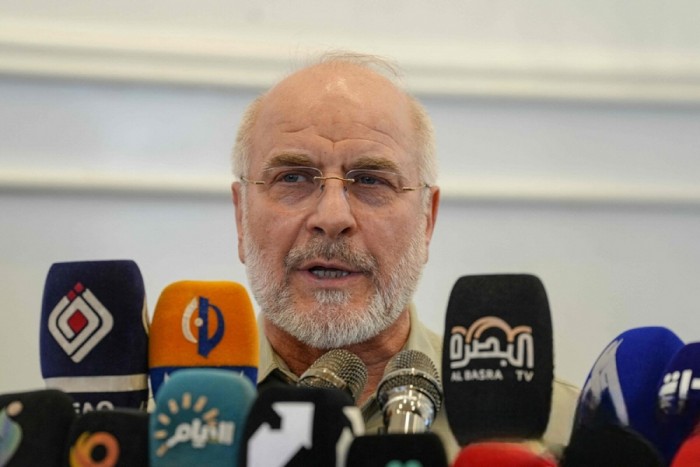 |
| Mohammad Bagher Ghalibaf, speaker of Iran's parliament. /AP-Yonhap News Agency |
Mohammad Bagher Ghalibaf, speaker of Iran's parliament, has urged the United States to accept Iran's seven demands as conditions for reopening the Strait of Hormuz and resuming peace talks with Washington.
In an interview with Al Jazeera on Nov. 11 (local time), Ghalibaf said, "The United States has yet to provide an official and clear response to our letter," adding, "The ball is now in the United States' court."
Iran recently proposed a so-called "two-day plan" to the United States through Qatar, which is serving as a mediator. The proposal compresses the seven-step set of demands presented in September into a two-day timetable. Under the plan, the United States would lift its blockade of Iranian ports, grant a waiver of sanctions on Iranian oil sales and withdraw newly imposed sanctions on the first day. Iran would then reopen the Strait of Hormuz on the second day. The two sides would subsequently continue negotiations on the remaining issues.
Ghalibaf also said Iran had reached an agreement with Oman on managing maritime traffic through the Strait of Hormuz. "We have reached an agreement with Oman on the management of shipping routes and the traffic separation scheme (TSS) in the Strait of Hormuz," he said. "Since the shipping lanes are managed under the laws of the two coastal states, the United States, which is 12,000 kilometers away, has no right to control the strait and must leave immediately," he argued.
He also denied reports that Iran's negotiating team had been replaced. Ghalibaf explained that he leads a six-member negotiating team and that major decisions are made by the Supreme National Security Council (SNSC) and approved by the supreme leader. He criticized the United States, saying, "The United States' claim that it does not know whom to talk to in Iran is a constant tactic of deception."
Regarding the war, Ghalibaf stressed, "We do not want war, but we cannot remain in a state of neither war nor peace. We must move toward building sustainable deterrence for our country." He accused Israel of instigating the conflict and the United States of intervening, warning that continued fighting would spread instability across the region.
Ghalibaf also rejected allegations that Iran supports Yemen's Houthi rebels. He described the Houthis as the product of a popular movement in Yemen and an independent government based in Sanaa, saying that Iran maintains its principle of noninterference in Yemen's internal affairs.
Regional media outlets assessed that a wide gap remains between the two sides' negotiating positions. Al Jazeera reported on Nov. 9 that Iran's demands for recognition of its proposed new maritime shipping routes and an end to hostilities on all fronts in the region were drawing opposition from the United States and Gulf Arab states. In particular, Iran's attempt to use the wartime influence it has gained over the Strait of Hormuz to reshape the region's postwar security order was identified as an obstacle to negotiations.
Cheon Hyun-bin
Most Read
-
1
Ukraine halts strikes on Russian oil refineries un..

-
2
Southeast Asian auto parts makers hit hard by Chin..

-
3
AMD's Lisa Su floated as potential Nvidia successo..

-
4
U.S. links Myanmar peace efforts to rare earth acc..

-
5
Hegseth rejects calls for impeachment over Iran wa..

-
6
Democrats flip U.S. Congress in historic midterm s..

-
7
USFK commander cites interoperability gaps, urges..

PEOPLE







-
Address : In-Young Bldg., 34, Uisadang-daero 1-gil, Yeongdeungpo-gu, Seoul
Copyright by ASIATODAY CO., LTD. All rights resereved