



Samsung Electronics teams with AMD to upgrade chip testing infrastructure
Nov 11, 2026, 02:14 pm


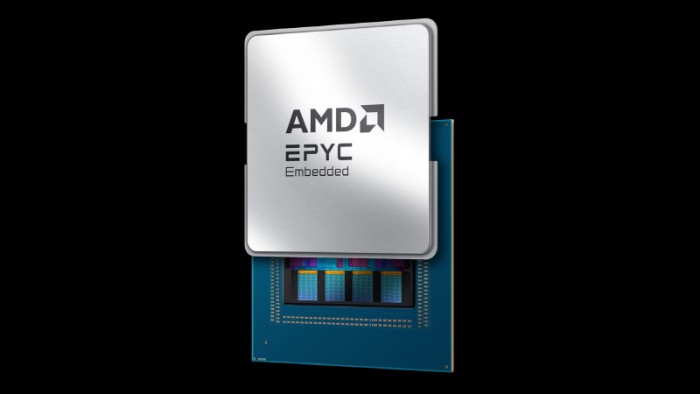 |
| AMD EPYC Embedded 9006 Series SP7 processor. /Courtesy of AMD |
Samsung Electronics is working with U.S. semiconductor company AMD to upgrade its next-generation semiconductor manufacturing test infrastructure. As semiconductor performance improves and the amount of data that needs to be tested increases, the company plans to use high-performance processors to improve testing speed and efficiency.
According to industry sources on Wednesday, AMD unveiled its sixth-generation EPYC Embedded 9006 Series processors on Tuesday (local time) and introduced configurations combining the processors with Samsung Electronics' memory and storage products.
The products include Samsung Electronics' DDR5 RDIMMs and MRDIMMs, the PM1763 solid-state drive (SSD) based on PCIe Gen 6, and the MD310 memory expansion module based on Compute Express Link (CXL) 3.2.
AMD's new processors support up to 256 cores and 512 threads, delivering up to 1.8 times the data throughput of the previous generation. They also feature 16 DDR5 memory channels, up to 96 PCIe Gen 6 lanes and CXL 3.1 connectivity.
The processors are designed for use in semiconductor automated test equipment (ATE), enterprise storage systems and network security systems. In semiconductor testing equipment in particular, they help control memory and storage testing operations and enable multiple tests to run simultaneously.
Through its collaboration with AMD, Samsung Electronics aims to secure the computing performance, memory bandwidth and high-speed data processing capabilities needed to validate the performance of next-generation memory and input/output (I/O) devices.
"As memory and I/O technologies continue to advance, manufacturing test environments must keep pace with increasing performance and bandwidth requirements," said Jangseok (JS) Choi, vice president of the Memory Product Planning Team at Samsung Electronics. "We look forward to working with AMD to bring these capabilities into our manufacturing test infrastructure."
Meanwhile, AMD plans to begin shipping the 128-core version of its new processor on Nov. 15, with the remaining models scheduled for a phased rollout by the end of the year.
Kim Han-seul
Most Read
-
1
Ukraine halts strikes on Russian oil refineries un..

-
2
Southeast Asian auto parts makers hit hard by Chin..

-
3
U.S. links Myanmar peace efforts to rare earth acc..

-
4
Hegseth rejects calls for impeachment over Iran wa..

-
5
Democrats flip U.S. Congress in historic midterm s..

-
6
Xi secures fourth term as China reshuffles next-ge..

-
7
USFK commander cites interoperability gaps, urges..

PEOPLE







-
Address : In-Young Bldg., 34, Uisadang-daero 1-gil, Yeongdeungpo-gu, Seoul
Copyright by ASIATODAY CO., LTD. All rights resereved