



Alice Huang–Megaspeed scandal puts ‘Singapore washing’ to the test
Nov 11, 2026, 02:09 pm


 |
| Nvidia CEO Jensen Huang (left) sits across from Alice Huang (right), who has ties to data center company Megaspeed, at a dinner held at a restaurant in Taipei, Taiwan, in May 2025. U.S. intelligence authorities reportedly suspect that Alice Huang used her personal relationship with Jensen Huang to conduct espionage on behalf of China, and Nvidia's board has launched an investigation into the matter. /AFP-Yonhap |
The controversy surrounding allegations that Singapore-based cloud computing company Megaspeed helped divert advanced Nvidia chips to China has once again put "Singapore washing" by Chinese-linked companies to the test. The strategy of establishing a legal entity or headquarters in Singapore to gain access to Western capital and technology while avoiding U.S.-China tensions is increasingly seen as reaching its limits. With U.S. authorities tracing the ultimate destination of chips purchased by Megaspeed and Chinese authorities reversing the sale of Singapore-based artificial intelligence (AI) company Manus to a U.S. company, simply relocating a company's legal headquarters is no longer enough to evade regulations imposed by either country.
Reuters reported Tuesday that Megaspeed had come under renewed scrutiny as U.S. authorities investigated the relationship between Nvidia CEO Jensen Huang and Chinese businesswoman Alice Huang. A former Megaspeed executive who has been identified in reports as Jensen Huang's alleged extramarital partner, Alice Huang is suspected of engaging in intelligence activities on behalf of China. Megaspeed had previously come under U.S. investigation over allegations that it helped channel advanced Nvidia chips subject to export restrictions into China.
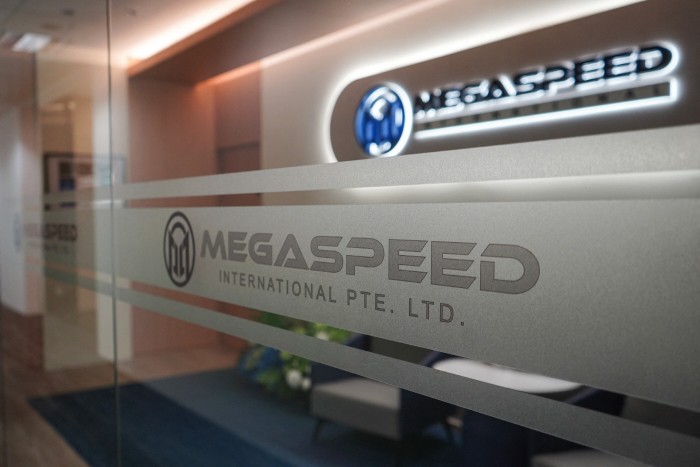 |
| The Megaspeed International logo is displayed at the data center company's office in Singapore's Ocean Financial Centre on Nov. 10, 2026. The company reportedly employed Alice Huang, a former senior executive accused of conducting espionage for China through her relationship with Nvidia CEO Jensen Huang. /AFP-Yonhap |
Owned by a Singapore entity, but the chips' ultimate whereabouts remains in question
According to corporate filings reviewed by Reuters, Megaspeed was incorporated in 2015 as 7Road International before changing its name to Megaspeed International in March 2023. The company, which was spun off from a Chinese gaming company, is now wholly owned by Singapore-registered Swiftdata. The directors and company secretaries listed in the filings of both companies are Singaporean.
The company has grown rapidly. Its assets increased from $33 million (approximately 44.088 billion won) in 2023 to $3 billion (approximately 4.008 trillion won) in 2024. Revenue rose from zero to $294 million (approximately 392.784 billion won) over the same period. On its website, Megaspeed describes itself as an Nvidia cloud partner in the Asia-Pacific region and says it provides services using advanced AI systems, including the GB200 NVL72 and HGX H100.
However, corporate registration records showing ownership by a Singapore entity do not establish whether the actual chip transactions complied with regulations. The central question in the U.S. investigation is whether Megaspeed transferred chips subject to export restrictions to China. Singapore police also announced in October last year that they were investigating the company for suspected violations of domestic laws. On Oct. 31, Singapore's Ministry of Home Affairs confirmed that the investigation into Megaspeed was ongoing but denied reports that authorities had separately investigated Alice Huang's alleged links to Chinese intelligence agencies.
Megaspeed denies allegations of illegal chip transfers. In a statement posted on its website, the company said the Bureau of Industry and Security (BIS) under the U.S. Department of Commerce, Malaysian authorities and Nvidia had conducted multiple on-site inspections and found no evidence of illegal transfers or other violations. This is the company's account and does not constitute an official announcement that authorities have closed their investigations. Nvidia's board also launched an independent investigation on Nov. 8 following reports that CEO Jensen Huang had been targeted by a foreign intelligence operation, while stating that it currently had no reason to believe national security or company confidential information had been compromised.
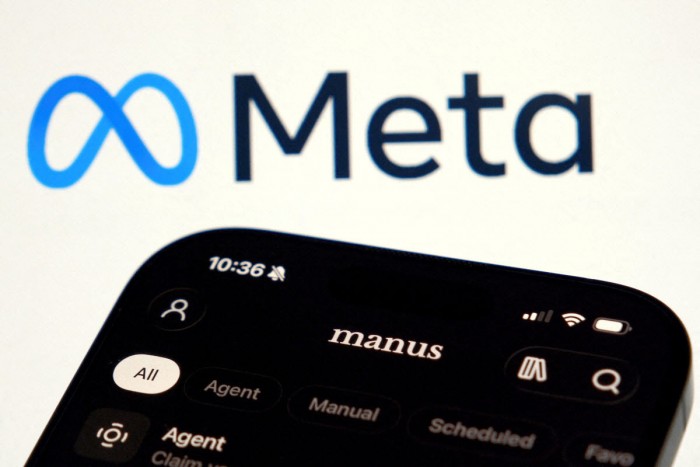 |
| The logos of U.S. technology company Meta, formerly Facebook, and Manus, a Chinese-founded developer of artificial intelligence (AI) agent applications. /Reuters-Yonhap |
Chinese firms seek Western capital through Singapore, but Beijing blocks sale
Chinese companies have been drawn to Singapore by its reputation as a trusted international financial and trading hub. They hope to attract Western investors, expand into markets outside China and reduce business disruptions caused by U.S.-China tensions. The trend is spreading beyond technology companies to sectors including critical minerals and biotechnology.
KG Tan, CEO of InCorp Group, which helps companies expand overseas, told Reuters last December that inquiries from Chinese companies had increased by 15% to 20% year-on-year. Although there are no official statistics on the total number of Chinese companies that have relocated to Singapore, the increase illustrates demand for such moves. However, Singapore-headquartered fashion company Shein has also faced political opposition in the West and regulatory approval issues in China while pursuing an overseas listing.
The case of Manus also shows that relocating a company's headquarters is not enough to escape Chinese regulatory control. The AI company, which originated in China, moved its headquarters and key personnel to Singapore last year and was acquired by Meta in December of the same year. The deal was reportedly worth more than $2 billion (2.6722 trillion won). However, in late April, the foreign investment security review body under China's National Development and Reform Commission (NDRC) prohibited the foreign acquisition of Manus and ordered the transaction to be unwound. The official announcement did not disclose the specific reasons for the decision.
Manus announced on Sept. 1 that it had resumed independent operations. During its separation from Meta, some users had to back up and restore their data, while access to the service was temporarily interrupted. The case demonstrates that even a company that relocated both its headquarters and key personnel was subject to a Chinese order to reverse a transaction, with the consequences extending to its users.
Chris Chen, founder of startup accelerator Future 500, argued in a May opinion article for Asia Times that investors should verify what assets they actually acquire when investing in a Singapore-incorporated company. He said they should examine who legally owns the intellectual property and in which country, whether the company conducts genuine business operations and whether its reported revenue can be independently verified.
The Singapore government has also drawn a line against using the country to circumvent export controls. In a recent statement, the Ministry of Home Affairs said Singapore does not enforce export controls unilaterally imposed by other countries but does not tolerate the use of Singapore to circumvent or violate those controls. It said it would take firm action against companies and individuals that violate domestic laws or engage in fraudulent or dishonest practices.
Jeong Ri-na
Most Read
-
1
Ukraine halts strikes on Russian oil refineries un..

-
2
Southeast Asian auto parts makers hit hard by Chin..

-
3
U.S. links Myanmar peace efforts to rare earth acc..

-
4
Hegseth rejects calls for impeachment over Iran wa..

-
5
Democrats flip U.S. Congress in historic midterm s..

-
6
USFK commander cites interoperability gaps, urges..

-
7
Xi secures fourth term as China reshuffles next-ge..

PEOPLE







-
Address : In-Young Bldg., 34, Uisadang-daero 1-gil, Yeongdeungpo-gu, Seoul
Copyright by ASIATODAY CO., LTD. All rights resereved