



S. Korea's Supreme Court establishes new enforcement rules for crypto assets
Nov 10, 2026, 09:55 am


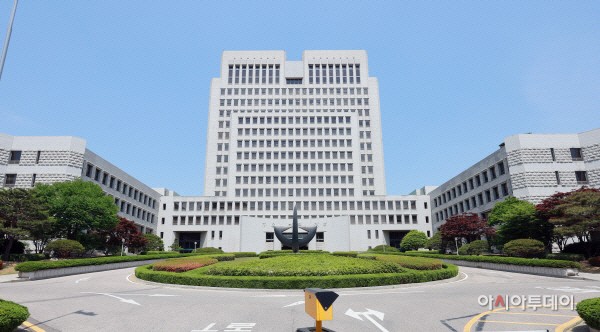 |
| A view of South Korea's Supreme Court. /Photo by Reporter Park Seong-il |
South Korea's Supreme Court has established civil enforcement procedures for seizing virtual assets and converting them into cash.
The National Court Administration announced Monday that revised Rules of Civil Execution, which establish procedures for seizing and liquidating virtual assets based on their characteristics and trading structures, took effect on Nov. 1.
The revised rules were introduced in response to a steady increase in compulsory enforcement cases involving virtual assets.
The number of civil enforcement cases involving the country's 28 registered virtual asset service providers as third-party debtors rose from 423 in 2023 to 958 in 2024 and 3,136 in 2025.
In the first nine months of this year alone, 3,186 cases were filed, already exceeding the total for last year.
However, virtual assets have no physical form and lack public registration systems comparable to land registries for real estate, vehicle registration systems or electronic account records for electronically registered shares.
The existing Civil Execution Act and Rules of Civil Execution also lacked specific provisions governing enforcement against virtual assets. As a result, courts had been handling such cases under procedures for the enforcement of "other property rights."
The revised rules clarify the procedures for seizing virtual assets held or managed by virtual asset service providers and other third parties by making the debtor's right to request the transfer of those assets subject to enforcement.
They also establish procedures for obtaining statements from third-party debtors and methods of converting the assets into cash, including transfer orders and sale orders.
For sale orders, the rules provide several methods tailored to the characteristics of virtual assets.
These include entrusting a virtual asset service provider with the sale, transferring the assets to an enforcement officer's account before selling them, transferring the assets to an enforcement officer for sale through another service provider, and exchanging them for other virtual assets that can be more easily converted into cash before selling them.
When debtors hold virtual assets directly, the assets themselves become subject to enforcement.
The revised rules prohibit debtors from disposing of the assets and require them to transfer the assets to an enforcement officer. They also establish procedures for converting the assets into cash through transfer orders, sale orders and other methods.
"By clarifying procedures for the seizure and liquidation of virtual assets, we expect to help creditors enforce their rights while protecting debtors' procedural rights," a Supreme Court official said.
"The revised rules will also clarify operating standards for courts, enforcement officers and virtual asset service providers, making enforcement procedures more predictable."
The official added, "We will continue to monitor practical issues and the implementation of the new system in response to changes in virtual asset technology and trading conditions. We will also continue improving the relevant rules and practices to better protect people's property rights and ensure effective enforcement."
Son Seung-hyun
Most Read
-
1
AMD's Lisa Su floated as potential Nvidia successo..

-
2
Ukraine halts strikes on Russian oil refineries un..

-
3
Southeast Asian auto parts makers hit hard by Chin..

-
4
U.S. links Myanmar peace efforts to rare earth acc..

-
5
Hegseth rejects calls for impeachment over Iran wa..

-
6
Democrats flip U.S. Congress in historic midterm s..

-
7
USFK commander cites interoperability gaps, urges..

PEOPLE







-
Address : In-Young Bldg., 34, Uisadang-daero 1-gil, Yeongdeungpo-gu, Seoul
Copyright by ASIATODAY CO., LTD. All rights resereved