



Cremation gains traction in Kazakhstan
Nov 09, 2026, 09:19 am


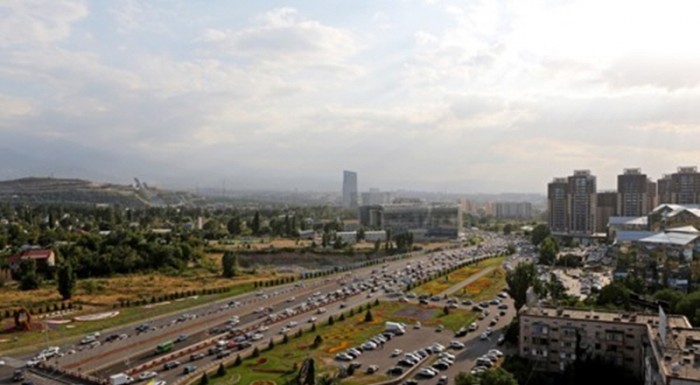 |
| A view of downtown Almaty, Kazakhstan. The photo is unrelated to the article. /EPA-Yonhap |
Traditional burial remains the predominant funeral practice in Kazakhstan, a country home to diverse ethnic and religious communities, including Muslims and Russian Orthodox Christians. However, cremation is gradually gaining acceptance as an alternative.
Kazakh news outlet Tengrinews reported Saturday that more than 14,000 people had registered their wishes to be cremated after death through the Ministry of Health's service on the country's e-government portal, using electronic digital signatures (EDS). Of those, 899 subsequently withdrew their consent.
Registration is free, requires no separate notarization and takes no more than 15 minutes to process. Family members cannot overturn a deceased person's decision. Only the individual concerned may withdraw consent during their lifetime.
Kazakhstan's first and only crematorium opened on April 30 in Almaty's Alatau district. The facility is equipped with a mortuary, a farewell ceremony hall and two cremation furnaces.
The cost of cremation is set at 240,000 tenge (approximately 730,000 won) per person. Additional services and items, including transportation and storage of the body, funeral preparations and urns, are charged separately.
However, demand remains limited. According to Almaty's Public Health Department, only 24 cremations were performed during the approximately six months following the facility's opening.
Kazakhstan is a multiethnic country whose population includes ethnic Kazakhs, Russians, Uzbeks, Ukrainians, Uyghurs and Germans, among others. Its religious communities are similarly diverse, encompassing Islam, Russian Orthodox Christianity and Catholicism.
Although funeral rites vary across ethnic and religious groups, burial of the deceased remains the country's customary practice.
Cremation has traditionally been uncommon in Kazakhstan. In Islam, the deceased are typically washed, wrapped in a burial shroud and buried following funeral prayers. Cremation is prohibited under Islamic religious principles. The Russian Orthodox Church has also traditionally favored burial.
Recently, however, signs of change have emerged in these funeral customs. Cremation is increasingly being accepted as an option for individuals who wish to decide how their remains should be handled after death.
Urbanization and limitations in funeral infrastructure are among the factors driving this shift. As populations become increasingly concentrated in major cities such as Almaty and Astana, securing and maintaining cemetery space and operating funeral facilities have become growing challenges for municipal authorities. Cremation is being considered as one possible alternative.
For cremation to become an established practice, Kazakhstan must address not only changing public attitudes but also practical issues, including the provision of facilities to store cremated remains.
Kazakh law prohibits scattering cremated ashes in nature. As the Almaty crematorium has yet to establish a permanent columbarium, urns are either kept in temporary storage at the facility, taken into the custody of family members or buried in existing family graves.
Kim Min-gyu
Most Read
-
1
Ukraine halts strikes on Russian oil refineries un..

-
2
China's fifth plenum to conclude amid expectations..

-
3
Southeast Asian auto parts makers hit hard by Chin..

-
4
U.S. links Myanmar peace efforts to rare earth acc..

-
5
Hegseth rejects calls for impeachment over Iran wa..

-
6
Democrats flip U.S. Congress in historic midterm s..

-
7
USFK commander cites interoperability gaps, urges..

PEOPLE






-
Address : In-Young Bldg., 34, Uisadang-daero 1-gil, Yeongdeungpo-gu, Seoul
Copyright by ASIATODAY CO., LTD. All rights resereved