



S. Korea faces warmer, wetter winter as El Niño reaches record strength
Nov 06, 2026, 02:53 pm


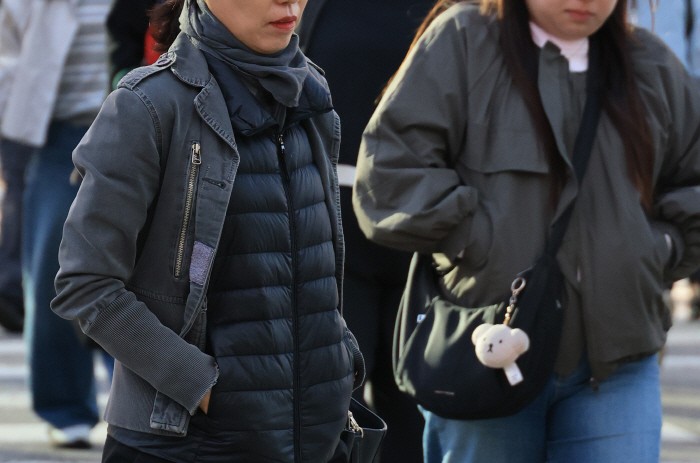 |
| Commuters hunch against the cold as they hurry to work in Seoul. /Yonhap |
The El Niño event that began earlier this year is forecast to develop into the strongest on record. As a result, South Korea is expected to experience warmer temperatures and more precipitation than usual this winter.
The Korea Meteorological Administration (KMA) said Friday that the El Niño event, which began in May, is expected to reach its peak in December and become the strongest ever recorded.
According to the KMA, sea surface temperatures in the El Niño monitoring region were 2.6 degrees Celsius above the long-term average in October, while the three-month moving average temperature anomaly for August through October reached 2.4 degrees Celsius. Both figures were the highest recorded for their respective periods since observations began in 1950.
The October sea surface temperature anomaly also surpassed those recorded during previous strong El Niño events in 1997 and 2015, when temperatures were 2.4 degrees and 2.3 degrees above normal, respectively.
El Niño is a climate phenomenon in which weakening trade winds over the equatorial Pacific allow warm water in the western Pacific to spread eastward. An El Niño event is identified when the three-month moving average sea surface temperature in the monitoring region remains at least 0.5 degrees Celsius above normal for five consecutive months or longer. An anomaly of 1.5 degrees or more is classified as a strong El Niño.
According to the KMA's three-month outlook, temperatures in November and December are expected to be higher than normal, with generally more precipitation than usual. Relatively mild conditions are also forecast to continue into January next year, although temporary inflows of cold air could cause significant temperature fluctuations. Precipitation in January is expected to be close to normal levels.
However, other climate factors, including Arctic sea ice and snow cover across Eurasia, also influence winter weather, meaning that temporary cold spells remain possible.
"This winter, the strong El Niño is expected to bring above-normal temperatures and generally more precipitation than usual," said KMA Administrator Lee Mi-seon. "However, because various climate factors interact, we must also prepare for sudden weather changes, including cold spells."
Kim Tae-hoon
Most Read
-
1
Ukraine halts strikes on Russian oil refineries un..

-
2
China's fifth plenum to conclude amid expectations..

-
3
ASEAN to discuss Myanmar's return next month

-
4
Southeast Asian auto parts makers hit hard by Chin..

-
5
U.S. links Myanmar peace efforts to rare earth acc..

-
6
Hegseth rejects calls for impeachment over Iran wa..

-
7
Democrats flip U.S. Congress in historic midterm s..

PEOPLE






-
Address : In-Young Bldg., 34, Uisadang-daero 1-gil, Yeongdeungpo-gu, Seoul
Copyright by ASIATODAY CO., LTD. All rights resereved