



Hyundai Motor faces expanded subcontractor talks
Nov 06, 2026, 10:53 am


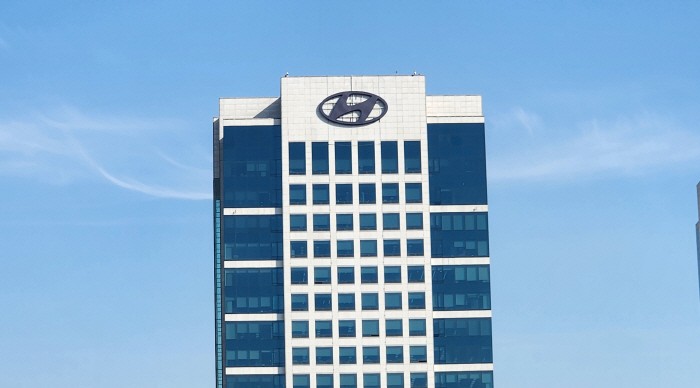 |
| Hyundai Motor's headquarters in Yangjae, Seoul. /Courtesy of Hyundai Motor |
South Korea's National Labor Relations Commission (NLRC) has broadened its recognition of Hyundai Motor's obligation to bargain with subcontractor unions to cover industrial safety-related working conditions more generally. By determining the automaker's status as an employer based on the nature of working conditions rather than individual bargaining demands, the commission's ruling is expected to intensify disputes between labor and management over the scope of negotiations with subcontractor unions.
According to labor and automotive industry sources Friday, the NLRC delivered its written decision on Oct. 27 to Hyundai Motor in an appeal involving subcontractor unions representing cafeteria and security workers. The commission had ruled on Aug. 31 after dividing the case into three categories: production, cafeteria and security, and sales.
In its latest written decision, the NLRC found that Hyundai Motor, as the principal contractor, had an obligation to bargain over industrial safety-related working conditions affecting subcontracted workers responsible for cafeteria operations, security, facility management and cleaning.
The decision differed from an earlier ruling by the Ulsan Regional Labor Relations Commission, which recognized Hyundai Motor's employer status based on specific demands, such as providing rest areas and improving working environments. The NLRC instead based its determination on the broader category of industrial safety-related working conditions. The reasoning was that there was no need to determine the principal contractor's responsibility for each individual bargaining item at the stage of publicly announcing a union's bargaining request.
The ruling is also significant because the issues that can be discussed during actual negotiations may not be limited to the unions' initial demands. It leaves greater room for determining whether additional requests for improvements related to industrial safety should also be subject to bargaining with the principal contractor.
However, the NLRC did not separately determine whether Hyundai Motor should be recognized as an employer with respect to working conditions outside industrial safety, such as wage increases and performance bonuses. As a result, disagreements could arise between labor and management over the specific working conditions for which the principal contractor should be held responsible when negotiations begin.
Automotive industry observers believe uncertainty surrounding collective bargaining is likely to persist for some time, as the ruling may not fully satisfy either labor or management.
For Hyundai Motor, the broader recognition of its employer status as a principal contractor could increase its bargaining obligations. The unions, meanwhile, will need further discussions because the commission did not rule on major demands involving wages and performance bonuses.
Observers therefore expect it could take considerable time for the two sides to narrow their differences over the scope of bargaining and determine their next steps.
The written decisions concerning the production and sales divisions have yet to be delivered. The deadline for filing an administrative lawsuit challenging the decision on cafeteria and security workers is Nov. 11.
"No decision has been made yet on whether to file an administrative lawsuit," a Hyundai Motor official said.
Nam Hyun-soo
Most Read
-
1
Ukraine halts strikes on Russian oil refineries un..

-
2
Southeast Asian auto parts makers hit hard by Chin..

-
3
U.S. links Myanmar peace efforts to rare earth acc..

-
4
Hegseth rejects calls for impeachment over Iran wa..

-
5
Democrats flip U.S. Congress in historic midterm s..

-
6
USFK commander cites interoperability gaps, urges..

-
7
Xi secures fourth term as China reshuffles next-ge..

PEOPLE






-
Address : In-Young Bldg., 34, Uisadang-daero 1-gil, Yeongdeungpo-gu, Seoul
Copyright by ASIATODAY CO., LTD. All rights resereved