



Trump looks to APEC in China for diplomatic reset after midterm defeat
Nov 05, 2026, 03:44 pm


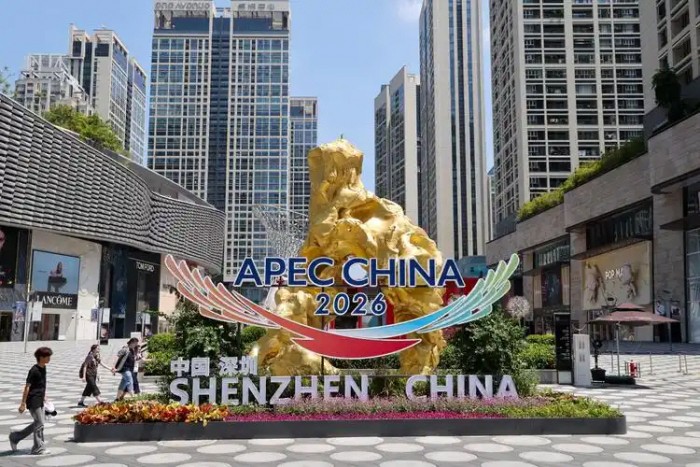 |
| The streets of Shenzhen, Guangdong Province, China, are buzzing with excitement ahead of the Asia-Pacific Economic Cooperation (APEC) summit, now less than two weeks away. Expectations are also growing that the leaders of the United States, China and Russia could hold a trilateral summit. /Beijing Youth Daily |
The Asia-Pacific Economic Cooperation (APEC) summit, scheduled for Nov. 18-19 in Shenzhen, Guangdong Province, is expected to be U.S. President Donald Trump's first major diplomatic engagement following his crushing midterm election defeat, raising expectations of a trilateral summit involving the leaders of the United States, China and Russia. Various developments suggest that such a meeting is now almost certain to take place.
China's position on Trump's devastating electoral defeat, which could leave him facing impeachment in the worst-case scenario, is complicated. Beijing is wary of the possibility that the U.S. Congress could adopt a tougher stance toward China. At the same time, it appears to welcome the weakening political influence of Trump, who spearheaded efforts to pressure China more than a decade ago.
Unsurprisingly, the Chinese government has responded cautiously, unlike many Chinese citizens who have mocked Trump's political downfall on social media. At a regular press briefing Wednesday, Chinese Foreign Ministry spokesperson Mao Ning reaffirmed Beijing's existing position without offering any particular comment on the election results.
"The U.S. midterm elections are a domestic affair," Mao said. "China stands ready to continue working with the U.S. to uphold and deliver on the important common understandings reached by the two heads of state, enhance communication, properly manage differences, expand cooperation, and build a constructive relationship of strategic stability on the basis of respect, fairness, and reciprocity."
According to diplomatic sources in Beijing familiar with U.S.-China relations on Thursday, however, the Chinese government may privately be pleased despite its measured public response. With Trump now described as a lame-duck president, his diminished political influence could substantially weaken his ability to pressure China.
"President Trump will find it difficult to treat China as he pleases from now on. If tensions between the two countries escalate further, he could find himself isolated on all sides," said Zhang Weiguo, a Beijing-based political commentator. In that sense, the election results may not be an unfavorable development for China.
Nevertheless, Beijing is unlikely to want Trump's complete political collapse, given his relatively predictable political style. Such an outcome could strengthen an increasingly unpredictable and hard-line U.S. Congress, potentially destabilizing the relatively stable framework for U.S.-China relations established through two years of tariff disputes and summit diplomacy.
This helps explain why some diplomatic sources in Beijing believe China is concerned about Trump's weakened standing and may therefore actively pursue a trilateral summit involving the United States, China and Russia at the upcoming APEC meeting.
That possibility was also reflected in remarks by Mao at Wednesday's briefing.
"China is in communication with relevant parties regarding a meeting between the three heads of state," she said. Her statement suggested that Beijing was actively engaging in discussions aimed at arranging the summit.
Trump, meanwhile, faces growing pressure to secure tangible diplomatic achievements to bolster his weakened political standing. A trilateral summit could therefore be particularly important to him, perhaps even more so than to Russian President Vladimir Putin.
An additional summit with North Korean leader Kim Jong Un on the sidelines of the gathering would be an even greater diplomatic achievement for Trump.
With just over 10 days remaining, the upcoming APEC summit is emerging as a major global event attracting an exceptional level of international attention.
Hong Soon-do
Most Read
-
1
U.S., Israel plan to resume strikes on Iran after..

-
2
Ukraine halts strikes on Russian oil refineries un..

-
3
China's fifth plenum to conclude amid expectations..

-
4
ASEAN to discuss Myanmar's return next month

-
5
AI-discovered PHP flaw triggers global cybersecuri..

-
6
Southeast Asian auto parts makers hit hard by Chin..

-
7
U.S.-China-Russia summit increasingly likely to be..

PEOPLE







-
Address : In-Young Bldg., 34, Uisadang-daero 1-gil, Yeongdeungpo-gu, Seoul
Copyright by ASIATODAY CO., LTD. All rights resereved