



[Market Power] SK Inc.'s full takeover of SK Ecoplant raises shareholder value concerns
Nov 05, 2026, 02:59 pm


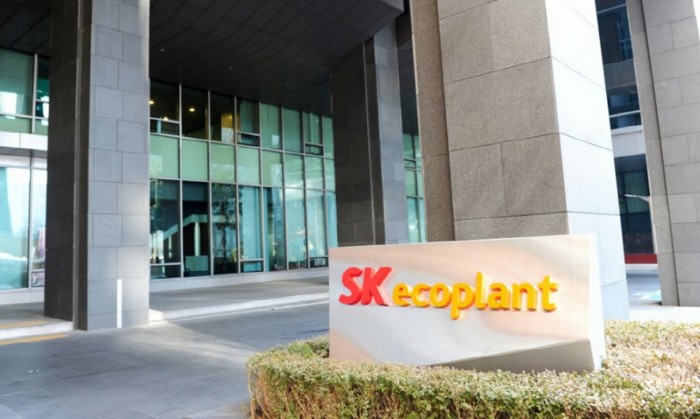 |
| The headquarters of SK ecoplant. /Courtesy of SK ecoplant |
 |
SK Inc. has decided to make SK ecoplant a wholly owned subsidiary instead of pursuing its initial public offering (IPO). The move is intended to eliminate concerns over duplicate listings and ensure that the performance of its semiconductor and artificial intelligence (AI) infrastructure businesses is fully reflected in the holding company's results. However, SK Inc. will also have to shoulder the costs associated with the failed IPO and the burden of a subsidiary with weak cash-generating capabilities. With the holding company committing substantial cash despite its pledge to increase shareholder returns, analysts say whether the decision ultimately benefits minority shareholders will depend on how quickly SK ecoplant improves its financial structure.
According to industry sources Thursday, SK Inc.'s board of directors approved a tender offer Wednesday to acquire approximately 25% of SK ecoplant's outstanding shares at 88,000 won per share, for a maximum of 1.4462 trillion won. The company plans to acquire the remaining shares through a comprehensive share exchange.
Including approximately 400 billion won spent in April to acquire shares held by financial investors (FIs), SK Inc.'s total investment in SK ecoplant will exceed 1.8 trillion won this year alone. The tender offer price represents a 53% premium over the stock's average over-the-counter trading price of approximately 57,500 won during the past month.
Market attention has naturally turned to SK Inc.'s financial capacity. As of the end of June, its cash and cash equivalents on a separate financial statement basis stood at just 110.5 billion won, roughly one-thirteenth of the tender offer amount. Short-term borrowings nearly doubled from 400 billion won at the end of last year to 790 billion won at the end of June. Borrowings due within one year also reached approximately 2.6491 trillion won.
Total liabilities on a separate basis fell from 12.7209 trillion won at the end of 2023 to 10.8281 trillion won at the end of last year, but rose again to 11.1036 trillion won by the end of June this year. The company has also continued making equity investments, including a tender offer for SK Signet shares and participation in a capital increase at Eclipse.
SK Inc. maintains that it will have no major difficulty securing the necessary funds. The company says it can comfortably cover the costs once it receives the expected proceeds of approximately 2.3 trillion won from the sale of SK Siltron. However, those proceeds are not expected until early next year, raising concerns that the company will inevitably face short-term funding pressure before settling the tender offer payments this month.
SK Inc.'s willingness to shoulder these costs stems from the collapse of SK ecoplant's IPO plans. During its pre-IPO fundraising in 2022, SK ecoplant pledged to complete its listing by July 2026. However, regulatory sanctions following allegations of overstated revenue at a U.S. subsidiary, combined with guidelines on duplicate listings introduced in August, prevented the company from even filing an application for preliminary listing approval.
As a result, approximately 1.0484 trillion won had to be returned to financial investors against their original investment of 800 billion won, resulting in additional costs of around 250 billion won. SK Inc.'s acquisition of FI-held shares in April was also part of its efforts to resolve these obligations.
Nevertheless, the potential benefits for SK Inc. are substantial. First, it could reduce the valuation discount associated with duplicate listings. Investors have long viewed the separate listing of subsidiaries as a potential drag on holding company valuations. The latest decision is expected to alleviate some of those concerns. In addition, the approximately 25% share of SK ecoplant's earnings previously attributable to minority shareholders will become fully attributable to SK Inc.
SK ecoplant's financial performance also offers reasons for optimism. Thanks to the consolidation of semiconductor-related affiliates, the company posted an operating profit of 1.465 trillion won in the first half of this year, a 6.8-fold increase from a year earlier. Growing demand for semiconductor and AI infrastructure driven by SK hynix's expanding investments also presents opportunities for the group.
The problem, however, lies in the quality of those earnings. An increase in accounting profits does not necessarily translate into an immediate increase in cash. SK ecoplant's total consolidated liabilities rose 2.2-fold from 5.755 trillion won at the end of 2020 to 12.8392 trillion won at the end of June this year. Its debt-to-equity ratio also climbed from 192.0% at the end of last year to 203.2% at the end of June.
Net cash outflows from operating activities totaled 259.1 billion won in the first half, while unbilled construction receivables surged 73% from the end of last year to 1.4156 trillion won. This means that substantial amounts of revenue and profit have been recognized as construction projects progressed, but the corresponding cash has yet to be collected. If cash generation continues to lag, SK Inc. may have to provide additional equity injections or loans.
For minority shareholders, the potential benefits and costs are difficult to weigh. Under its medium-term shareholder return policy for 2024-2026, SK Inc. pledged a minimum annual dividend of 5,000 won per share, along with additional dividends equivalent to 1% to 2% of its market capitalization, funded by gains from asset sales. However, concerns have emerged that the substantial cash outlay to acquire additional shares in its subsidiary during the final year of the policy could reduce its capacity to pay dividends.
Indeed, SK Inc.'s share price weakened during trading shortly after the announcement that SK ecoplant would become a wholly owned subsidiary. This suggests that investors initially focused more on the short-term funding burden than on the potential benefits to shareholder value.
The assessment could change over the medium to long term. Eliminating duplicate-listing risks, securing 100% of the earnings of an unlisted subsidiary and gaining greater exposure to growth in semiconductor and AI infrastructure businesses could collectively have a positive impact on SK Inc.'s corporate value.
Ultimately, the key question is how quickly SK ecoplant can convert its increased earnings into cash. Shareholders of the holding company will be able to benefit from the improved performance only if the earnings growth translates into stable cash flow rather than remaining a temporary effect of consolidating new subsidiaries.
"Most of the unbilled construction receivables arose from projects commissioned by financially sound clients in the high-tech sector," an SK ecoplant official said. "Payments will be collected progressively as construction advances, and we expect cash flow to improve gradually."
SK Inc. also said that both its financial burden and concerns over shareholder returns remain manageable.
"We have steadily reduced our net borrowings, so the impact on our credit rating and financial stability will be limited," an SK Inc. official said. "We also plan to maintain the principles of our medium-term shareholder return policy."
"This acquisition is not a decision to reduce the funds available for shareholder returns, but a choice intended to increase the earnings we can share with shareholders in the future," the official added.
Kim Da-bin
#SK #SK ecoplant #Shareholder
Copyright by Asiatoday
Most Read
-
1
U.S., Israel plan to resume strikes on Iran after..

-
2
Ukraine halts strikes on Russian oil refineries un..

-
3
China's fifth plenum to conclude amid expectations..

-
4
ASEAN to discuss Myanmar's return next month

-
5
AI-discovered PHP flaw triggers global cybersecuri..

-
6
Southeast Asian auto parts makers hit hard by Chin..

-
7
U.S.-China-Russia summit increasingly likely to be..

PEOPLE







-
Address : In-Young Bldg., 34, Uisadang-daero 1-gil, Yeongdeungpo-gu, Seoul
Copyright by ASIATODAY CO., LTD. All rights resereved