



S. Korea shifts gas pipeline access reviews to industry ministry
Nov 05, 2026, 10:28 am


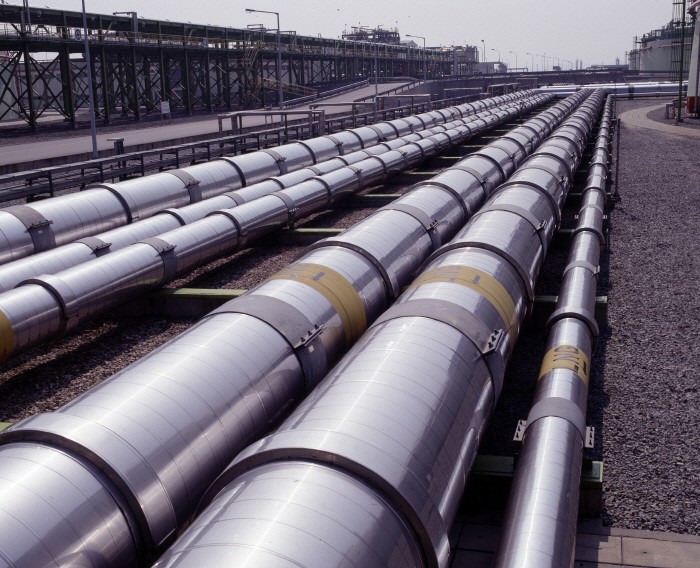 |
| Pipelines at Korea Gas Corp.'s (KOGAS) Incheon LNG Terminal. /Courtesy of KOGAS |
As South Korean private companies account for a growing share of direct liquefied natural gas (LNG) imports, the body responsible for reviewing shared access to the national gas pipeline network will be transferred from Korea Gas Corp. (KOGAS) to the Ministry of Trade, Industry and Resources (MOTIR) this month. With the government establishing a new committee to improve neutrality and fairness in pipeline access, a key challenge will be how effectively it can balance the interests of KOGAS and private LNG importers.
According to industry sources on Wednesday, the Gas Pipeline Committee will be established under MOTIR on Nov. 27 in accordance with amendments to the City Gas Business Act made in May. The new committee will be responsible for specialized reviews of matters related to shared access to natural gas pipeline facilities, including analyses of the volume of gas that can be fed into the network and reviews of pipeline access regulations to ensure fair use. It will also mediate related disputes. The committee will consist of no more than nine members, who must meet qualifications such as being a Grade 3 or higher government official, having at least 10 years of experience as a judge, prosecutor or lawyer, or having worked in the gas industry for at least 15 years.
"We are currently selecting committee members based on their expertise and representativeness in relevant fields and plan to complete the process in time for the committee's launch," a MOTIR official said. "We are also considering appointing members of the existing Pipeline Facility Access Review Committee, taking into account their expertise and experience." The new committee plans to use data provided by KOGAS and other relevant institutions for pipeline operations and technical analyses.
The private LNG industry has welcomed the establishment of the statutory committee under the City Gas Business Act. "The existing committee operated by KOGAS played a certain role in improving fairness in pipeline access, but it had limitations because it was established under KOGAS' internal regulations," a private industry official said. "This time, the significance lies in establishing a neutral review system based on legislation."
KOGAS launched the Pipeline Facility Access Review Committee in July 2024 and appointed seven external members, including professors and legal experts. The committee has reviewed the criteria and results of analyses conducted jointly by KOGAS and private LNG operators on the volume of gas that can be fed into pipelines at individual entry points. It has also gathered feedback from pipeline users.
However, because the committee operated under KOGAS' internal regulations, private LNG companies had raised concerns about the structure in which the pipeline operator itself also organized the review body, calling for a more objective institution. A consensus also emerged in the National Assembly on the need to improve the effectiveness and transparency of the shared-access system. The establishment of a statutory committee was subsequently confirmed after a partial amendment to the City Gas Business Act passed the National Assembly's plenary session in April.
However, apart from enhancing neutrality through the new committee, maintaining the public interest and safety of the national gas pipeline network is expected to remain a key challenge. KOGAS President Hong Ui-rak recently expressed concerns about the establishment of the Gas Pipeline Committee on his social media account. "I am worried. Public interest, equity, fairness and safety must be properly ensured," he wrote. "There are also quite a few areas where KOGAS needs to reflect on its actions and shortcomings. In any case, this is not an issue that can be easily resolved through coordination and mediation alone."
Bae Seok-won
Most Read
-
1
U.S., Israel plan to resume strikes on Iran after..

-
2
Ukraine halts strikes on Russian oil refineries un..

-
3
China's fifth plenum to conclude amid expectations..

-
4
ASEAN to discuss Myanmar's return next month

-
5
AI-discovered PHP flaw triggers global cybersecuri..

-
6
Southeast Asian auto parts makers hit hard by Chin..

-
7
U.S.-China-Russia summit increasingly likely to be..

PEOPLE







-
Address : In-Young Bldg., 34, Uisadang-daero 1-gil, Yeongdeungpo-gu, Seoul
Copyright by ASIATODAY CO., LTD. All rights resereved