



Adults urged to check Japanese encephalitis vaccination as fatality rate reaches 30%
Nov 03, 2026, 03:59 pm


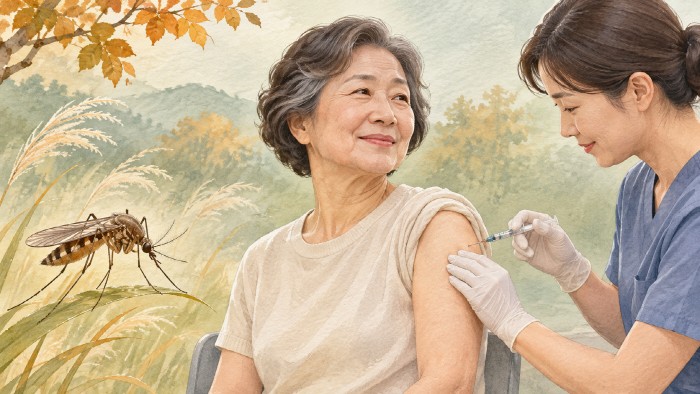 |
| An AI-generated image depicting a middle-aged woman receiving a Japanese encephalitis vaccination. |
The risk of Japanese encephalitis infection continues even in late autumn, when mosquito activity declines. In Korea, patients mainly occur from August to November, and prevention is important because there is no clearly effective antiviral treatment. In particular, adults at high risk of infection need to check their past vaccination history.
According to the Korea Disease Control and Prevention Agency on Nov. 3, this year’s first Japanese encephalitis patient was confirmed on Sept. 9. The patient, a woman in her 60s with no vaccination history, was hospitalized with symptoms including high fever, chills and vomiting. Of the 79 domestic patients recorded over the past five years, 65.9% were aged 50 or older.
Japanese encephalitis is a Class 3 notifiable infectious disease transmitted through the bite of mosquitoes carrying the virus, including Culex tritaeniorhynchus. The incubation period is five to 15 days, and most people are asymptomatic or experience only mild fever and headache. However, in some cases it progresses to acute encephalitis, causing symptoms such as seizures and impaired consciousness. The fatality rate among encephalitis patients reaches 20% to 30%, and 30% to 50% of survivors may suffer neurological complications such as motor, cognitive and language impairment. Treatment is centered on supportive care to relieve symptoms.
The KDCA recommends vaccination for adults aged 18 or older who lack immunity and who live in high-risk areas such as near rice paddies or pig farms, or who plan to engage in activities in such areas during the epidemic season. The recommendation also applies to foreigners who moved from non-endemic areas and reside in Korea long-term, as well as travelers to countries at risk for Japanese encephalitis. Adults are not covered by the national immunization support program and must pay the vaccination cost themselves.
Vaccines are divided into inactivated vaccines and live vaccines. Children receive a total of five doses of the inactivated vaccine or a total of two doses of the live vaccine. For adults, the inactivated vaccine is administered in two doses at a one-month interval, followed by a third dose 11 months later. The chimeric live vaccine is given as a one-dose schedule, and the number of doses and intervals differ depending on the type of vaccine.
However, vaccination is not recommended for all adults. Whether to receive the vaccine should be decided with medical professionals in consideration of past vaccination history, infection risk and health condition. The KDCA does not recommend interchangeability between inactivated and live vaccines.
Preventing mosquito bites is also important. It is advisable to reduce outdoor activity from sunset to sunrise and to wear light-colored long clothing and use mosquito repellent. Checking window screens and removing standing water around the home can also help.
Moon Jeong-woo
Most Read
-
1
U.S., Israel plan to resume strikes on Iran after..

-
2
Ukraine halts strikes on Russian oil refineries un..

-
3
China's fifth plenum to conclude amid expectations..

-
4
ASEAN to discuss Myanmar's return next month

-
5
AI-discovered PHP flaw triggers global cybersecuri..

-
6
UK court orders worldwide asset freeze on Vietnam'..

-
7
Trump envoy says U.S. no longer guarantees Middle..

PEOPLE






-
Address : In-Young Bldg., 34, Uisadang-daero 1-gil, Yeongdeungpo-gu, Seoul
Copyright by ASIATODAY CO., LTD. All rights resereved