



S. Korea launches labor inspections to root out unpaid youth overtime
Nov 03, 2026, 10:20 am


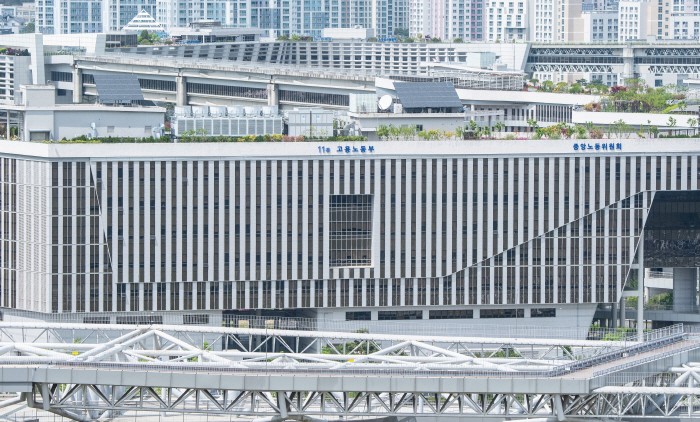 |
| A view of the Ministry of Employment and Labor building. / Park Sung-il |
Workplaces in Seoul's Seongsu-dong area, where concerns have been raised over long working hours and unpaid overtime among young workers, will face intensive labor inspections. Workplaces that repeatedly use special overtime arrangements will also be inspected to determine whether they comply with authorized working hours and properly implement measures to protect workers' health.
The Ministry of Employment and Labor announced that it would launch targeted inspections of 100 workplaces nationwide starting Nov. 3 as part of its "Second-Half 2026 Special Inspections on Long Working Hours." The inspections aim to address unfair labor practices, including excessive overtime and unpaid wages, at workplaces employing large numbers of young people and to prevent violations of workers' right to health caused by long working hours.
The inspections will primarily target industries with high proportions of young workers, including information and communications, professional, scientific and technical services, accommodation and food services, and wholesale and retail trade. Inspectors will focus on whether workplaces comply with working-hour limits and properly pay overtime, night work and holiday work allowances.
In particular, the ministry plans to intensively inspect workplaces in Seongdong District, Seoul, following concerns raised during a parliamentary audit of the ministry on Oct. 13 about habitual overtime and unpaid allowances among young workers in the Seongsu-dong area.
Workplaces that repeatedly use special overtime arrangements will undergo both labor inspections and occupational safety inspections. Authorities will check whether they comply with authorized working hours and properly implement measures to protect workers' health.
The inspections come amid the ministry's assessment that, despite a decline in overall actual working hours, long working hours and the failure to pay workers for all the hours they work persist at some workplaces.
According to figures provided by the ministry, the average annual actual working hours of wage workers declined from 2,058 hours in 2015 to 1,928 hours in 2021, 1,874 hours in 2023 and 1,846 hours last year.
The ministry plans to respond to violations of labor standards and occupational safety and health laws identified during the inspections through corrective orders, administrative fines and legal proceedings. It also intends to encourage workplaces to reduce long working hours on their own by improving working-hour management systems and restructuring work arrangements.
"It is important to create a working environment where workers are fairly compensated for the work they do and can work in good health with sufficient rest," said Minister of Employment and Labor Kim Young-hoon.
"We will work to address unfair labor practices, including long working hours and unpaid overtime among young workers, and ensure that workers' health and safety are protected."
Kim Nam-hyung
Most Read
-
1
Ukraine halts strikes on Russian oil refineries un..

-
2
Southeast Asian auto parts makers hit hard by Chin..

-
3
U.S. links Myanmar peace efforts to rare earth acc..

-
4
Hegseth rejects calls for impeachment over Iran wa..

-
5
Democrats flip U.S. Congress in historic midterm s..

-
6
USFK commander cites interoperability gaps, urges..

-
7
Xi secures fourth term as China reshuffles next-ge..

PEOPLE






-
Address : In-Young Bldg., 34, Uisadang-daero 1-gil, Yeongdeungpo-gu, Seoul
Copyright by ASIATODAY CO., LTD. All rights resereved