



Births in Korea rise for 26th straight month
Oct 28, 2026, 01:47 pm


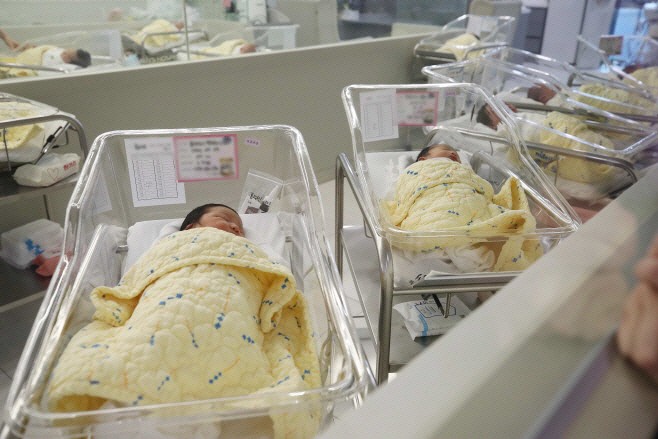 |
| Medical staff care for newborn babies at a women's hospital in Dongdaemun District, Seoul. / Yonhap |
The number of babies born in August increased by more than 23,000 from a year earlier, extending the country's record-long streak of rising births to 26 consecutive months. Despite the usual decline in childbirth-related indicators during the second half of the year, both the number of births and the total fertility rate have continued to rise this year, bringing the country closer to achieving a fertility rate of 0.9.
According to the "August Vital Statistics" report released by the Ministry of Data and Statistics on Oct. 28, the number of births in August rose 13.0% from a year earlier to 23,703. This marked the 26th consecutive month of year-on-year increases, surpassing the previous record of 25 months.
The cumulative number of births from January to August reached 193,783, up 14.5% from the same period last year, raising the likelihood that annual births will exceed 250,000 for the second consecutive year.
The total fertility rate, which represents the average number of children a woman is expected to have over her lifetime, also continued to rise. The rate stood at 0.87 in August, up 0.09 from a year earlier. With the rate remaining in the upper 0.8 range for four consecutive months since May, the country has moved closer to reaching 0.9 this year.
Fertility rates have typically followed a pattern of rising in the first half of the year and declining in the second. This year, however, the upward trend has continued into the second half.
By age group, women aged 30 to 34 recorded the highest fertility rate at 79.5 births per 1,000 women, leading the rebound. Women aged 35 to 39 followed at 59.8, while those aged 25 to 29 recorded 21.4.
The number of marriages, considered a leading indicator of future births, fell 1.2% year-on-year to 19,218 in August. Although marriages increased in 13 cities and provinces, including Daejeon and Ulsan, the decline was attributed to decreases in three regions, including Gyeonggi Province, Sejong and North Gyeongsang Province. In Gyeonggi Province alone, marriages fell 18.9% from a year earlier.
However, the cumulative number of marriages from January to August rose 5.2% year-on-year to 165,874.
Meanwhile, deaths continued to outnumber births in August, extending the country's streak of natural population decline to 82 consecutive months. The number of deaths reached 30,308, up 4.9% from a year earlier and exceeding the number of births by 6,605.
Seo Byeong-ju
Most Read
-
1
Putin proposes trilateral U.S.-China-Russia summit..

-
2
U.S. weighs dropping MOAB, world's most powerful n..

-
3
"Aren't those foreigners on welfare?": M..

-
4
Attention centers on APEC for possible Trump-Xi-Pu..

-
5
U.S., Israel plan to resume strikes on Iran after..

-
6
China tightens grip on boosting domestic demand an..

-
7
Amid health rumors, Chinese President Xi Jinping i..

PEOPLE





-
Address : In-Young Bldg., 34, Uisadang-daero 1-gil, Yeongdeungpo-gu, Seoul
Copyright by ASIATODAY CO., LTD. All rights resereved