



El Niño drives surge in dengue cases in Peru
Oct 28, 2026, 10:06 am


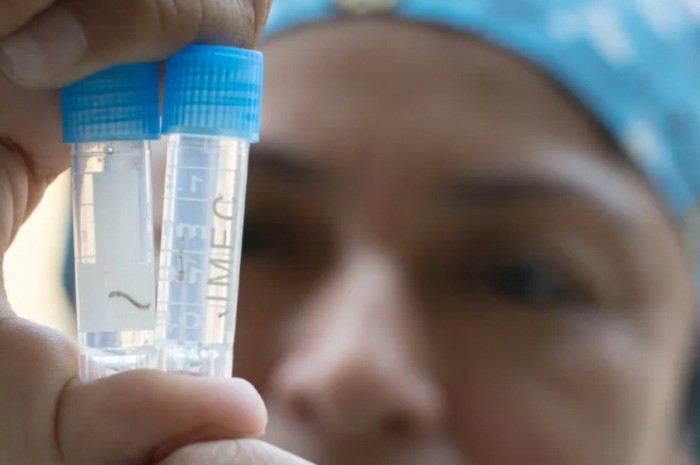 |
| A researcher from Peru's Ministry of Health examines the larvae of Aedes aegypti mosquitoes, which transmit dengue fever. / AFP-Yonhap |
Dengue deaths and infections are rising rapidly in Peru.
According to local media outlets, including Ojo, on Oct. 26 (local time), 81 people, including 28 minors, have died from dengue fever in Peru so far this year. The death toll represents a 59% increase from 51 during the same period last year.
The number of dengue infections officially reported to the Ministry of Health surged more than 120% to 76,784, compared with 30,587 during the same period last year.
Dengue is spreading particularly rapidly in northern Peru, which borders Ecuador, and the Peruvian Amazon region. These areas have one thing in common: scorching temperatures exceeding 30 degrees Celsius have persisted for weeks.
The Ministry of Health believes that the prolonged high temperatures caused by El Niño have created favorable conditions for mosquito breeding. Although the ministry is accelerating dengue vaccination efforts, vaccination rates remain relatively low.
In particular, the government is concentrating vaccination efforts on people aged 10 to 20 in areas with high infection rates, but the first-dose vaccination rate stands at just 30.8%, while the second-dose rate is only 2.7%.
Concerns are also growing over outbreaks of infectious diseases other than dengue. Peru's National Center for Epidemiology, Prevention and Disease Control has issued a nationwide infectious disease alert. With acute diarrhea and leptospirosis spreading rapidly, authorities are working to establish a rapid response system.
According to the Ministry of Health, 1,159,363 cases of acute diarrhea have been reported so far this year, up 11.3% from the same period last year. Analysts attribute the increase to contamination of water sources caused by more frequent heavy rainfall associated with El Niño.
Leptospirosis, which causes high fever, chills, headaches and muscle pain, is also spreading. The infectious disease can be transmitted when skin or mucous membranes come into contact with water or soil contaminated with rodent urine.
The number of infections reported recently reached 13,235, up 85.5% from the same period last year. The increase has been attributed to more frequent flooding and inundation, which have created more areas of standing water and allowed the bacteria to spread faster than in previous years.
Local media reported that concerns over potential outbreaks of dengue, acute diarrhea and leptospirosis amid forecasts of an exceptionally strong El Niño this year are becoming a reality. Health authorities are also on alert because the possibility of malaria and measles outbreaks cannot be ruled out.
Meteorologists expect the effects of the exceptionally strong El Niño to become more pronounced from next month through early next year. There are also concerns that infectious disease outbreaks could accelerate as El Niño reaches its peak intensity.
Son Young-sik
Most Read
-
1
Celltrion nears additional contract with major U.S..

-
2
Putin proposes trilateral U.S.-China-Russia summit..

-
3
U.S. weighs dropping MOAB, world's most powerful n..

-
4
"Aren't those foreigners on welfare?": M..

-
5
Attention centers on APEC for possible Trump-Xi-Pu..

-
6
U.S., Israel plan to resume strikes on Iran after..

-
7
China tightens grip on boosting domestic demand an..

PEOPLE







-
Address : In-Young Bldg., 34, Uisadang-daero 1-gil, Yeongdeungpo-gu, Seoul
Copyright by ASIATODAY CO., LTD. All rights resereved