



Takaichi denies reflationist stance, but tax cut plans raise doubts
Oct 26, 2026, 03:01 pm


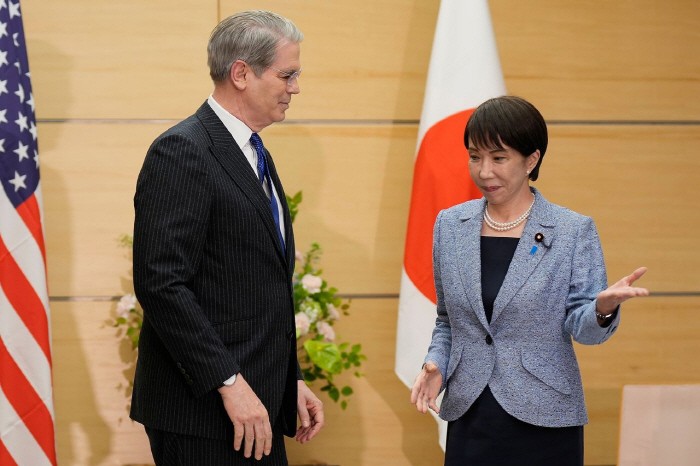 |
| Japanese Prime Minister Sanae Takaichi (right) and U.S. Treasury Secretary Scott Bessent (left) prepare to attend a meeting at the Prime Minister's Office in Tokyo on May 12. / Yonhap |
"I am not a reflationist." Japanese Prime Minister Sanae Takaichi has repeatedly asked Finance Minister Satsuki Katayama to make this clear to audiences overseas, the Yomiuri Shimbun reported on Oct. 26.
However, the yen has continued to weaken and Japanese government bond yields have risen as Japan moves forward with plans to cut the consumption tax on food starting next year, a measure expected to cost approximately 5 trillion yen ($33 billion) annually, or about 42 trillion won. As Takaichi marks one year in office, a key challenge for her administration is whether her denial of a reflationist stance can be substantiated through actual policies and market developments.
Reflation refers to policies aimed at stimulating prices and economic activity through monetary expansion and increased government spending. Takaichi was previously known as a strong advocate of monetary easing because of her firm opposition to interest rate hikes by the Bank of Japan (BOJ). However, Japan is now facing rising prices and a depreciating yen. Concerns are growing that continuing with the same policy approach could push up import prices and undermine market confidence in the country's public finances.
The United States has also taken a more critical stance. According to the Yomiuri Shimbun, U.S. President Donald Trump told Takaichi during a Japan-U.S. summit at U.N. headquarters on Sept. 22 that the weak yen was also causing difficulties for the United States. U.S. Treasury Secretary Scott Bessent reportedly expressed concerns about Japan's reliance on traditional economic stimulus policies. According to official statements from Japanese and U.S. financial authorities, both countries share the goal of maintaining stability in the yen market. This does not necessarily mean that Washington opposes Japan's proposed consumption tax cut itself.
Concerns over exchange rates have already prompted concrete action. Japan's Ministry of Finance officially announced that it had intervened in the currency market alongside the U.S. Treasury on July 31, U.S. time, purchasing yen. The joint intervention was aimed at preventing an excessively rapid depreciation of the Japanese currency.
The BOJ also raised its policy interest rate to 1.25% on Sept. 18, with seven members voting in favor and two against. The central bank explained that the weak yen and rising crude oil prices, among other factors, were pushing up inflation. It also said it would consider further interest rate hikes while monitoring economic conditions and price developments.
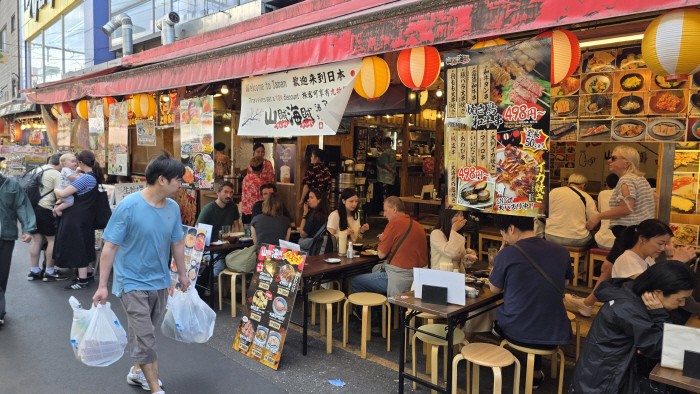 |
| Shimbashi, Tokyo. The weak yen has contributed to an increase in South Korean tourists visiting Japan. According to the Japan National Tourism Organization, approximately 842,300 South Koreans visited Japan in September, up 25.6% from a year earlier and the highest figure on record for the month. / By Choi Young-jae, Tokyo Correspondent |
Prime Minister Takaichi emphasized in a parliamentary speech on Oct. 5 that fiscal sustainability was a prerequisite for "responsible and proactive fiscal policy." She also pledged to strengthen market confidence. However, questions remain over how the government will finance the proposed tax cut. Under the government's plan, the consumption tax rate on food would be reduced from the current 8% to 1% for two years starting in April 2027. The measure is intended to ease the burden of rising prices on households.
However, if the government issues bonds to make up for lost tax revenue, it could struggle to convince markets already concerned about rising interest rates and fiscal instability. A tax cut can directly lower the prices consumers pay, but the way it is financed can also affect financial markets. Experts say these two effects need to be considered separately.
The issue also has implications for South Korea. In a report released in March this year, the Bank of Korea identified the weak yen as one factor influencing the won-dollar exchange rate. If Japan's monetary and fiscal policies trigger significant fluctuations in the yen, South Korean companies will need to monitor both the won-dollar and won-yen exchange rates. Such changes could also affect the relative prices of South Korean and Japanese products in overseas markets where companies from the two countries compete.
Exchange rate fluctuations are even more noticeable in travel. According to the Japan National Tourism Organization (JNTO), approximately 842,300 South Koreans visited Japan in September, up 25.6% from the same month last year and a record high for September. The JNTO also cited the Chuseok holiday and increased airline seat capacity as contributing factors.
The Korea Tourism Organization considers the weak yen a factor attracting South Korean travelers to Japan. If the yen strengthens against the won in the future, South Korean tourists could face higher costs for accommodation, meals and shopping.
Takaichi faces difficult policy choices. She must cut taxes to help households struggling with high prices while preventing further yen depreciation and containing rising government bond yields. At the same time, she must reassure the United States and financial markets that her administration respects the Bank of Japan's interest rate decisions. How specifically she outlines funding sources for the tax cut and government spending plans during December's parliamentary budget deliberations is likely to be the first major test of her claim that she is "not a reflationist."
Choi Young-jae
Most Read
-
1
Ukraine halts strikes on Russian oil refineries un..

-
2
China's fifth plenum to conclude amid expectations..

-
3
ASEAN to discuss Myanmar's return next month

-
4
Southeast Asian auto parts makers hit hard by Chin..

-
5
Hegseth rejects calls for impeachment over Iran wa..

-
6
U.S. links Myanmar peace efforts to rare earth acc..

-
7
Democrats flip U.S. Congress in historic midterm s..

PEOPLE







-
Address : In-Young Bldg., 34, Uisadang-daero 1-gil, Yeongdeungpo-gu, Seoul
Copyright by ASIATODAY CO., LTD. All rights resereved