



LG to test technology in extreme space conditions with affiliate components aboard fifth Nuri launch
Oct 06, 2026, 10:06 am


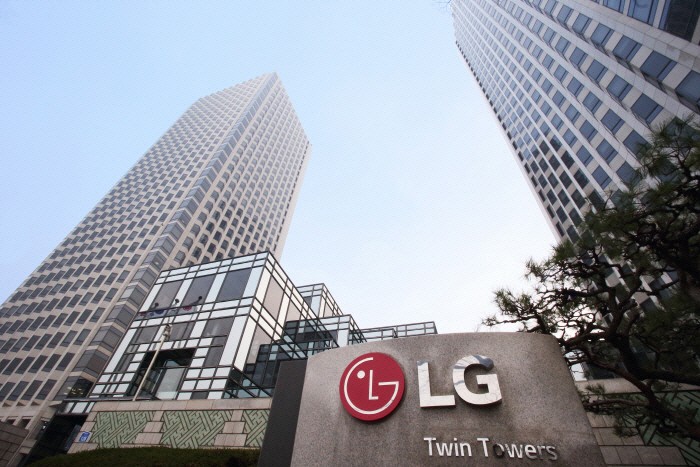 |
| LG Twin Towers headquarters. / LG |
LG Group is embarking on technology verification in the space environment by loading components aboard the fifth launch of the Nuri rocket.
LG Sciencepark announced on the 6th that, in partnership with Unmanned Exploration Laboratory (UEL), a lunar exploration rover development startup, it will install five types of components from LG affiliates onto a CubeSat (secondary payload).
The components include camera modules from LG Innotek, battery packs from LG Energy Solution, and power modules, attitude control actuators, and satellite communication antennas from LG Electronics.
The launch is scheduled for the afternoon of the 7th. Once the Nuri rocket successfully settles into orbit, the CubeSat is set to carry out sequential operational tests for each component over roughly 60 days at an altitude of 570 kilometers.
The verification will adopt the commercial off-the-shelf (COTS) approach, adapting terrestrial components with proven reliability for the space environment. Because this method significantly cuts development costs and timelines, it is regarded as an effective way to accelerate the growth of the private-led space industry.
LG Sciencepark stated, "Through this verification, we plan to verify whether each component functions properly in an actual space environment and use reliability data secured during operations to refine and advance our technologies."
LG Sciencepark also plans to launch its own CubeSat in 2028 to accelerate the expansion of business opportunities in the space domain.
Jung Soo-heon, CEO of LG Sciencepark, said, "This launch marks the first step in verifying how LG's technologies perform in an actual space environment. By continuing to validate technologies accumulated on the ground, we aim to contribute to South Korea's space industry ecosystem."
Previously, LG explored opportunities in the space sector in January of last year during the LG Technology Council, a gathering of technology executives from group affiliates. At that meeting, LG presented various scenarios executable by respective affiliates and discussed future market opportunities. In particular, diverse collaboration models were discussed concerning activities where UEL rovers executing precision scientific exploration missions record and transmit on-site data.
Following a meeting in June of last year, LG Sciencepark met again with the Korea AeroSpace Administration (KASA) in November to discuss cooperation plans in the space industry. In November of last year, LG Energy Solution also announced that it had embarked on developing aerospace battery cells with South 8 Technologies, a U.S. startup. That collaboration was pursued as part of an aerospace project driven by KULR Technology Group, a U.S. thermal management solution specialist, and NASA.
Choi In-kyu
Most Read
-
1
Alteogen secures European patent for Keytruda SC,..

-
2
Trump shares map on social media labeling Strait o..

-
3
Celltrion seeks rheumatoid arthritis indication ex..

-
4
Kia Sportage outperforms Mazda CX-5 in German auto..

-
5
Chinese e-commerce giants AliExpress, Temu and She..

-
6
U.S. deploys carrier, 10,000 more troops to Middle..

-
7
Trump rejects Iran's offer to open Strait of Hormu..

PEOPLE







-
Address : In-Young Bldg., 34, Uisadang-daero 1-gil, Yeongdeungpo-gu, Seoul
Copyright by ASIATODAY CO., LTD. All rights resereved