



Two U.S. F-16V Block 70 fighter jets arrive in Taiwan
Oct 06, 2026, 10:18 am


Two of the 66 F-16V Block fighter jets that Taiwan is purchasing from the U.S. arrived at Zhihang Air Base in Taitung on the 2nd. Taiwan cheered as if it had long awaited the arrival of the aircraft. For China, having just concluded a summit with the U.S., this development must come across as utterly unpleasant.
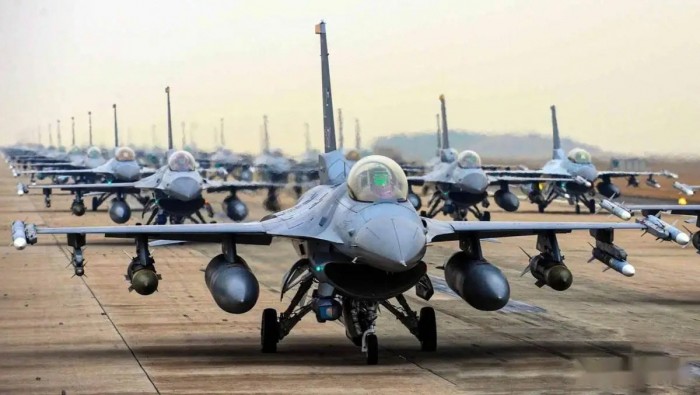 |
| A U.S. F-16V Block 70 fighter jet lands at Zhihang Air Base in Taitung, eastern Taiwan, on the 2nd. / Search engine Baidu |
According to Beijing sources well versed in cross-strait relations on the 3rd, numerous Taiwanese citizens and military enthusiasts reportedly gathered in Taitung overnight to capture this historic moment on the previous day. Around noon, as the sharp roar of the fighter jets was heard, those gathered at Zhonghua Bridge erupted into cheers in unison, shouting, "They're finally here! They've arrived!"
The fighter jets that arrived that day mark the initial delivery among the 66 F-16V Block 70 aircraft Taiwan is purchasing from the U.S. through the so-called Phoenix Soaring Project, with subsequent deliveries expected to follow one after another given the current momentum. If all 66 aircraft are delivered as scheduled, Taiwan's F-16 fleet will expand to over 200 units. From China's perspective, this could present a considerably burdensome situation.
These fighter jets, classified as 4.5-generation, are not the latest generation. However, since they are reportedly capable of remaining in service into the 2060s and beyond, they can undoubtedly be described as invaluable assets for Taiwan to counter Chinese military threats. This significance is clearly reflected in analyses by Taiwanese media, which emphasize that the acquisition not only confirms mutual trust with the U.S. but also opens the path for the air force's operational capabilities to expand from defense to offensive missions.
Regarding this development, an anonymous Taiwanese national in Beijing also spoke highly of the trust between the U.S. and Taiwan, remarking, "With the induction of these fighter jets, Taiwan's first major defense procurement project proposed after the U.S. passed the 2019 National Defense Authorization Act and the Asia Pacific Security Initiative has materialized. It carries immense significance in demonstrating mutual political trust."
The aircraft Taiwan received this time are known to be equipped with the AN/APG-83 AESA radar tailored for modern air combat environments and the embedded L3Harris AN/ALQ-254(V)1 Viper Shield electronic warfare suite. Although limited to the 4.5-generation category, they are evaluated as platforms that substantially improve beyond-visual-range (BVR) engagements and multi-target strike capabilities. Furthermore, utilizing Zhihang Air Base in Taitung as an eastern line of defense holds substantial importance, as it enables responses to the reality of Chinese People's Liberation Army aircraft carriers, naval vessels, and aircraft appearing frequently in waters east of the Taiwan Strait.
Naturally feeling blindsided, China is bound to voice fierce pushback. This is particularly so given that General Secretary and President Xi Jinping requested President Donald Trump during their White House summit in Washington, D.C., on the 24th of last month to refrain from delivering weapons to Taiwan within this year. Assessments by diplomatic sources in Beijing that the summit's effect did not even last 10 days appear far from unfounded.
Hong Soon-do
Most Read
-
1
Alteogen secures European patent for Keytruda SC,..

-
2
Trump shares map on social media labeling Strait o..

-
3
Celltrion seeks rheumatoid arthritis indication ex..

-
4
Kia Sportage outperforms Mazda CX-5 in German auto..

-
5
Chinese e-commerce giants AliExpress, Temu and She..

-
6
U.S. deploys carrier, 10,000 more troops to Middle..

-
7
Trump rejects Iran's offer to open Strait of Hormu..

PEOPLE







-
Address : In-Young Bldg., 34, Uisadang-daero 1-gil, Yeongdeungpo-gu, Seoul
Copyright by ASIATODAY CO., LTD. All rights resereved