



Russian plague research institute researcher dies, entire hospital quarantined
Oct 06, 2026, 10:30 am


 |
| An undated photo released in 2019 by the Irkutsk Anti-Plague Research Institute of Siberia and the Far East in Russia shows staff working in a laboratory. / AP, Yonhap |
Article summary:
1. President Donald Trump stated that he is very closely watching the death of a researcher at a plague prevention research institute in Siberia, Russia, and declared that the U.S. will assist Russia as much as possible.
2. Russian authorities have not confirmed a plague infection, announcing that no work-related microorganisms were detected in samples from the deceased researcher and no emergency involving pathogenic microorganisms was confirmed at the research institute.
3. Local media reported that alongside the quarantine of an inpatient wing at a Shelekhov regional hospital, up to 200 people were placed under medical observation.
4. Pneumonic plague spreads between humans via respiratory droplets and is fatal if left untreated, but recovery rates are high if treatment begins within 24 hours of symptom onset.
U.S. President Donald Trump stated on the 5th (local time) regarding a suspected pathogen leak accident at a plague prevention research institute in Siberia, Russia, "We are watching this very strongly," adding that the U.S. will assist Russia as much as possible. Russian authorities announced that the deceased researcher was diagnosed with "pneumonia of unknown etiology" and that investigations of samples and the facility revealed neither plague infection nor any emergency related to pathogenic microorganisms. The U.S. and the European Union (EU) are tracking the exact circumstances of the incident and whether additional infections have occurred.
 |
| U.S. President Donald Trump and Russian President Vladimir Putin shake hands at Joint Base Elmendorf-Richardson north of Anchorage, Alaska, U.S., on August 15, 2025 (local time). / AFP, Yonhap |
Trump says US watching suspected Russian plague incident very closely and will help as much as possible
Meeting with reporters at the White House on that day, President Trump said, "I just heard about it," adding, "We are going to help them. We are going to help them to the maximum extent that we can." He assessed that "the germs have gotten relatively much stronger than they were before" and described the accident as "a big problem for Russia."
President Trump remarked, "We don't want to see them go through that. It's a rough disease," continuing, "It was a disease we used to be able to control, and somehow those bugs got stronger and smarter. They're like an army." However, President Trump stated that he had not discussed the matter with Russian President Vladimir Putin.
U.S. online news outlet Axios reported that President Trump's remarks appeared to refer to "antimicrobial resistance," noting that pneumonic plague itself can be treated with antibiotics if diagnosed early.
Russian 28-year-old researcher dies after reports of broken test tube, leading to hospital quarantine and observation of up to 200 people
Behind the U.S. move to assess the situation lie the death of a Russian research institute employee and widespread quarantine measures taken by authorities. Russian media reported that Darya Shipilova (28), a researcher at the Irkutsk Anti-Plague Research Institute located in the city of Shelekhov, Irkutsk Oblast—an institution founded in the 1930s to respond to plague and currently employing 95 staff members—broke a test tube containing plague pathogens on the 25th of last month.
Shipilova died after being hospitalized on the 29th of last month with symptoms of severe pneumonia, and the British daily Financial Times (FT) reported that she joined the institute in 2022 and had worked in its plague microbiology department since 2023. Maxim Modin, mayor of Shelekhov—a city with a population of approximately 40,000—announced that the inpatient wing of the local hospital where Shipilova had been admitted was quarantined, halting patient admissions and suspending some medical tests. Meanwhile, the nearby Irkutsk Aluminium Smelter, which employs more than 2,000 workers, instructed its staff to wear face masks.
Local independent media outlet Lyudi Baikala reported that, beyond the Shelekhov hospital, medical institutions and a maternity ward in the city of Irkutsk were also closed. Local news outlets reported that the number of individuals placed under observation reached up to 200.
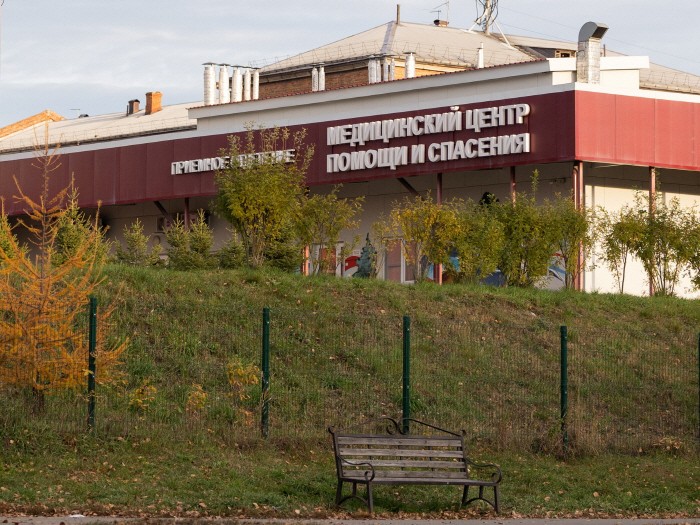 |
| A view of the Medical Assistance and Rescue Centre, an infectious diseases hospital in the town of Shelekhov in the Irkutsk region of Russia, taken on the 5th (local time). / Reuters, Yonhap |
Russian authorities state no pathogenic microorganism incident confirmed at institute while Buryatia head notes possibility of plague
However, the researcher's plague infection and any pathogen leak have not been officially confirmed. Russia's consumer health watchdog, Rospotrebnadzor, announced on the 4th that Shipilova was diagnosed with "pneumonia of unknown etiology" and that "no microorganisms associated with occupational activities were identified in the patient's specimens." It also stated that an inspection into the institute's compliance with biosafety requirements found no emergency related to pathogenic microorganisms.
Rospotrebnadzor stated that no health abnormalities related to infectious diseases were found among individuals who came into contact with Shipilova. Axios reported that no additional deaths or patients linked to this incident have been reported so far.
Kremlin spokesperson Dmitry Peskov told reporters, "Do not listen to rumors about an outbreak of plague," urging reliance on official announcements from Rospotrebnadzor. Former Rospotrebnadzor head Gennady Onishchenko claimed to TASS that it was most likely not plague, and even if it were, it would not spread across Russia.
In contrast, Alexey Tsydenov, head of the Republic of Buryatia, mentioned that Shipilova "likely died of plague," though he stated there is no mass outbreak of plague in the Buryatia region. The Washington Post (WP) pointed out that Tsydenov is the only official to have publicly linked the cause of death to plague. The New York Times (NYT) reported that posts mentioning plague, including notices from authorities in nearby Baikalsk and reports by federal broadcaster REN TV, were sequentially deleted.
US Secretary of State Rubio says incident is not cause for alarm
Despite official announcements from Russian authorities, the U.S. government views the exact circumstances of the incident as unconfirmed and is gathering intelligence on its own. While visiting Iceland, Secretary of State Marco Rubio said Russian authorities had shared some information regarding concerns that an infected lab worker and other Russians could be affected, remarking, "I don't think it's a cause for alarm, but it's a reason to be focused on it and continue to watch it."
The WP reported that the Centers for Disease Control and Prevention (CDC), the State Department, and the Administration for Strategic Preparedness and Response (ASPR) are tracking related information, with senior health and national security officials discussing response measures at the White House on that day. A health official said, "We don't have a lot of information," adding, "This happened in Siberia. Unless someone gets on a plane and flies to the U.S., the risk is low. We should be alert, but there is no need to panic."
The State Department told the FT, "Many details remain unconfirmed," adding, "We urge Russian authorities to share accurate information quickly and publicly."
Ashish Jha, who led the White House COVID-19 response during the Joe Biden administration, wrote on X (formerly Twitter), "We need to understand precisely what happened," and "We should assume that we may not know the full story and build our biodefense capabilities accordingly." Jha told the WP that unconfirmed reports of Russian security agency personnel escorting the vehicle transporting the patient were concerning.
The WP reported that Russia's reluctance to share information and reports involving Russian intelligence officers have complicated efforts to grasp the situation. It added that current and former U.S. officials are also trying to determine whether Russia's unusual level of response is linked to "gain-of-function" research aimed at modifying existing Yersinia pestis samples.
EU tracks situation with ECDC; US urges Russia to share information rapidly and publicly
Following the U.S., the EU is also tracking information from the Russian side and monitoring for potential additional infections. A spokesperson for the European Commission said, "Public health is always our top priority, which is why we are in close contact with experts at the European Centre for Disease Prevention and Control (ECDC)."
The spokesperson stated that having experienced the COVID-19 pandemic, Europe is far better prepared for any epidemic, noting that member countries maintain stockpiles of antibiotics.
Pneumonic plague spreads between humans via respiratory droplets, becoming fatal if untreated but showing high recovery rates with early treatment
Countries are closely watching the situation because pneumonic plague, unlike other forms, can spread from person to person. Plague is caused by the bacterium Yersinia pestis and is categorized into bubonic, pneumonic, and septicemic forms. Bubonic plague, the most common form worldwide, occurs through bites from infected fleas and rarely spreads between humans, but the fatality rate reaches 30% to 100% if left untreated, the WP reported, citing WHO data.
Pneumonic plague is the most virulent form, with symptoms capable of appearing within 24 hours of infection, and it transmits between people through respiratory droplets. The CDC explained that patients rapidly develop pneumonia accompanied by fever, headache, weakness, shortness of breath, chest pain, coughing, and hemoptysis (bloody sputum).
According to the WHO, pneumonic and septicemic forms are fatal if left untreated, but recovery rates are high if treatment is administered within 24 hours of symptom onset. The WP reported that the incubation period for pneumonic plague can be up to 6 to 7 days. Authorities in the Shelekhov area stated that they are testing and observing contacts on a daily basis. A U.S. health official explained that while Russian authorities must report confirmed plague cases to the WHO, reporting may take time due to laboratory and tissue testing required to identify Yersinia pestis.
The last confirmed plague infection in Russia was in 2016, involving a 10-year-old boy in the Altai region bordering Mongolia who touched a marmot; the boy received treatment and survived, the FT reported.
Retired Air Force Major General Paul Friedrichs, who served as director of the White House Office of Pandemic Preparedness and Response Policy, told the WP, "The current narrative that a researcher made a mistake is plausible, and human error is the most common cause of biosafety incidents." However, he added, "Initial reports are often wrong, and historically Russia has not been particularly candid about what actually happened."
Virologist Ian Jones, a professor at the University of Reading in the UK, assessed the Irkutsk case for the NYT, stating, "It looks like a rare laboratory accident, and it is unlikely to spread any further."
Ha Man-ju
Most Read
-
1
Alteogen secures European patent for Keytruda SC,..

-
2
Trump shares map on social media labeling Strait o..

-
3
Celltrion seeks rheumatoid arthritis indication ex..

-
4
Kia Sportage outperforms Mazda CX-5 in German auto..

-
5
Chinese e-commerce giants AliExpress, Temu and She..

-
6
U.S. deploys carrier, 10,000 more troops to Middle..

-
7
Trump rejects Iran's offer to open Strait of Hormu..

PEOPLE







-
Address : In-Young Bldg., 34, Uisadang-daero 1-gil, Yeongdeungpo-gu, Seoul
Copyright by ASIATODAY CO., LTD. All rights resereved