



$200 billion investment in the U.S. begins
Oct 02, 2026, 09:31 am


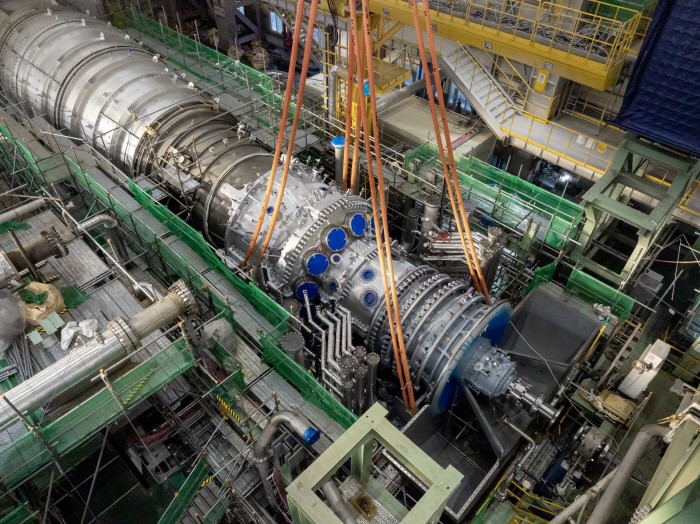 |
| A 380MW gas turbine developed and manufactured by Doosan Enerbility. / Doosan Enerbility |
A 200 billion dollar strategic investment fund in the U.S. is paving the way for domestic South Korean enterprises to expand their U.S. operations. This momentum follows the roll-out of mega-projects spanning a combined-cycle gas turbine plant in Texas, large-scale nuclear power stations, and an Alaska liquefied natural gas (LNG) venture. Doosan Enerbility is eyeing contracts for power generation and nuclear equipment, while POSCO Group and SeAH Steel aim to supply steel plates and pipes. Expectations are also mounting that expanding data center investments in the U.S. could unlock fresh demand across the battery and power equipment industries.
According to government and industry sources on the 1st, South Korea and the U.S. are moving ahead with "Project Star" as their maiden bilateral strategic investment venture—building a gas-fired combined-cycle power plant in Encinal, Texas, dedicated to supplying electricity to data centers. Total project expenditures stand at around 22.3 billion dollars, funded entirely by the South Korean government. Boasting an installed capacity of 6,472 MW, the facility aims to launch phase one operations in 2029 and achieve full commercial run by 2032. Domestically, Doosan Enerbility, which independently develops and manufactures large-scale gas turbines, stands out as a prime candidate to supply power generation equipment. The South Korean side holds the right to recommend domestic vendors, suppliers, and project managers (PMs) for individual projects. The framework agreement also includes provisions prioritizing the participation of South Korean firms in nuclear initiatives, effectively carving out a conduit linking state-backed investment with private corporate order wins.
In the nuclear segment, Doosan Enerbility's footprint could broaden further. Under "Project Power," South Korea and the U.S. will commit up to 120 billion dollars to construct eight large commercial nuclear reactors in the U.S., comprising two South Korean APR1400 units and six Westinghouse AP1000 units. The APR1400 model, historically barred from U.S. construction under prior bilateral nuclear cooperation frameworks, has secured an exception under this strategic investment fund, enabling two units to be built. The nuclear framework also includes clauses prioritizing South Korean corporate participation and granting Seoul the right to nominate involved enterprises.
Doosan Enerbility brings proven fabrication experience as the primary equipment supplier for the APR1400 while having also participated in the AP1000 supply chain. As South Korea and the U.S. pursue advance procurement for long-lead items such as reactor pressure vessels and steam generators, Doosan is well-positioned to pursue equipment orders across both reactor models. Specific supply items and shipment volumes will be finalized through subsequent EPC contracts and equipment procurement tenders.
The Alaska LNG venture opens up greater supply opportunities for steelmakers such as POSCO Group and SeAH Steel. "Project North" involves constructing an approximately 1,300-kilometer gas pipeline from oil and gas fields in northern Alaska down to southern Anchorage and Nikiski to export LNG. The initiative targets an annual output of roughly 20 million tons, kicking off exports in 2032. POSCO International has signed a Heads of Agreement (HOA) for a strategic partnership with project developer Glenfarne, negotiating an off-take agreement for 1 million tons of LNG annually over 20 years alongside the supply of POSCO steel for the 42-inch high-pressure natural gas pipeline.
A POSCO International official stated, "We have reviewed the Alaska LNG project as part of our efforts to diversify global LNG supply chains and secure a stable procurement footprint. We are actively discussing business collaboration with Glenfarne, including long-term LNG purchases, while supplies of project-related steel products are also on the table." SeAH Steel is in line to supply large-diameter steel pipes required for the roughly 1,300-kilometer pipeline, having formally expressed its intent to take part last year should the project materialize. POSCO and Hyundai Steel, which manufacture hot-rolled and heavy steel plates, can also supply raw materials for steel pipes. Project North is currently in the feasibility study phase.
In the battery sector, players anticipate indirect business opportunities in the energy storage system (ESS) market if strategic investments in the U.S. spur power infrastructure expansion focused on artificial intelligence (AI) data centers. The flagship Texas gas-fired power plant, boasting a 6.4 GW generation capacity, aims specifically to supply power to massive data center complexes. Demand for ESS installations is likely to grow alongside this expansion to manage grid fluctuations and underpin a stable power supply.
South Korea's top three battery makers—LG Energy Solution, Samsung SDI, and SK On—are already converting portions of their local U.S. manufacturing lines to ESS production or securing new dedicated capacity. As they broaden their business portfolios toward ESS to offset a slowdown in electric vehicle demand, market observers note that accelerating investments in AI data centers and generation infrastructure in the U.S. could yield additional order wins for domestic manufacturers equipped with local production footprints. Still, no formal decisions have yet been made regarding ESS installations or battery maker participation for the current projects. An official from the electrical equipment industry likewise noted, "The U.S. has always been our core market, so this investment does not instantly create brand-new operations overnight."
Lee Seo-yeon
Most Read
-
1
Alteogen secures European patent for Keytruda SC,..

-
2
Trump shares map on social media labeling Strait o..

-
3
Celltrion seeks rheumatoid arthritis indication ex..

-
4
Kia Sportage outperforms Mazda CX-5 in German auto..

-
5
Chinese e-commerce giants AliExpress, Temu and She..

-
6
U.S. deploys carrier, 10,000 more troops to Middle..

-
7
Trump rejects Iran's offer to open Strait of Hormu..

PEOPLE





-
Address : In-Young Bldg., 34, Uisadang-daero 1-gil, Yeongdeungpo-gu, Seoul
Copyright by ASIATODAY CO., LTD. All rights resereved