



S. Korea to invest 940 billion won by 2030 to analyze disaster risks and assist evacuation using AI
Sep 28, 2026, 09:44 am


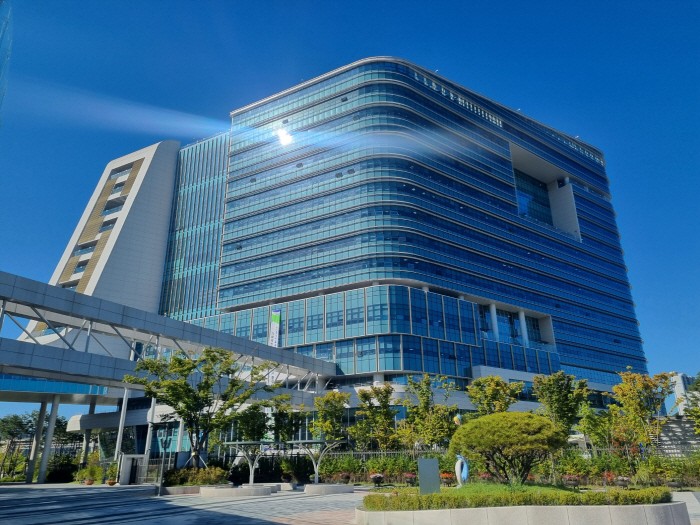 |
| A view of the Ministry of the Interior and Safety. / Kim Nam-hyung, Reporter |
A system is being built in which artificial intelligence analyzes weather data and historical damage cases to recommend evacuation routes and road closures during heavy downpours or typhoons. By 2030, the government will invest approximately 940 billion won across 50 disaster and safety projects, shifting from response-oriented disaster management to an AI-driven proactive preparedness framework.
The Ministry of the Interior and Safety announced on the 27th that it established the "Pan-Government Disaster and Safety AI Transformation (AX) Master Plan." Formulated in line with recommendations from the National AI Strategic Committee earlier this year, the plan aims to apply AI across all facets of disaster and safety operations.
First, an "AI-based Heavy Rain and Typhoon Response Service" will be piloted in Busan, Yeongcheon in North Gyeongsang Province, and Inje County in Gangwon Province. In these regions selected through an open contest this year, AI will analyze real-time meteorological information, risk factors such as underground spaces and low-lying areas, and historical damage data to suggest optimal evacuation and closure measures. The ministry held a project kickoff meeting on the 8th and plans to verify the efficacy of the decision-support service in collaboration with local governments through early next year.
The data infrastructure required for AI disaster analysis will also be upgraded. The ministry and the National Information Society Agency (NIA) will convert unstructured documents produced daily—such as daily safety status reports and situational broadcast alerts—into structured data that AI can process. The government will also build an infrastructure to enable integrated analysis of satellite imagery alongside data on natural disaster risk improvement areas and landslide-prone zones.
Information fragmented across different agencies will be linked around specific disaster events. When torrential rain occurs, AI will comprehensively synthesize inundation zones and damage reports from the interior ministry, weather data from the Korea Meteorological Administration, river water levels from the climate ministry, and 119 emergency dispatch records from the National Fire Agency to assess danger levels.
Data demand surveys and distribution procedures will also be detailed to help public institutions and private enterprises develop services using disaster and safety data. Taking into account that public websites often require multiple navigation steps or feature complex data presentation layouts that risk erroneous data scraping by AI, the government plans to foster an AI-accessible environment during new website builds or reorganizations.
Minister of the Interior and Safety Yoon Ho-jung stated, "We will rapidly convert and converge accumulated disaster management data into formats AI can comprehend, working together to complete an intelligent disaster and safety AX that delivers practical support to frontline officials."
Kim Nam-hyung
Most Read
-
1
Trump demands rates fall below 1% as Fed hikes for..

-
2
Celltrion seeks rheumatoid arthritis indication ex..

-
3
Chinese e-commerce giants AliExpress, Temu and She..

-
4
Trump warns countries not helping U.S. must pay re..

-
5
China expels No. 2 military official Zhang Youxia..

-
6
Houthi rebels release video claiming downing of Sa..

-
7
Trump rejects Iran's offer to open Strait of Hormu..

PEOPLE







-
Address : In-Young Bldg., 34, Uisadang-daero 1-gil, Yeongdeungpo-gu, Seoul
Copyright by ASIATODAY CO., LTD. All rights resereved