



U.S.-China summit two days away, progress expected beyond Beijing talks
Sep 21, 2026, 04:12 pm


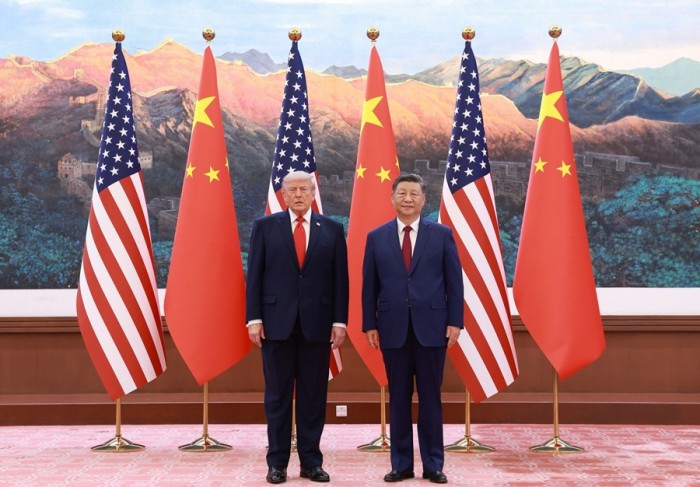 |
| U.S. President Donald Trump and Chinese President Xi Jinping meet at the Great Hall of the People in Beijing on May 14. The two leaders are scheduled to meet again at the White House in Washington on Sept. 24 to discuss bilateral and global issues. / Xinhua |
The U.S.-China summit scheduled for Sept. 24 at the White House in Washington, now just two days away, is expected to produce more substantial results than previous talks. The two sides could even sign a preliminary agreement containing commitments that go beyond a fact sheet, suggesting progress on key issues compared with their May 14 meeting in Beijing.
According to Beijing diplomatic sources familiar with U.S.-China relations on Sept. 21, Chinese President Xi Jinping has recently been the subject of speculation about health problems that could make travel to the U.S. difficult for his meeting with President Donald Trump. Still, given developments so far, the summit is widely expected in Beijing diplomatic circles to proceed as planned, with relatively positive expectations for the outcome.
The May meeting in Beijing also took place in a generally positive atmosphere, with nearly all major bilateral issues discussed. However, most of what was agreed at the time has yet to be properly implemented. That is why some Beijing diplomatic sources have described the previous summit critically as little more than a “feast of words.”
This time, however, there appears to be a considerably greater possibility of concrete progress, particularly on issues where agreements could actually be implemented.
First, the tariff truce is expected to be formally extended for at least six months and possibly up to a year. If China’s position gains traction, an extension lasting through the remainder of Trump’s term cannot be ruled out.
China’s restrictions on rare-earth exports to the U.S., which Washington is eager to see eased, are also likely to be relaxed in some form. Since the two leaders agreed at their Beijing meeting on the need to ease the restrictions, a more meaningful decision could emerge this time. Such a move would also allow Beijing to respond to what it sees as U.S. goodwill in extending the tariff truce.
On artificial intelligence safety regulations, an issue driven in part by U.S. concerns over Chinese companies acquiring American technology, expectations are that any agreement may remain at the level of broad principles. Still, there is speculation that the two sides could produce an unexpected outcome beneficial to both countries.
Fueling such expectations are widespread rumors that prominent business leaders may attend the leaders’ meeting, including Amazon Executive Chair Jeff Bezos, Alphabet CEO Sundar Pichai, OpenAI CEO Sam Altman and Nvidia CEO Jensen Huang from the U.S., as well as BYD Chairman Wang Chuanfu, CATL Chairman Zeng Yuqun and Xiaomi Chairman Lei Jun from China.
The two leaders are also expected to discuss North Korea, Taiwan, Iran and the war in Ukraine in an effort to produce positive outcomes. In particular, given growing discussion of a possible U.S.-North Korea summit, Trump and Xi are likely to address the issue actively.
There are several reasons why expectations for the White House meeting are more positive than they were ahead of the Beijing summit. One is the domestic political situation facing both leaders.
Trump is seeking tangible results from the summit as he looks to restore political momentum amid the deepening Iran war and ahead of the November midterm elections.
Xi, meanwhile, also has incentives to produce results as he seeks to dispel speculation over his health and ensure a smooth fifth plenary session of the 20th Communist Party of China Central Committee in October. That need is particularly acute given that China’s economic performance this year has fallen considerably short of its original targets.
Against this backdrop, the relatively upbeat tone of Chinese media coverage of the summit two days before the meeting is seen as significant.
Hong Soon-do
Most Read
-
1
Celltrion’s Omlyclo gains ground in major European..

-
2
Trump demands rates fall below 1% as Fed hikes for..

-
3
Trump makes $1 trillion bet ahead of midterm elect..

-
4
Iran resumes ballistic missile production, assembl..

-
5
Samsung Electronics, Mistral AI to jointly develop..

-
6
Trump warns countries not helping U.S. must pay re..

-
7
Seoul faces triple squeeze over troop deployment t..

PEOPLE







-
Address : In-Young Bldg., 34, Uisadang-daero 1-gil, Yeongdeungpo-gu, Seoul
Copyright by ASIATODAY CO., LTD. All rights resereved