



Indonesia's finance minister abruptly sacked after one year amid tumbling rupiah and fiscal uncertainty
Sep 15, 2026, 10:42 am


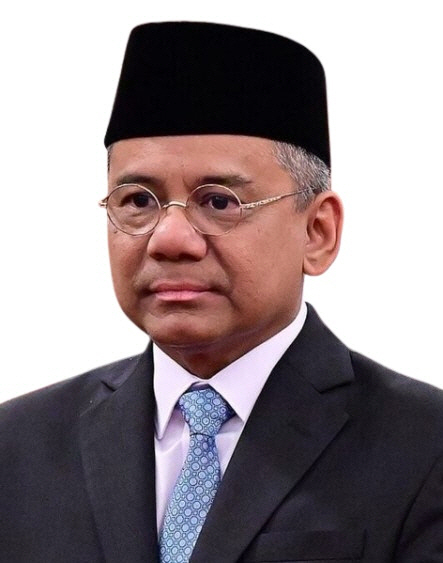 |
| Indonesia's new Finance Minister Suahasil Nazara, appointed as successor to former Minister Purbaya. / Wikimedia Commons |
Indonesian President Prabowo Subianto has abruptly dismissed Finance Minister Purbaya Yudhi Sadewa, whose aggressive stimulus measures triggered financial turmoil and a sharp depreciation of the currency. To restore fiscal discipline and market confidence, Prabowo promoted career technocrat and Deputy Finance Minister Suahasil Nazara as his successor.
According to the Indonesian Presidential Office on the 14th local time, newly appointed Minister Suahasil stated immediately following his inauguration ceremony that "running a credible state budget is the top priority," pledging to strictly maintain the fiscal deficit within the statutory ceiling of 3% of gross domestic product (GDP). He went on to emphasize, "I will ensure that the state budget supports the government's priority programs without disruption, while continuing trustworthy public communication with the market." Having served as deputy finance minister since 2019, Suahasil is widely regarded as a seasoned economic bureaucrat well versed in macroeconomic policy and bureaucratic governance.
The new minister's immediate emphasis on "trust" and "fiscal discipline" is seen as a commitment to clean up the policy missteps of his predecessor. The dismissed former minister, Purbaya, was appointed in September last year to succeed Sri Mulyani Indrawati, who had long anchored Indonesia's fiscal soundness and external credibility. At the time, Purbaya was an unconventional pick made as President Prabowo pushed aggressively for high-paced growth targeting the 8% range over fiscal stability.
During Purbaya's tenure, however, Southeast Asia's largest economy suffered from severe macroeconomic volatility. His aggressive fiscal expansion and rapid injection of liquidity into the banking sector created sharp policy friction with Bank Indonesia (BI), which prioritized price stability, ultimately leading to a tumbling rupiah and a widening fiscal deficit.
Market anxieties subsequently spilled over into deteriorating sovereign credit rating outlooks. Earlier this year, two of the top three global credit rating agencies downgraded Indonesia's sovereign credit rating outlook from positive to negative, sounding the alarm on the economy. In particular, just prior to his dismissal, Purbaya faced intense criticism for decisively eroding investor and market trust after floating a plan to transfer 120 trillion rupiah (approximately 9.1 trillion won) in earnings from the newly established sovereign wealth fund Danantara to the state coffers to plug the current fiscal deficit. Ultimately, Purbaya was forced out in disgrace just one year after taking office, bearing responsibility for his policy failures.
Jeong Ri-na
Most Read
-
1
U.S. Treasury Secretary Bessent publicly warns ove..

-
2
Celltrion’s Omlyclo gains ground in major European..

-
3
Hyundai Motor Group breaks ground on integrated st..

-
4
Russia faces warning signs over prolonged war econ..

-
5
Anti-Western solidarity strengthens amid Trump's e..

-
6
U.S. strikes 3 Iranian oil tankers, Iran vows reta..

-
7
S. Korea seeks redemption from World Cup setback w..

PEOPLE







-
Address : In-Young Bldg., 34, Uisadang-daero 1-gil, Yeongdeungpo-gu, Seoul
Copyright by ASIATODAY CO., LTD. All rights resereved