



China hits back at U.S.-led calls to slow AI development and curb Beijing
Sep 15, 2026, 10:37 am


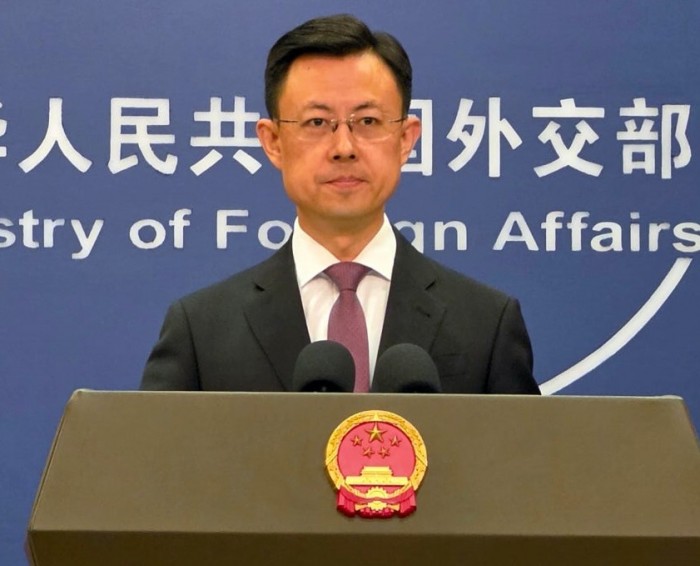 |
| Guo Jiakun, spokesperson for China's Ministry of Foreign Affairs. During a regular press briefing on the 14th, Guo strongly pushed back against U.S.-led calls to slow AI development and curb Beijing. / Ministry of Foreign Affairs of the People's Republic of China website |
China has pushed back against mounting voices in the U.S. warning against its artificial intelligence (AI) advancements, stating that "fear-mongering and vicious competition will only hinder global AI governance and serve the interests of neither side." The reaction appears driven by concerns that U.S. vigilance against China could materialize into concrete actions, even as Beijing still has a long road ahead in its tech ambitions.
Guo Jiakun, spokesperson for China's Ministry of Foreign Affairs, made the remarks during a regular press briefing on the 14th in response to a related question, emphasizing that "AI development is closely linked to the well-being of all humanity." He added, "All countries should jointly pursue open and inclusive development so that AI can be oriented toward the good and benefit everyone."
Earlier, Dario Amodei, CEO of Anthropic, warned against the expansion of China's AI capabilities, cautioning that U.S. exports of advanced AI chips to China could pose significant national security risks. He has also actively argued recently that the U.S. must tighten export controls on advanced AI chips to China to mitigate these concerns.
He is not alone. Leading figures across the AI industry, including OpenAI CEO Sam Altman and Elon Musk, have also raised the need to pace development, citing the emerging risks that stem from the technology's rapid advancement. Their calls, too, appear rooted in an underlying vigilance aimed at containing China.
Hong Soon-do
Most Read
-
1
U.S. Treasury Secretary Bessent publicly warns ove..

-
2
Celltrion’s Omlyclo gains ground in major European..

-
3
Hyundai Motor Group breaks ground on integrated st..

-
4
Russia faces warning signs over prolonged war econ..

-
5
Anti-Western solidarity strengthens amid Trump's e..

-
6
U.S. strikes 3 Iranian oil tankers, Iran vows reta..

-
7
S. Korea seeks redemption from World Cup setback w..

PEOPLE






-
Address : In-Young Bldg., 34, Uisadang-daero 1-gil, Yeongdeungpo-gu, Seoul
Copyright by ASIATODAY CO., LTD. All rights resereved