



Number of young basic livelihood recipients in 20s and 30s without illness or disability tops 20,000
Sep 15, 2026, 09:44 am


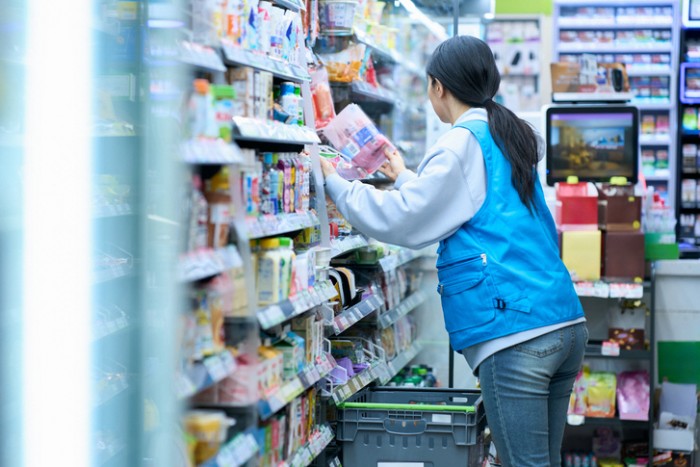 |
| Image unrelated to the content of the article. / Getty Images Bank |
Kim Hee-young (pseudonym, 22), who works at a youth self-sufficiency enterprise in Gyeonggi Province, described the self-reliance program environment as "a structure that easily breeds complacency." She confessed, "One reason people cannot break away from recipient status in the first place is that the work is easy while money comes in steadily," adding, "Because the payment is substantial relative to the work intensity, people often grow idle and simply adjust to life on welfare benefits."
According to the Ministry of Health and Welfare and related agencies on the 14th, the number of able-bodied basic livelihood recipients in their 20s and 30s subject to conditional aid stood at roughly 20,000 as of late last year. The total reached 19,192, comprising 10,040 in their 20s and 9,152 in their 30s.
Recipients of the National Basic Living Security Act are divided into institutional recipients and regular recipients. Among regular recipients, those deemed able to work are categorized as "conditional recipients," who receive livelihood benefits only if they participate in self-sufficiency programs or related projects. A significant portion of these young people have no illness or disability, but remain conditional recipients by inheriting the recipient status from their families of origin to receive university tuition and other support during their school years. Kim is among such cases.
Structural limitations within the government's self-reliance program are also cited as a key factor hindering participants from leaving welfare rolls. Critics point out that the current self-reliance program allows participation for up to 15 years through three five-year terms, undermining participants' drive for independence. Because the work intensity is relatively low and income is steady compared to the open labor market, a considerable number of participants settle in, treating it like a permanent job. As a result, not only the elderly but even youths in their 30s are increasingly staying inside the self-reliance system for extended periods rather than stepping out into a fiercely competitive society.
A practical dilemma where young people struggle to amass seed money for independence is also pointed to as a contributing factor. Kim explained, "To escape welfare recipient status and become independent, you need seed money, but if you take on additional work and official income is reported, your eligibility is immediately revoked and you are kicked off the program." She added, "In the past, people could save up funds for independence by working off the books at restaurants or similar venues without statutory four-major social insurance, but these days even self-employed business owners avoid cash payments due to tax scrutiny, making that next to impossible," noting that "with practical ways to build savings blocked, people inevitably end up settling into recipient status."
According to the ministry, individuals with relatively high capabilities who score 85 points or above on the self-reliance capability assessment are linked to the Ministry of Employment and Labor's National Employment Support Program, while those scoring below 85 points take part in local self-sufficiency programs. However, the self-reliance success rate—meaning departure from welfare rolls—among young participants in their 20s and 30s (2,909 in their 20s and 3,779 in their 30s as of late last year) was a mere 10.8% for those in their 20s and 15.1% for those in their 30s.
A ministry official explained, "Because a high proportion of high-capability youths are transferred to the employment ministry's program, the success rate for the self-sufficiency program appears low." Still, the overall self-reliance success rate across all age groups dropped from 37.3% in 2016 to just 18.02% last year.
The problem is that the recipient population is expanding rapidly while the system's self-reliance function weakens. Some observers argue that the number of recipients surged as individuals who experienced welfare benefits firsthand through measures like livelihood recovery consumption coupons encouraged people around them to apply. Consequently, an increasing number of regions are seeing waiting periods for self-sufficiency program enrollment stretch from six months to as long as a year, drawing criticism over a persistent loophole where livelihood benefits continue to be paid during the waiting period even without working.
In fact, excluding institutional recipients, the number of regular recipients jumped by more than 1 million from 1,539,539 in 2016 to 2,573,778 in 2024. Among them, young recipients in their 20s and 30s surged by 98,063 (63%), rising from 155,089 to 253,152 over the same period.
An official from a local government in Seoul noted, "There was an overwhelming surge in recipient applications aimed at receiving consumption coupons."
Lee Jeong-yeon
Most Read
-
1
U.S. Treasury Secretary Bessent publicly warns ove..

-
2
Celltrion’s Omlyclo gains ground in major European..

-
3
Hyundai Motor Group breaks ground on integrated st..

-
4
Russia faces warning signs over prolonged war econ..

-
5
Anti-Western solidarity strengthens amid Trump's e..

-
6
U.S. strikes 3 Iranian oil tankers, Iran vows reta..

-
7
S. Korea seeks redemption from World Cup setback w..

PEOPLE






-
Address : In-Young Bldg., 34, Uisadang-daero 1-gil, Yeongdeungpo-gu, Seoul
Copyright by ASIATODAY CO., LTD. All rights resereved