



Courts tighten privacy protections in civil and family litigation including divorce cases
Sep 15, 2026, 09:41 am


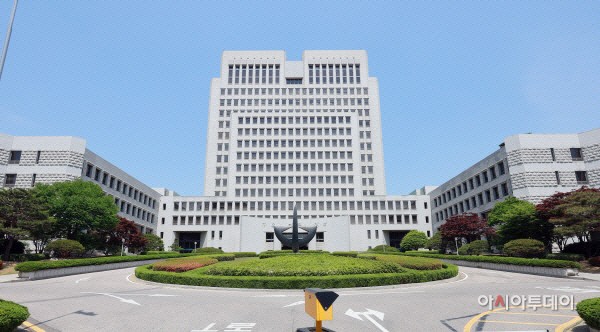 |
| The Supreme Court. / Reporter Park Sung-il |
The Supreme Court will strengthen personal information protection measures to prevent litigants' addresses and other personal data from being disclosed to opposing parties and threatening their safety during civil and family litigation.
The Supreme Court announced on the 14th that it plans to review and swiftly implement measures to expand notices regarding personal information protection across the electronic litigation portal and complaint templates, making it easier for litigants to apply for such safeguards. The move comes in response to growing calls to improve access to protective mechanisms, following a series of incidents where personal data exposed during lawsuits was exploited for crimes, including a recent case where a man tracked down his wife at the address listed on a divorce complaint and murdered her.
Under current law, personal information protection measures regarding addresses and other details can be implemented upon the request of parties in civil and family cases. In principle, addresses are stated to identify parties and determine jurisdiction, and are served on the opposing party. However, under the amended Civil Procedure Act (enacted July 11, 2023), privacy protection measures took effect in civil and family litigation on July 12 last year, allowing personal details to be withheld from disclosure when a need for protection exists.
Furthermore, when there is prima facie evidence showing concern of harm to the life or physical safety of a litigation participant, the court may withhold personal data—including addresses, resident registration numbers, and phone numbers—from being disclosed to third parties, including the opposing party.
Nevertheless, critics pointed out that because the system requires litigants to apply for protective measures directly, those unaware of the mechanism struggle to receive protection. In Gwangju, Gyeonggi Province, a woman who had repeatedly reported domestic violence was recently murdered after her address was exposed to her husband during divorce proceedings.
To ensure that litigants learn about privacy safeguards without having to search separately, the Supreme Court decided to incorporate notices throughout the litigation process.
First, it will push to add explanatory text regarding privacy protection measures directly beneath the address input field when filing complaints through the electronic litigation portal.
The court is also pursuing plans to provide a direct link icon on the submission completion screen, guiding users immediately to the privacy protection application process, while reinforcing informational notices through external bodies such as the Korean Bar Association, the Korea Legal Aid Corporation, and the Korea Legal Aid Center for Family Relations.
A Supreme Court official stated, "We will do everything possible to protect litigants' personal data to ensure that legal proceedings intended to provide remedy for rights do not instead end up threatening their safety."
Cheon Hyeon-bin
Most Read
-
1
U.S. Treasury Secretary Bessent publicly warns ove..

-
2
Celltrion’s Omlyclo gains ground in major European..

-
3
Hyundai Motor Group breaks ground on integrated st..

-
4
Russia faces warning signs over prolonged war econ..

-
5
Anti-Western solidarity strengthens amid Trump's e..

-
6
U.S. strikes 3 Iranian oil tankers, Iran vows reta..

-
7
S. Korea seeks redemption from World Cup setback w..

PEOPLE







-
Address : In-Young Bldg., 34, Uisadang-daero 1-gil, Yeongdeungpo-gu, Seoul
Copyright by ASIATODAY CO., LTD. All rights resereved