



Calls to scrap semi-linked proportional representation resurface amid 'Yong Hye-in controversy'
Sep 11, 2026, 09:23 am


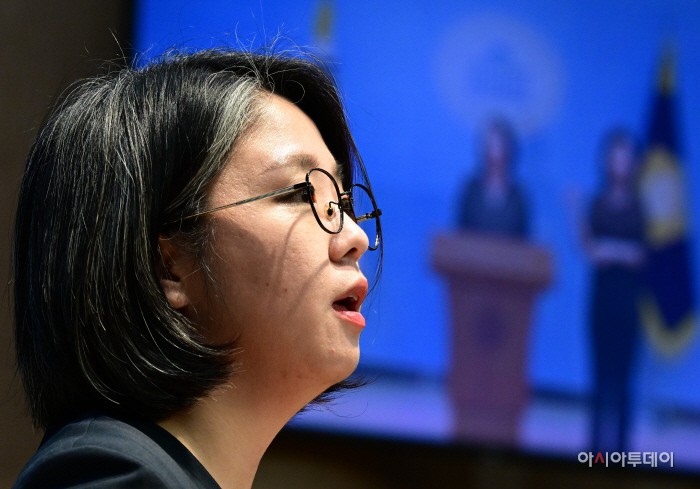 |
| Gender Equality and Family Minister nominee Yong Hye-in holds a press conference at the National Assembly Communication Building on Sept. 10 to address allegations against her, including controversy over concurrently holding a parliamentary seat. / Lee Byung-hwa |
Calls to abolish South Korea’s semi-linked proportional representation system are resurfacing amid controversy over Gender Equality and Family Minister nominee Yong Hye-in’s election to the National Assembly twice through proportional representation and her plan to concurrently serve as a lawmaker and Cabinet minister.
The system was introduced to make it easier for minor parties to enter the National Assembly and improve the proportionality of votes. Critics, however, say its original purpose has been undermined by the two major parties’ use of satellite parties. Against this backdrop, the People Power Party has formally proposed talks with the Democratic Party on abolishing the system.
People Power Party floor leader Jeong Jeom-sik on Sept. 10 formally proposed discussions with the Democratic Party on electoral reform that would completely abolish the semi-linked proportional representation system. Yong’s case has brought the method of electing proportional representatives and the issue of satellite parties back to the center of political debate.
“How was nominee Yong able to become a proportional representative twice, and how was a ‘parasitic party’ like the Basic Income Party able to live off taxpayers’ money?” Jeong said at a party leadership meeting. “The root cause of all this is the fundamentally flawed semi-linked proportional representation system.”
He added that “underqualified left-wing parties gather around the Democratic Party, their ‘host party,’ whenever elections approach, enter the National Assembly and then act as the Democratic Party’s vanguard,” arguing that “this low-quality system must now be abolished.”
Under the semi-linked proportional representation system, proportional representation seats are allocated by linking a party’s share of the proportional vote with the number of constituency seats it wins. Parties that win relatively few constituency seats receive additional proportional representation seats, while parties that secure many constituency seats receive relatively fewer.
Critics, however, say the system’s original purpose was undermined when the two major parties created separate proportional representation parties to circumvent it. Major parties were able to field their own candidates in constituency races while using separate satellite parties to win proportional representation seats. A system intended to help minor parties gain representation was therefore also used by the two major parties in their competition for seats.
In the 2024 general election, the Democratic Party backed the Democratic Alliance of Korea as its proportional representation satellite party, while the People Power Party fielded the People Future Party. Critics say the satellite-party problem could recur in every election as long as the semi-linked system remains in place.
With Jeong formally proposing talks with the Democratic Party, attention is now focused on whether the ruling and opposition parties will begin negotiations on electoral reform. However, because the method of allocating proportional representation seats directly affects each party’s number of seats, difficult negotiations are expected over both the details and timing of any changes.
Kim Dong-wook
Most Read
-
1
Celltrion’s Omlyclo gains ground in major European..

-
2
Trump demands rates fall below 1% as Fed hikes for..

-
3
Hyundai Motor Group breaks ground on integrated st..

-
4
U.S. strikes 3 Iranian oil tankers, Iran vows reta..

-
5
Trump makes $1 trillion bet ahead of midterm elect..

-
6
Iran resumes ballistic missile production, assembl..

-
7
Samsung Electronics, Mistral AI to jointly develop..

PEOPLE






-
Address : In-Young Bldg., 34, Uisadang-daero 1-gil, Yeongdeungpo-gu, Seoul
Copyright by ASIATODAY CO., LTD. All rights resereved