



Ministry of Food and Drug Safety expands narcotics surveillance network
Jul 28, 2026, 09:34 am


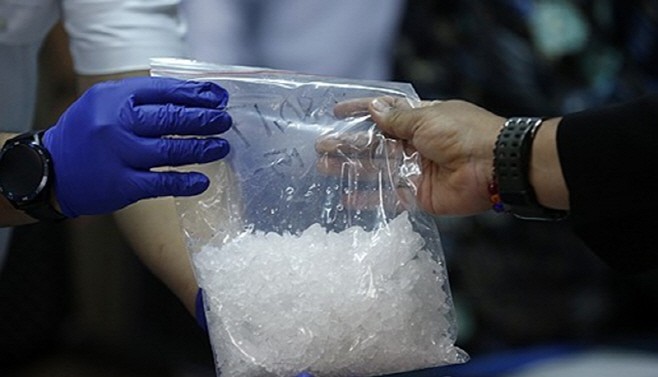 |
| Crystalline methamphetamine (meth) / EPA, Yonhap |
The Ministry of Food and Drug Safety is tightening its grip on narcotics management by expanding its oversight from medical institutions to sewage monitoring and overseas direct purchases. However, experts point out that because these efforts focus primarily on detecting suspicious cases after prescription or administration occurs, significant limitations remain in preventing abuse before it happens.
According to the Ministry's second-half business report released on July 27, the agency plans to establish the AI-based Narcotics Misuse Integrated Surveillance System, known as K-NASS, by the end of the year to analyze more than one billion drug handling records. Through this system, the timeframe for selecting inspection targets will be drastically reduced from three weeks to within three days. In addition, a dedicated medical narcotics inspection unit launched on July 1 to conduct focused monitoring on anesthetics like propofol and ketamine, as well as appetite suppressants.
Despite these efforts by the Ministry, medical narcotics prescriptions continue to rise year after year, exposing the limitations of relying on post-detection methods. Last year, the number of patients prescribed medical narcotics reached 20.2 million, an increase of 0.9% compared to 2024. The total volume of prescribed units rose to 1.95724 billion, up 1.6% from the previous year and 7.1% compared to 2021.
On the other hand, recent unannounced inspections of 30 medical facilities handling propofol this year revealed that 17 had violated the Narcotics Control Act. A subsequent inspection targeting 27 facilities resulted in 11 clinics and 13 patients suspected of doctor shopping being referred for investigation. In April, 3,923 physicians who overprescribed seven types of medical narcotics beyond recommended standards were identified and placed under tracking observation. Wastewater epidemiology surveys last year also detected 31 types of illegal narcotics, including methamphetamine, alongside 25 types of medical narcotics like zolpidem.
To address these issues, the Ministry plans to establish K-NASS and select suspicious targets based on data reported by medical institutions to the Integrated Narcotics Management System. However, K-NASS also allows narcotics and propofol to be reported within seven days after handling, while psychotropic drugs can be reported as late as the tenth day of the following month, creating a time lag between actual prescription or administration and data reflection.
In addition, checking patient medication histories remains mostly optional rather than mandatory for most drugs, except for fentanyl tablets and patches. Doctors face no legal penalties if they skip checking patient history when prescribing substances such as zolpidem, methylphenidate, or appetite suppressants. Even when historical data indicates potential misuse, the final decision to prescribe ultimately rests entirely on the medical staff.
In response, the Ministry of Food and Drug Safety stated that it checks for duplicate prescriptions at the prescription stage through the Drug Utilization Review system, while providing accumulated medication history to doctors to support their clinical decisions. A Ministry official remarked, "It is difficult to view making medication history checks mandatory as an immediate solution to the misuse problem," adding, "If DUR verification becomes mandatory, it will filter out a significant number of duplicate prescriptions and assist medical professionals in making decisions on the ground."
Lee Se-mi
Most Read
-
1
U.S. Treasury Secretary Bessent publicly warns ove..

-
2
Celltrion’s Omlyclo gains ground in major European..

-
3
Hyundai Motor Group breaks ground on integrated st..

-
4
Russia faces warning signs over prolonged war econ..

-
5
U.S. strikes 3 Iranian oil tankers, Iran vows reta..

-
6
S. Korea seeks redemption from World Cup setback w..

-
7
Trump makes $1 trillion bet ahead of midterm elect..

PEOPLE







-
Address : In-Young Bldg., 34, Uisadang-daero 1-gil, Yeongdeungpo-gu, Seoul
Copyright by ASIATODAY CO., LTD. All rights resereved