



Children's meal cards abused to buy alcohol and tobacco
Jun 24, 2026, 10:46 am


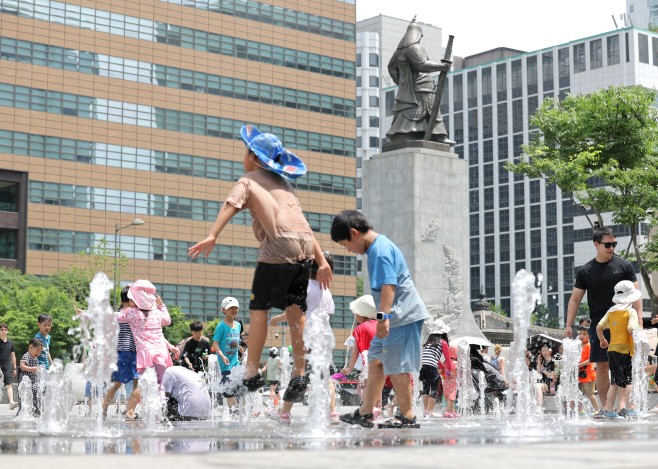 |
| The attached photo is for illustrative purposes only and is not directly related to the article. / Courtesy of Yonhap |
Undernourished children’s meal cards, issued to support meals for vulnerable youth, were found to have been misappropriated for over 1.2 billion won in spending at non-designated businesses such as cafes, bars, and entertainment facilities. In certain regions, parents weaponized their children's cards for fraudulent transactions, and some cards continued to be billed even after the child beneficiaries were placed in welfare shelters or passed away.
According to the "Result of the Joint Government Inspection on the Operation of Undernourished Children's Meal Cards" released on June 24 by the Ministry of Health and Welfare and the Government Joint Anti-Corruption Inspection Team under the Office for Government Policy Coordination, an analysis of meal card usage across 182 local governments from January to August last year revealed that inappropriate transactions totaled 1,247,620,000 won.
The undernourished children's meal card system is a welfare initiative designed to prevent food insecurity among vulnerable minors under the age of 18, including recipients of basic livelihood security and single-parent households. As of last year, the program targeted 273,000 children, with approximately 150,000 utilizing the cards. Total card expenditures reached 209.6 billion won from January to August last year.
Cafes accounted for the overwhelming majority of inappropriate usage. Spending at cafes reached 1,091,180,000 won, making up the bulk of the non-compliant transactions. The government classifies cafes as businesses unrelated to substantive meal purposes. This was followed by 144.08 million won spent at lifestyle facilities such as private academies, hospitals, and hair salons; 7.28 million won at bars; and 5.07 million won at entertainment venues like internet cafes, comic book rooms, and kids' cafes.
Instances of purchasing alcohol and tobacco were also uncovered. A sample audit conducted across 17 major cities and provinces—selecting one municipality from each jurisdiction—revealed that cardholders bought alcohol or tobacco using meal cards in 13 regions, with the exceptions of Seoul, Incheon, Busan, and Gwangju. Unlike convenience stores, independent supermarkets lack automated item-restriction software, allowing individuals to purchase alcohol and cigarettes alongside raw groceries.
Fraudulent billing by parents was also widespread. There were 55 documented cases, totaling approximately 170 million won, where parents processed fake transactions using their children's cards at restaurants they owned. Other investigations revealed that some parents left cards with supermarket owners to be swiped up to the daily limit, taking home household goods such as detergents and toilet paper instead of food.
Glaring loopholes in administrative oversight were also exposed. Several local governments managed card systems through separate external databases rather than registering eligible children on "Haengbok e-Eum," the central social security information system. Consequently, 14 cases were detected where parents continued to burn through card balances—amounting to approximately 5.5 million won—after their children were separated and placed in protective facilities due to abuse. In one egregious case, parents continued using a card for 610,000 won after the child had passed away.
Conversely, a significant amount of subsidized meal funds went entirely unused and expired. In 2024, unspent meal card funds that reverted to the state treasury reached 17.1 billion won, representing 7.8% of the total 220.7 billion won loaded onto the cards. Furthermore, 4,811 cards used less than 10% of their total balance. The government cited the social stigma attached to using the cards and a lack of clear guidance on how to use them as primary factors behind the left-over funds.
Based on the inspection results, the government plans to revamp the system. It will mandate item-restriction software—which automatically blocks illicit items like alcohol and tobacco—at standard supermarkets, expanding the system from convenience stores. The government will also bar establishments unfit for meal purposes, such as taverns, from joining the affiliate network. Businesses that condone fraudulent use by parents will be stripped of their affiliate status, and regular checks will be institutionalized for dormant cards or cases suspected of fraud.
Additionally, the government intends to upgrade the Haengbok e-Eum system by the end of the year to automatically alert relevant officials when a beneficiary’s eligibility status changes due to shelter placement or death. Digital notifications regarding unused balances will also be strengthened to prevent funds from being left dormant.
"We will continuously expand the network of affiliated stores equipped to systematically block unauthorized items, ensuring the program returns to its original purpose of nourishing children," said Hyun Soo-yeop, First Vice Minister of Health and Welfare. "We will significantly enhance tailored user guidance so that vital funds do not go to waste simply because children are unaware of participating restaurants or their remaining balances."
Hyun added, "By restructuring the Haengbok e-Eum network, we will ensure that shifts in beneficiary eligibility are monitored in real-time. We will work hand-in-hand with local governments to enforce rigorous, effective oversight on the ground."
Lee Sae-mi
Most Read
-
1
Trump demands rates fall below 1% as Fed hikes for..

-
2
Celltrion seeks rheumatoid arthritis indication ex..

-
3
Chinese e-commerce giants AliExpress, Temu and She..

-
4
Trump warns countries not helping U.S. must pay re..

-
5
Turkish Airlines named main club partner of Liverp..

-
6
China expels No. 2 military official Zhang Youxia..

-
7
Houthi rebels release video claiming downing of Sa..

PEOPLE






-
Address : In-Young Bldg., 34, Uisadang-daero 1-gil, Yeongdeungpo-gu, Seoul
Copyright by ASIATODAY CO., LTD. All rights resereved