



China's May youth unemployment drops to 11-month low of 15.6%
Jun 23, 2026, 10:39 am


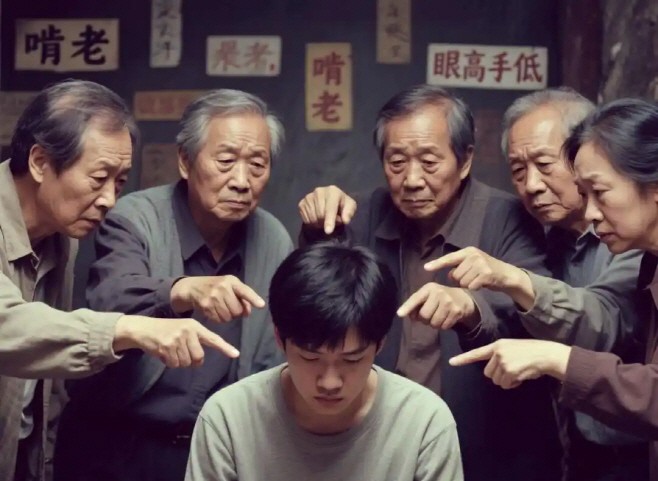 |
| A media illustration satirizing the high unemployment rate among Chinese youth, depicting older generations criticizing them. / Courtesy of The Beijing News |
China's youth unemployment rate for May dropped to its lowest level in 11 months. While this can be viewed as a reasonably meaningful improvement, the broader employment landscape remains largely unsatisfactory. According to data released by China's National Bureau of Statistics on June 22, the urban unemployment rate for youth aged 16 to 24, excluding students, stood at 15.6% last month. This marks a 0.7 percentage point decrease from 16.3% in April and represents the lowest level in 11 months since hitting 14.5% in June of last year.
During the same period, the unemployment rate for the 25–29 age bracket edged down to 7.2%, a 0.2 percentage point drop from April's 7.4%. For those aged 30 to 59, the jobless rate also softened slightly to 4.1%, down 0.1 percentage points from the previous month's 4.2%.
This follows earlier data released on June 16, which showed China’s overall surveyed urban unemployment rate coming in at 5.1%, indicating a modest overall improvement compared to 5.2% in April.
China's youth unemployment rate previously soared to a record high of 21.3% in June 2023. In response, Beijing abruptly suspended the publication of the data. The authorities resumed releases in December of that year under a revised methodology that excludes full-time students and breaks down unemployment metrics by specific age brackets.
Despite the recent dip, youth unemployment has remained stubbornly high, fluctuating stubbornly between 16% and 17% due to a cooling economy and a growing influx of college graduates.
According to China's Ministry of Education, a record 12.7 million students are projected to graduate from universities and colleges this year, surpassing last year's 12.22 million. This unprecedented wave of job seekers is poised to intensify employment pressures. In response, relevant authorities recently introduced a startup support strategy that bridges science, technology, industry, and vocational training. Additionally, Beijing rolled out an employment blueprint aimed at stabilizing positions within labor-intensive sectors, including light industry, textiles, trade, and construction—reflecting proactive efforts to stabilize the job market despite challenging conditions.
Hong Soon-do
Most Read
-
1
Celltrion’s Omlyclo gains ground in major European..

-
2
Trump demands rates fall below 1% as Fed hikes for..

-
3
Trump makes $1 trillion bet ahead of midterm elect..

-
4
Iran resumes ballistic missile production, assembl..

-
5
Samsung Electronics, Mistral AI to jointly develop..

-
6
Trump warns countries not helping U.S. must pay re..

-
7
Seoul faces triple squeeze over troop deployment t..

PEOPLE






-
Address : In-Young Bldg., 34, Uisadang-daero 1-gil, Yeongdeungpo-gu, Seoul
Copyright by ASIATODAY CO., LTD. All rights resereved