



Triple whammy of high FX, Mideast risk, and heatwave hits everyday economy
Jun 23, 2026, 09:39 am


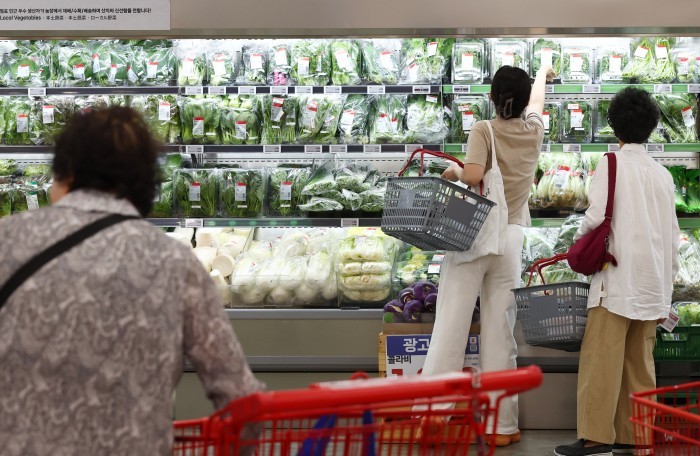 |
| A major supermarket in Seoul. / Yonhap News |
As a combination of a high foreign exchange rate, geopolitical risks stemming from the Middle East, and intense heatwaves collide, warning signals are growing louder over a potential "inflation perfect storm" hitting the everyday economy in the second half of the year. With anxieties over rising international crude oil prices resurfacing and the costs of key raw materials—including grains, sugar, and coffee beans—trending upward, red lights have flashed across food and living costs. While the food and beverage industry faces a mounting burden from raw material costs, the construction sector is also grappling with upward pressure from material and labor expenses, which is expected to further intensify the inflationary pressure felt by ordinary citizens.
Indeed, the upward trajectory of prices is becoming increasingly alarming. According to Statistics Korea on June 22, the consumer price index (CPI) for last month rose 3.1% year-on-year, marking the sharpest increase so far this year. The living necessities price index, a gauge of perceived inflation, also climbed 3.3%. Data from the Food and Agriculture Organization (FAO) of the United Nations showed that in May, the global cereal price index increased by 2.6% month-on-month, while the sugar price index surged by 7.5%.
Upward pressure on costs is already manifesting across various segments of the food industry. Major coffee chains, including Mega MGC Coffee, Ediya Coffee, and The Coffee Bean & Tea Leaf, have raised their menu prices, while the instant noodle (ramyeon) and confectionery industries are facing similar pressure to follow suit. Industry insiders project that if the high exchange rates and elevated raw material costs persist over the long term, adjustments to the prices of major processed foods will become inevitable.
Agricultural and livestock products, which directly dictate the cost of the dining table, offer little reassurance either. Egg prices have remained stubbornly high due to a drop in production following an outbreak of highly pathogenic avian influenza (AI) last winter, while domestic beef (Hanwoo) and pork prices are also on the rise, driven by a decline in cattle and pig herds along with rising prices for imported meat. On top of this, forecasts warn that if heatwaves and torrential rains lead to poor crop yields and reduced livestock productivity, food inflation could be driven even higher in the second half of the year.
The real estate market is also falling within the blast radius. Concerns are mounting that a prolonged period of inflationary instability could delay the timing of benchmark interest rate cuts, thereby compounding the mortgage repayment burdens for actual homebuyers.
"Until the trajectories of oil prices and exchange rates stabilize, a high level of vigilance regarding inflation is highly likely to persist," said Kim Si-wol, a professor of consumer information science at Konkuk University.
Jung Moon-kyung
Most Read
-
1
Celltrion nears additional contract with major U.S..

-
2
Putin proposes trilateral U.S.-China-Russia summit..

-
3
U.S. weighs dropping MOAB, world's most powerful n..

-
4
"Aren't those foreigners on welfare?": M..

-
5
Attention centers on APEC for possible Trump-Xi-Pu..

-
6
Saudi Arabia, Iran hold first diplomatic talks to..

-
7
China tightens grip on boosting domestic demand an..

PEOPLE







-
Address : In-Young Bldg., 34, Uisadang-daero 1-gil, Yeongdeungpo-gu, Seoul
Copyright by ASIATODAY CO., LTD. All rights resereved