



SpaceX valuation expands to $94B as stock surges 19% for second day
Jun 16, 2026, 10:54 am


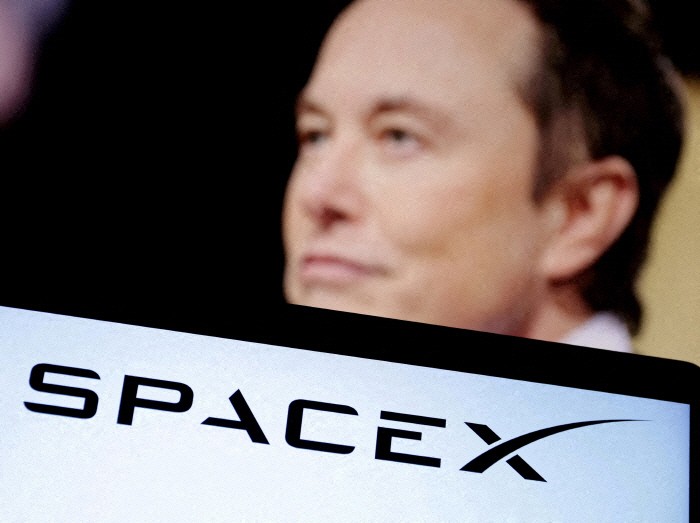 |
| Elon Musk, CEO of SpaceX, is seen behind the company's official corporate logo. / Photo courtesy of Reuters, Yonhap News Agency |
SpaceX, the aerospace and artificial intelligence enterprise led by Elon Musk, has rewritten the record books for the global capital markets by raising a total of 85.7 billion dollars (approximately 130 trillion won) through its initial public offering (IPO), marking the largest stock debut in history.
CNBC reported on June 15 (local time) that the total offering size expanded to 85.7 billion dollars after SpaceX's underwriters fully exercised their overallotment option, widely known as the "greenshoe" option.
SpaceX initially raised 75 billion dollars on June 12 by pricing its shares at 135 dollars each, a figure that already shattered previous historical records. The underwriters, Goldman Sachs and Morgan Stanley, held a greenshoe option allowing them to purchase an additional 83.3 million shares during the IPO process, and they chose to exercise the option in its entirety following a massive post-listing stock rally. A greenshoe option is a market mechanism that permits underwriters to buy and distribute supplementary shares to the market when institutional and retail investor demand proves exceptionally robust immediately after a public debut.
Shares of SpaceX skyrocketed 19 percent on their first day of trading on June 12, closing at approximately 161 dollars and propelling the company's market capitalization past the 2 trillion-dollar milestone. The momentum carried into the second trading session on June 15, with the stock surging another 19.6 percent to finish at 192.50 dollars. In after-hours trading, the stock edged up an additional 3.86 percent, changing hands in the 199-dollar range.
SpaceX intends to deploy the massive windfall generated from the historic IPO to accelerate its next-generation aerospace initiatives and build out robust AI infrastructure. The company is currently shifting into high gear to commercialize Starship, its fully reusable, super-heavy launch vehicle, while simultaneously expanding its satellite internet division via the deployment of next-generation Starlink V3 satellites. Furthermore, the firm has set its sights on pioneering "orbital data centers"—positioning AI computing clusters directly in outer space—alongside constructing a massive semiconductor fabrication plant in Texas.
However, CNBC noted that lingering concerns remain regarding SpaceX's underlying financial health. The company posted a net loss of 4.9 billion dollars last year, and its cumulative losses since its founding have now surpassed 41 billion dollars.
Jung Ah-reum
Most Read
-
1
Kia Sportage outperforms Mazda CX-5 in German auto..

-
2
Houthis launch successive attacks on Saudi airport..

-
3
Saudi Arabia, Iran hold first diplomatic talks to..

-
4
U.S. deploys carrier, 10,000 more troops to Middle..

-
5
Saudi airport in Riyadh struck again, leaving at l..

-
6
Putin's ally visits China on the 8th ahead of APEC..

-
7
Chinese military support and training center opens..

PEOPLE






HEADLINE NEWS

-
Address : In-Young Bldg., 34, Uisadang-daero 1-gil, Yeongdeungpo-gu, Seoul
Copyright by ASIATODAY CO., LTD. All rights resereved