



Police to partner with 19 countries to tackle transnational crime
Jun 09, 2026, 01:17 pm


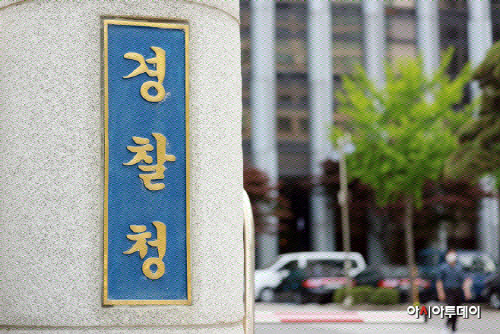 |
| National Police Agency. / Photo by Park Sung-il, reporter |
The National Police Agency will hold a large-scale international cooperation meeting in Seoul with Interpol to respond to transnational crime. The plan is to expand the scope of cooperation beyond existing efforts focused on scams and human trafficking to include drug crimes and fugitive tracking, aiming to simultaneously cut off criminal organizations’ financial sources and operational bases.
The National Police Agency announced on the 9th that it will co-host the 3rd International Cooperative Operation Meeting, “Breaking Chains,” and Interpol’s fugitive arrest operation meeting, “INFRA-SEAF IV,” in Seoul from the 9th to the 12th.
The meeting will bring together five international organizations, including Interpol, ASEANAPOL, AMERIPOL, the International Organization for Migration (IOM), and the United Nations Office on Drugs and Crime (UNODC), as well as law enforcement agencies from 19 countries, including the United States, China, Japan, and Cambodia. Participants will discuss investigative leads, cooperation procedures, and joint response measures for tackling transnational crime and apprehending fugitives.
“Breaking Chains” is an international cooperative operation led by the National Police Agency to protect victims of transnational crimes such as scam centers, human trafficking, and online fraud. Through two previous operations, Korean authorities have arrested 66 suspects involved in transnational scams.
A key feature of this third operation is the expansion of its scope to include drug-related crimes. Police assess that scam networks based in Southeast Asia are increasingly diversifying or combining their activities with drug trafficking and online gambling, using existing money-laundering networks and human connections.
Accordingly, the agency plans to track not only the lower structures of scam organizations but also their financial sources and escape routes. To prevent a “balloon effect,” where criminal groups shift locations or reorganize to evade crackdowns, participating countries will share and analyze investigative leads and link them directly to enforcement actions.
The meeting is also connected to Interpol projects funded by Korea, including HAECHI (focused on financial crime), MAYAG (drug crime response), and INFRA-SEAF (tracking fugitives). Crime intelligence officers and operational support staff from these projects will participate in case analysis and bilateral meetings.
Through this, the police aim to go beyond simple information sharing and build a case-centered, operational model of international cooperation. A total of 193 cases will be the focus of intensive coordination during the meeting period.
Park Jun-seong, Director of International Cooperation at the National Police Agency, said, “If criminal organizations evolve by changing methods and crossing crime types, international cooperation must become faster and more multidimensional,” adding, “We will intensively coordinate 193 cases over four days so that participating countries can immediately begin arrest operations upon returning home.”
Seol So-young
Most Read
-
1
Trump demands rates fall below 1% as Fed hikes for..

-
2
Celltrion seeks rheumatoid arthritis indication ex..

-
3
Chinese e-commerce giants AliExpress, Temu and She..

-
4
Trump warns countries not helping U.S. must pay re..

-
5
Turkish Airlines named main club partner of Liverp..

-
6
China expels No. 2 military official Zhang Youxia..

-
7
Houthi rebels release video claiming downing of Sa..

PEOPLE







-
Address : In-Young Bldg., 34, Uisadang-daero 1-gil, Yeongdeungpo-gu, Seoul
Copyright by ASIATODAY CO., LTD. All rights resereved