



Religious communities weigh AI regulation and use
Jun 09, 2026, 11:17 am


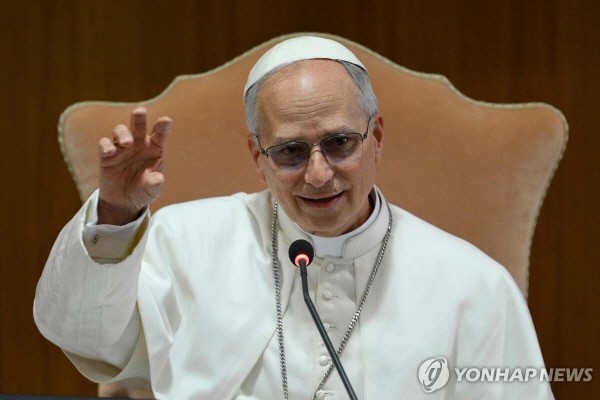 |
| Pope Leo XIV at the Synod Hall of the Vatican. In his first encyclical since his inauguration on the 25th (local time), Pope Leo XIV stressed that “AI must be disarmed so that it does not come to dominate humanity.” / Yonhap News |
# A pastor of a Protestant church, referred to as Pastor A, begins preparing his sermons by searching with Google AI Mode and ChatGPT. He admits that preparation time, which previously took several hours, has been significantly reduced.
# Ahead of “Buddha’s Birthday” in 2026 (Buddhist calendar year 2570), a striking scene unfolded in front of Jogyesa Temple in Seoul, where a robot monk appeared, symbolically “ordained” through the Buddhist precepts adapted for a humanoid form.
# At the 2024 Seoul International Buddhism Expo, a “counseling booth of the Rock-carved Buddha of Yeonamsa Temple” drew public attention. Using ChatGPT-based technology, the program allows visitors to enter their concerns, after which an AI representation of the Buddha responds with teachings rooted in Buddhist wisdom.
As the era of artificial intelligence advances, religious communities are also undergoing change. It has become an open secret that many Protestant pastors use AI for sermon preparation, while young Buddhists study doctrine with the help of AI tools. Accordingly, two contrasting approaches are emerging within religious circles: one advocating effective use of AI, and the other emphasizing ethical frameworks to prevent AI from undermining human values.
According to religious sources on the 9th, among Korea’s four major religions—Protestantism, Buddhism, Catholicism, and Won Buddhism—the Catholic Church is the most active in establishing AI-related ethics. The Church has raised concerns about the risks of AI while emphasizing the dignity of human beings.
Pope Leo XIV, in his first encyclical (Magnifica Humanitas, “Great Humanity”) delivered on the 25th (local time) at the Synod Hall of the Vatican, stated that “AI must be disarmed so that it does not come to dominate humanity,” adding that humanity should not attempt to build “another Tower of Babel” through AI, but instead work toward the common good.
An encyclical is considered the highest-level pastoral letter from the pope, delivered to the global Catholic community of around 1.4 billion believers and bishops, and is regarded as a moral and doctrinal guideline with influence beyond the Church. Representatives from AI company Anthropic’s co-founding team reportedly attended the event, signaling closer dialogue between the Church and the technology sector on AI ethics.
The Catholic Church of Korea is also moving quickly. The Korean Catholic Bishops’ Conference has decided to form an AI task force and prioritize the development of related guidelines.
Warnings about AI risks are also shared by other religions, although Buddhism appears more focused on practical application in outreach and education. Ven. Jinwoo, head of the Jogye Order of Korean Buddhism, said at a press conference on the 7th ahead of Buddha’s Birthday that “AI should be trained with compassion rather than harmful or negative information,” adding that it should serve as an assistant to help alleviate human suffering and promote peace.
Won Buddhism has taken a similar approach. It has established an “AX (AI Transformation) Committee” under its research institute and is planning to develop a proprietary data platform and large language model (LLM) based on Won Buddhist teachings to prevent distortion and bias in information. A Won Buddhism official said the religion is pursuing “coexistence rather than rejection of AI,” while emphasizing the role of religion as a stabilizing force within society.
The Protestant community is actively using AI in ministry while also expressing caution. According to a recent survey by the Korea Church & Ministry Data Research Institute, the proportion of pastors using AI in sermon preparation rose sharply from 17% in 2023 to 58% this year.
However, concerns remain among respondents, mainly regarding reduced personal reflection and weakened pastoral introspection. Calls for ethical guidelines are also growing within the Protestant community.
The institute’s director, Jiyong Geun, noted that AI adoption in sermon preparation is expected to increase further next year, adding that while usage is rising rapidly among pastors, many congregants are uncomfortable with AI-generated sermons, making regulatory discussions inevitable at the denominational level.
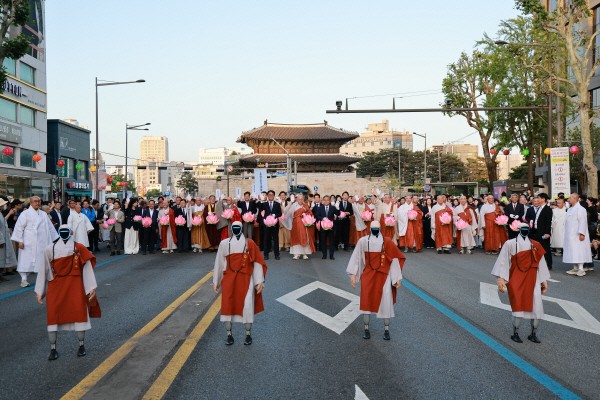 |
| Monk robots “Gabi,” “Seokja,” “Mohi,” and “Nisa” lead a lantern parade passing in front of Heunginjimun (Dongdaemun) in Seoul on the 16th. / Provided by the Jogye Order of Korean Buddhism |
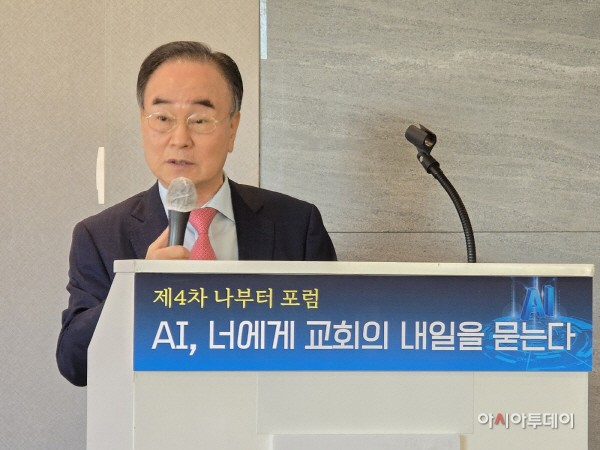 |
| Ryu Young-mo, chair of the NaButeo Forum and a Protestant pastor. The Protestant group NaButeo Forum held a seminar under the theme “AI, We Ask You About the Church’s Future.” Pastor Ryu urged ministers to make use of AI while continuously engaging in self-reflection. / Photo by Hwang Eui-jung, reporter |
Hwang Eui-jung
Most Read
-
1
Trump demands rates fall below 1% as Fed hikes for..

-
2
Celltrion seeks rheumatoid arthritis indication ex..

-
3
Chinese e-commerce giants AliExpress, Temu and She..

-
4
Trump warns countries not helping U.S. must pay re..

-
5
Turkish Airlines named main club partner of Liverp..

-
6
China expels No. 2 military official Zhang Youxia..

-
7
Houthi rebels release video claiming downing of Sa..

PEOPLE






-
Address : In-Young Bldg., 34, Uisadang-daero 1-gil, Yeongdeungpo-gu, Seoul
Copyright by ASIATODAY CO., LTD. All rights resereved