



Gov't to release 66,000 public rental homes to stabilize rent market
May 22, 2026, 10:31 am


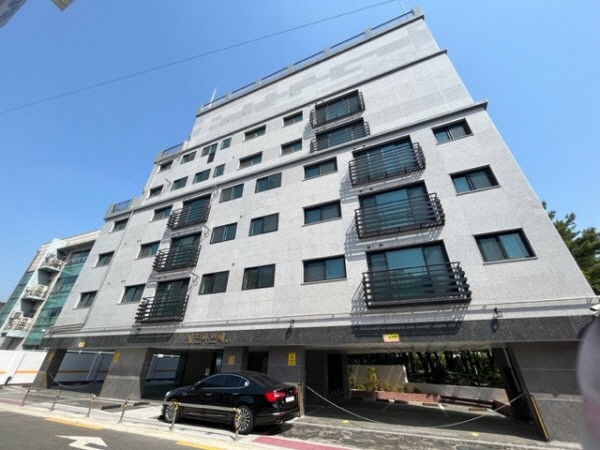 |
| An exterior view of a Korea Land and Housing Corporation (LH) public buy-to-rent housing complex in Seoul. /LH |
The government will significantly ramp up the supply of public buy-to-rent housing in the capital faction to counter escalating anxieties in the lease market fueled by a contraction in private non-apartment supplies. The volume will be concentrated primarily across Seoul and 12 designated regulatory zones in Gyeonggi Province to restore stability to the rental ecosystem.
Buy-to-rent housing is a public framework where state-run agencies purchase existing or newly built residential properties to lease them out below prevailing market rates. The initiative aims to provide housing stability for vulnerable groups—including youth, newlyweds, and low-income households—while smoothing out supply-demand imbalances in the lease market.
The Ministry of Land, Infrastructure and Transport announced on May 22 that it plans to supply 90,000 buy-to-rent units in the Greater Seoul area over the next two years through 2027. Out of this total, 66,000 units will be preferentially allocated to Seoul and the 12 Gyeonggi regulatory zones, marking a substantial increase from the 36,000 units supplied between 2024 and 2025.
Under the regional distribution blueprint, the regulatory zones will receive 54,000 newly constructed units and 12,000 existing homes.
The government emphasized that until private non-apartment supply recovers, it remains prepared to expand acquisition volumes beyond original targets to incentivize market stabilization and supply normalization.
To fast-track this influx, acquisition thresholds will be relaxed. While agencies previously adhered to a strict rule of purchasing entire apartment blocks, they will now be permitted to acquire partial units within a building. The minimum acquisition benchmark will also be lowered to 10 or more units, down from the prior minimums of 19 in Seoul and 50 in Gyeonggi. Furthermore, building age limits will be waived for existing homes within regulatory zones.
Financial scaffolding to incentivize new-build acquisitions will also be reinforced. The land acquisition support ceiling for the Korea Land and Housing Corporation (LH) will expand up to 80% of land costs, while the Housing & Urban Guarantee Corporation (HUG) will scale up its Project Financing (PF) loan guarantees, cutting the initial capital burden for developers down to roughly 10% of land costs.
Additionally, payout structures will switch to a three-month installment format tied to construction progress to accelerate project execution. Disbursed funds will be managed via trust companies to maintain transparency, while LH and HUG secure primary beneficiary rights to hedge against potential project defaults.
Concurrently, the government will strengthen quality control by providing standardized floor plans and pre-construction consulting, while shortening project timelines through a "start construction first, verify later" protocol. Penalty measures, including contract terminations, will be enforced for structural delays.
"With private non-apartment supply facing a contraction, the public sector must step forward proactively with acquisitions and supply to support market normalization," said Kim Young-guk, Deputy Minister for Housing and Land at the Ministry of Land, Infrastructure and Transport. "We will continuously push forward with supply expansion frameworks centered on non-apartments to keep the lease market anchored."
Most Read
-
1
Celltrion’s Omlyclo gains ground in major European..

-
2
Trump demands rates fall below 1% as Fed hikes for..

-
3
Trump makes $1 trillion bet ahead of midterm elect..

-
4
Iran resumes ballistic missile production, assembl..

-
5
Samsung Electronics, Mistral AI to jointly develop..

-
6
Trump warns countries not helping U.S. must pay re..

-
7
Apple launches first foldable, 1 million won prici..

PEOPLE





HEADLINE NEWS
- Trump to roll out ‘unprecedented welcome’ for Xi with B-2 bombers, F-22 fighters
- S. Korea, U.S., and Japan form united front on Taiwan and economic coercion..
- Trump administration moves to impose sweeping sanctions on International Cr..
- Xi to make state visit to U.S. Sept. 23-25, dispelling rumors over his heal..

-
Address : In-Young Bldg., 34, Uisadang-daero 1-gil, Yeongdeungpo-gu, Seoul
Copyright by ASIATODAY CO., LTD. All rights resereved