



Iran's enriched uranium export ban stalls ceasefire negotiations
May 22, 2026, 10:03 am


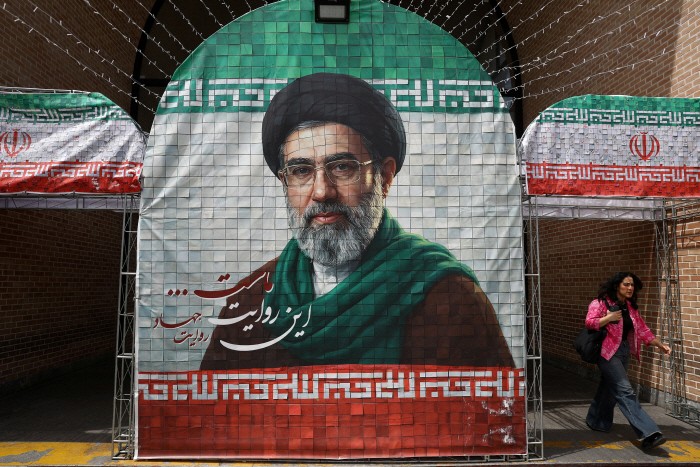 |
| A woman walks past a banner featuring Iran's new Supreme Leader Mojtaba Khamenei in Tehran, Iran, on May 8. / Photo courtesy of Reuters-Yonhap |
Iran's ultimate decision-maker, Supreme Leader Ayatollah Mojtaba Khamenei, has reportedly issued a directive prohibiting the export of the country's highly enriched uranium. This stance directly clashes with demands from the United States and Israel, which have insisted on the wholesale removal of the uranium stockpile, and is expected to stall ongoing ceasefire negotiations.
Citing two senior Iranian government sources, Reuters reported on May 21 that a consensus recently formed within Iran's leadership that transferring its uranium stockpile abroad would leave national security more vulnerable to subsequent attacks by the U.S. and Israel.
Analysts note that prior to the outbreak of the war, Iran had indicated a willingness to transfer roughly half of its 60% enriched uranium stockpile overseas but shifted its stance as military threats persisted.
During a White House press conference on May 20, U.S. President Donald Trump stated firmly, "The United States will not tolerate Iran holding highly enriched uranium; we will secure it and dispose of it." White House Spokesperson Olivia Wales reiterated this sentiment, adding, "President Trump's red line is clear. We will only accept a deal that puts the American people first."
While some progress has been made in talks mediated by Pakistan concerning the blockade of Iranian ports and control over the Strait of Hormuz, negotiations remain deadlocked over the nuclear program.
Some observers suggest a potential compromise may exist short of total removal. An Iranian source left the door open for negotiation, noting, "Down-blending the highly enriched uranium under strict supervision of the International Atomic Energy Agency (IAEA) is not entirely out of the question."
The Iranian government maintains that its current stockpile of highly enriched uranium is intended solely for legitimate civilian use, including medical purposes and fueling Tehran's research reactor.
Lee Jung-eun
Most Read
-
1
Celltrion’s Omlyclo gains ground in major European..

-
2
Trump demands rates fall below 1% as Fed hikes for..

-
3
Trump makes $1 trillion bet ahead of midterm elect..

-
4
Iran resumes ballistic missile production, assembl..

-
5
Samsung Electronics, Mistral AI to jointly develop..

-
6
Trump warns countries not helping U.S. must pay re..

-
7
Apple launches first foldable, 1 million won prici..

PEOPLE






HEADLINE NEWS
- Trump to roll out ‘unprecedented welcome’ for Xi with B-2 bombers, F-22 fighters
- S. Korea, U.S., and Japan form united front on Taiwan and economic coercion..
- Trump administration moves to impose sweeping sanctions on International Cr..
- Xi to make state visit to U.S. Sept. 23-25, dispelling rumors over his heal..

-
Address : In-Young Bldg., 34, Uisadang-daero 1-gil, Yeongdeungpo-gu, Seoul
Copyright by ASIATODAY CO., LTD. All rights resereved