



Iran demands asset release as US ceasefire proposal reviewed
May 21, 2026, 08:17 am


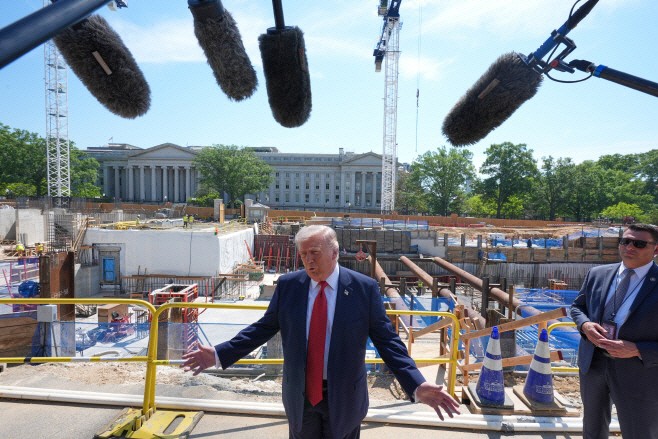 |
| U.S. President Donald Trump answers reporters’ questions while touring the White House ballroom construction site on May 19 in Washington, D.C. /AP-Yonhap |
Iran said Wednesday it is reviewing a new U.S. proposal aimed at ending the ongoing conflict, while insisting that the release of frozen Iranian assets and an end to U.S. naval restrictions remain key conditions for any agreement.
At the same time, Pakistan continued shuttle diplomacy between Washington and Tehran, sending a senior minister to Iran for the second time in a week, as U.S. forces intensified maritime enforcement operations in the Gulf of Oman — underscoring the simultaneous pursuit of diplomacy and military pressure.
While Iranian officials signaled openness to negotiations, they also questioned Washington’s sincerity. U.S. President Donald Trump, meanwhile, continued to warn that military options remain on the table, leaving the outlook for ceasefire talks uncertain.
Iran Says It Is Reviewing U.S. Proposal
Iranian Foreign Ministry spokesman Esmail Baghaei said in an interview with state television that Tehran had received the latest U.S. proposal and was carefully reviewing its contents. He emphasized that Iran’s position has remained consistent from the beginning of negotiations, particularly regarding the release of frozen overseas assets and the removal of restrictions targeting Iranian shipping operations.
Baghaei accused the United States of engaging in what he described as “piracy” and interference against Iranian maritime activities, insisting that Iran had entered talks in “good faith and sincerity.” He added that Washington must now prove its own commitment to a genuine diplomatic solution.
The spokesman also confirmed that Naqvi’s visit to Tehran was intended to facilitate exchanges of messages between the two countries. According to Iran’s semi-official Tasnim News Agency, the Pakistani minister held meetings with Iranian President Masoud Pezeshkian, Parliament Speaker Mohammad Bagher Ghalibaf, and Interior Minister Eskandar Momeni. Discussions reportedly focused on strengthening regional stability through cooperation among Islamic nations and exploring ways to reduce foreign military involvement in the region.
Baghaei said Iran has not yet decided whether it will participate in a second round of ceasefire negotiations in Islamabad. He rejected accusations that Tehran had backed away from earlier commitments, claiming instead that inconsistency has been a recurring feature of U.S. policy.
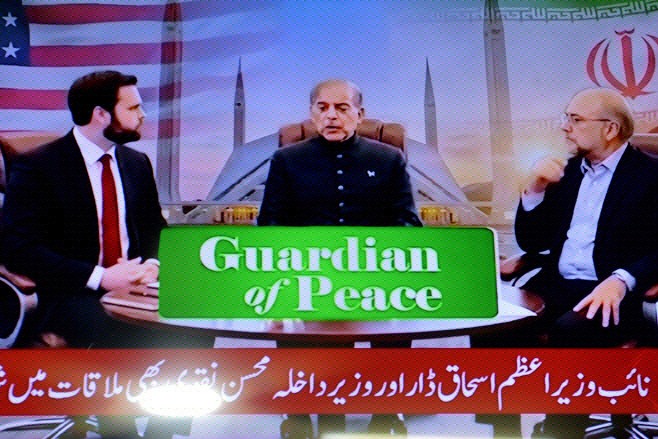 |
| J. D. Vance (left) and Mohammad Bagher Ghalibaf take part in ceasefire negotiations mediated by Pakistani Prime Minister Shehbaz Sharif at a hotel in Islamabad, Pakistan, on April 11, in this image captured from a television broadcast. /EPA-Yonhap |
Trump Warns of Further Military Action
President Trump, meanwhile, claimed that the United States continues to hold the upper hand in the conflict and suggested that Iran is eager to secure a peace agreement. Speaking to reporters on Tuesday, Trump said Iran was “begging” for negotiations and warned that additional military action could still be possible if talks fail to produce results.
Iran’s Islamic Revolutionary Guard Corps responded with a sharply worded statement, warning that Tehran had not yet deployed the full extent of its military capabilities. The IRGC said any renewed attack would trigger “devastating strikes” that could extend beyond the Middle East.
U.S. Forces Intercept Iranian Tanker in Gulf of Oman
At the same time, U.S. Central Command announced that American Marines from the 31st Marine Expeditionary Unit boarded an Iranian commercial tanker, the Celestial Sea, in the Gulf of Oman after suspecting it had violated blockade restrictions. According to CENTCOM, the vessel was inspected, redirected, and later released.
The U.S. military said enforcement operations have so far diverted 91 commercial vessels under blockade regulations, signaling that Washington is continuing to apply maritime pressure even as diplomatic discussions remain active.
Baghaei condemned the operation as an act of aggression and argued that such actions undermine the credibility of the diplomatic process. He also referenced previous seizures of Iranian vessels, saying the United States was not behaving like a country genuinely committed to negotiations.
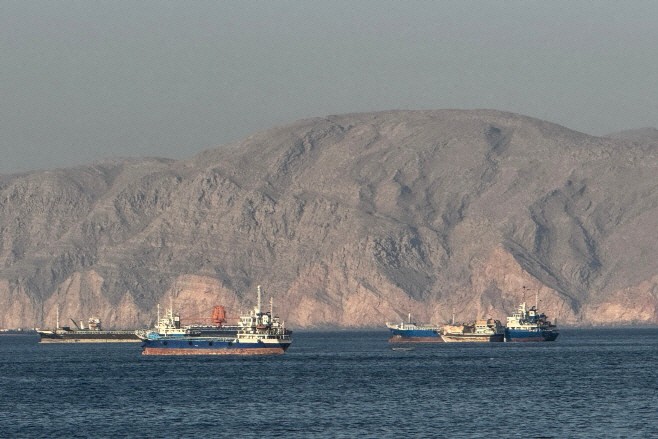 |
| Ships are anchored in the Strait of Hormuz off the port city of Khasab on Oman’s northern Musandam Peninsula on May 17. /AFP-Yonhap |
Iranian Leaders Warn of Escalation
Parliament Speaker Mohammad Bagher Ghalibaf warned that Iran’s adversaries had not abandoned military objectives despite economic and political pressure campaigns.
“We must strengthen our preparedness to respond effectively and powerfully to any potential attack,” he said in a recorded message carried by state media.
In a separate post on X, Ghalibaf referenced U.S. Vice President J. D. Vance’s memoir Hillbilly Elegy, quoting a passage about America’s wars in Iraq and Afghanistan.
“‘Hillbilly 2’ is coming,” Ghalibaf wrote, arguing that ordinary Americans would ultimately bear the cost of another conflict driven by wealthy elites and “Beltway war merchants.”
Iranian Foreign Minister Abbas Araghchi also emphasized Tehran’s hardline diplomatic posture during a memorial event in Tehran.
“If diplomacy, dialogue, and negotiations are required to protect the interests of the Islamic Republic, we will enter those arenas with the same strength shown by our military defending the country,” Araghchi said.
He described Iran’s response strategy as resting on four pillars: the battlefield, diplomacy, media, and public support on the streets, which he said had become an additional source of strength during the current conflict.
#Iran #United States #Donald Trump #Pakistan #ceasefire talks
Copyright by Asiatoday
Most Read
-
1
Celltrion’s Omlyclo gains ground in major European..

-
2
Trump demands rates fall below 1% as Fed hikes for..

-
3
Trump makes $1 trillion bet ahead of midterm elect..

-
4
Iran resumes ballistic missile production, assembl..

-
5
Samsung Electronics, Mistral AI to jointly develop..

-
6
Trump warns countries not helping U.S. must pay re..

-
7
Apple launches first foldable, 1 million won prici..

PEOPLE






HEADLINE NEWS
- Trump to roll out ‘unprecedented welcome’ for Xi with B-2 bombers, F-22 fighters
- S. Korea, U.S., and Japan form united front on Taiwan and economic coercion..
- Trump administration moves to impose sweeping sanctions on International Cr..
- Xi to make state visit to U.S. Sept. 23-25, dispelling rumors over his heal..

-
Address : In-Young Bldg., 34, Uisadang-daero 1-gil, Yeongdeungpo-gu, Seoul
Copyright by ASIATODAY CO., LTD. All rights resereved