



[Asia Issue] Illusion clouds Chinese property market: Recovery remains far off
May 20, 2026, 02:54 pm


China's property market, which has been on a downturn so steep since the second half of 2021 that the term "shocking" would not be an exaggeration, appears to be showing signs of a turnaround, though analysts suggest this may be a statistical illusion driven by a temporary rebound. Within the market, however, the dominant consensus is that the sector remains trapped in a state of living death, with little to no actual escape. Put simply, the industry is running out of time with a long, arduous road ahead.
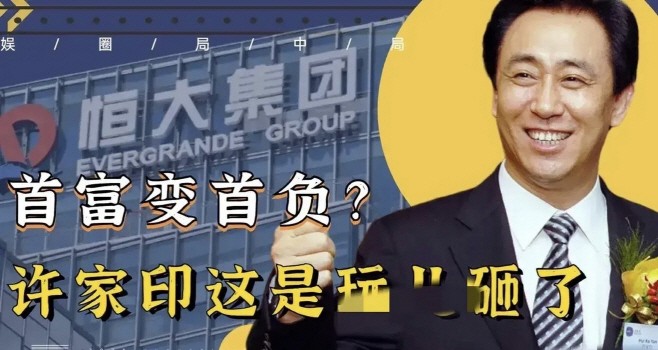 |
A report from a Chinese media outlet that underscores the reality of China's property market. The coverage highlights how Xu Jiayin, the former chairman of Evergrande—once China's top property developer—went from being the nation's wealthiest tycoon to its biggest debtor. / Economic Daily (Jingji Ribao)
According to Beijing sources well-versed in the Chinese economy on May 20, it is no exaggeration to say that China's property market wielded immense power until the first half of 2021. This was well-justified, given that the myth of "unbeatable real estate" had persisted since the end of the last century, and the industry accounted for a staggering 25% of the nation's gross domestic product (GDP).
However, the situation took a drastic turn in the second half of 2021 when Evergrande, one of the industry's biggest giants, defaulted after failing to manage a massive debt of 2.4 trillion yuan ($331.4 billion). The bubble—which most industry insiders had long been aware of but kept quiet about as if by tacit agreement—had finally burst, ushering in a catastrophe.
The fallout that followed was nothing short of disastrous. It requires little explanation, considering that giants like Evergrande began collapsing one after another on an almost daily basis. This reality is underscored by the fact that, as of the first half of 2026, the combined debt of the industry's top 10 companies easily surpasses 10 trillion yuan. The same applies to the rampant rumors within the sector that the founders of these firms will soon face criminal prosecution and harsh punishment, following in the footsteps of former Evergrande Chairman Xu Jiayin.
The only silver lining is the recent flurry of reports suggesting signs of recovery in a sector that has been near comatose. Indeed, average housing prices have risen in major metropolitan areas, including Beijing and Shanghai, seemingly giving developers some breathing room. However, given that "cabbage apartments"—properties trading for absolute peanuts—still exist in second- and third-tier cities and provincial areas outside major hubs, it is difficult to accept reports of an industry recovery at face value.
Furthermore, compared to how utterly devastated the industry became in less than five years, the price increases and stabilizing market conditions seen in a few major cities amount to a mere drop in the bucket. To put it bluntly, this phenomenon could well be a statistical illusion reflecting the industry's desperate wishful thinking.
Currently, it is estimated that there are up to 150 million vacant homes across China. Additionally, tens of millions of "lanweilou"—unfinished, abandoned construction projects—litter the country. It is only natural that analysts within the industry predict the market will not regain its former glory for the next decade. The reasons why the recovery of China's property market can only be described through the pessimistic lens of having a long, arduous road ahead remain self-evident. |
Most Read
-
1
Celltrion’s Omlyclo gains ground in major European..

-
2
Trump demands rates fall below 1% as Fed hikes for..

-
3
Trump makes $1 trillion bet ahead of midterm elect..

-
4
Iran resumes ballistic missile production, assembl..

-
5
Samsung Electronics, Mistral AI to jointly develop..

-
6
Trump warns countries not helping U.S. must pay re..

-
7
Apple launches first foldable, 1 million won prici..

PEOPLE






HEADLINE NEWS
- Trump to roll out ‘unprecedented welcome’ for Xi with B-2 bombers, F-22 fighters
- S. Korea, U.S., and Japan form united front on Taiwan and economic coercion..
- Trump administration moves to impose sweeping sanctions on International Cr..
- Xi to make state visit to U.S. Sept. 23-25, dispelling rumors over his heal..

-
Address : In-Young Bldg., 34, Uisadang-daero 1-gil, Yeongdeungpo-gu, Seoul
Copyright by ASIATODAY CO., LTD. All rights resereved