



AI-driven supercycle could push KOSPI to 10,500, KB says
May 14, 2026, 11:28 am


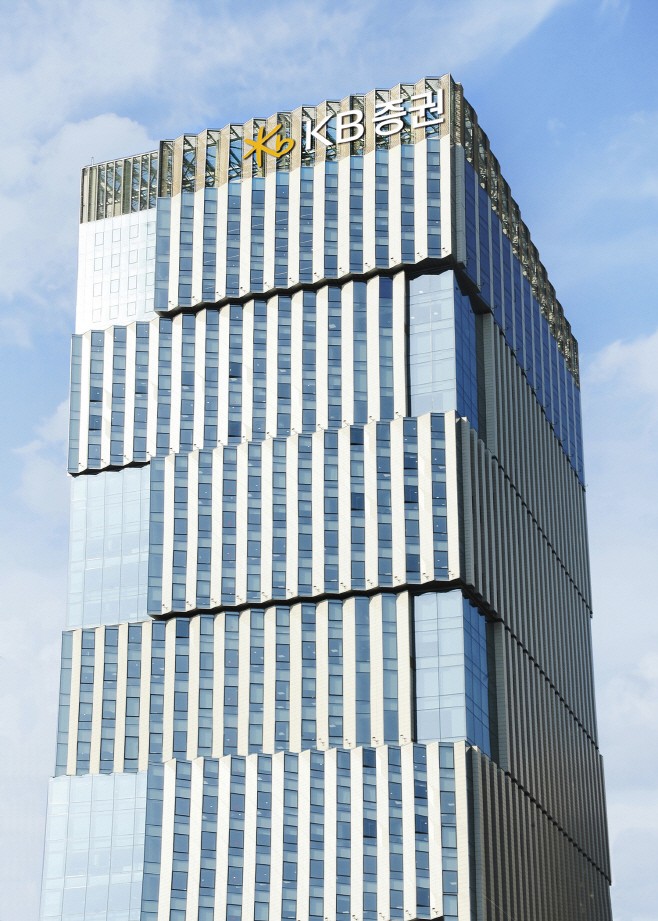 |
| / KB Securities |
KB Securities sharply raised its 2026 target for South Korea’s benchmark KOSPI index to 10,500 points, citing expectations of a powerful artificial intelligence-driven earnings boom led by semiconductors, robotics and infrastructure industries.
The brokerage said Wednesday that it had increased its KOSPI target by 40% from its previous estimate of 7,500 points.
In its latest “KB Strategy” report, the firm argued that the current Korean stock market rally could surpass the momentum of the country’s historic “three-low boom” period between 1986 and 1989, when the KOSPI rose roughly eightfold over four years.
KB Securities attributed the bullish outlook primarily to rapidly improving corporate earnings tied to expanding AI investment.
The report said upward revisions in earnings forecasts for KOSPI-listed companies are currently outpacing the speed of stock market gains, helping ease valuation concerns despite the sharp rally.
The brokerage projected combined operating profit for KOSPI companies would triple year-over-year to 919 trillion won in 2026 before rising further to 1,241 trillion won in 2027, surpassing the 1,000 trillion won mark for the first time.
The firm also forecast explosive earnings growth for Samsung Electronics and SK hynix.
According to KB Securities, the two companies’ combined operating profit is expected to surge from 91 trillion won in 2025 to 630 trillion won in 2026 and 906 trillion won in 2027.
“The intensity of KOSPI earnings improvement this year is overwhelming even compared with global markets,” the report said.
KB Securities identified memory semiconductors and humanoid robots as “scarce strategic assets” in the emerging AI infrastructure era.
The report argued that the AI industry is evolving beyond server-centered “AI 1.0” toward on-device “Agentic AI (AI 2.0)” and eventually humanoid-focused “Physical AI (AI 3.0),” significantly expanding growth opportunities for related industries.
The brokerage said high-capacity memory chips and robotics value chains will become increasingly critical as real-time AI inference capabilities grow in importance.
As a result, companies such as Samsung Electronics, SK hynix and Hyundai Motor Company — through its ownership of Boston Dynamics — could be revalued as core AI infrastructure players rather than traditional manufacturers.
KB Securities dismissed concerns about an imminent market bubble collapse, arguing that rapid price increases alone are insufficient to trigger a crash.
“A bubble does not burst simply because prices rise sharply,” the report said. “A clear shock factor such as a collapse in the economic cycle or a sudden spike in interest rates is required.”
The brokerage added that such warning signals are unlikely to emerge in the near term.
KB Securities expects AI-related sectors to remain the market’s primary drivers, particularly semiconductors, robotics, power infrastructure and space industries.
Kim Dong-won, head of research at KB Securities, said the Korean market remains undervalued despite recent gains.
“Even though KOSPI operating profit is expected to triple this year to 919 trillion won, the market is still trading at a PER of 7.9 times and a PBR of 1.8 times, more than 30% below the average valuation of Asian emerging markets,” Kim said.
“Korea has an industrial structure optimized for AI infrastructure development in semiconductors, power systems and robotics, leaving ample room for additional upside,” he added.
#KB Securities #KOSPI #AI boom #semiconductors #Samsung Electronics
Copyright by Asiatoday
Most Read
-
1
Celltrion’s Omlyclo gains ground in major European..

-
2
Trump demands rates fall below 1% as Fed hikes for..

-
3
Trump makes $1 trillion bet ahead of midterm elect..

-
4
Iran resumes ballistic missile production, assembl..

-
5
Trump warns countries not helping U.S. must pay re..

-
6
Apple launches first foldable, 1 million won prici..

-
7
Turkish Airlines named main club partner of Liverp..

PEOPLE






-
Address : In-Young Bldg., 34, Uisadang-daero 1-gil, Yeongdeungpo-gu, Seoul
Copyright by ASIATODAY CO., LTD. All rights resereved