



Korean researchers identify paired gene mutations linked to autism
May 14, 2026, 09:05 am


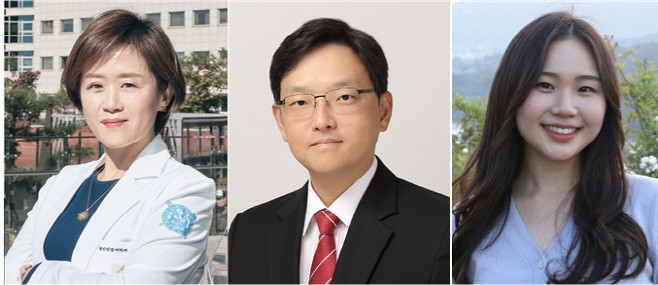 |
| (From left) Yoo Hee-jung, professor of psychiatry at Seoul National University Bundang Hospital, Ahn Joon-yong, professor at Korea University’s Division of Biomedical Systems Informatics, and researcher Lee Hye-ji pose for a photo. /Seoul National University Bundang Hospital |
South Korean researchers have uncovered a new genetic mechanism linked to autism spectrum disorder (ASD), finding that combinations of two gene mutations — even those with little individual impact — can significantly increase autism risk when they occur together.
The study, led by Yoo Hee-jung, professor of psychiatry at Seoul National University Bundang Hospital, and Ahn Joon-yong, professor at Korea University’s Division of Biomedical Systems Informatics, was published in the international journal Genome Biology.
Researchers said the findings could improve future autism diagnosis and prediction technologies by identifying previously undetectable “hidden genetic risk combinations.”
Autism spectrum disorder is a neurodevelopmental condition characterized by difficulties in social interaction and repetitive behaviors. While genetic factors are known to play a major role in autism, most previous studies focused on analyzing individual gene mutations separately, making it difficult to detect the combined effects of weaker variants.
To overcome those limitations, the joint research team developed a new analytical approach focused on cases in which two gene mutations occur simultaneously.
By analyzing genomic data from about 60,000 individuals of East Asian and European ancestry, the researchers identified 162 gene pairs strongly associated with autism.
The study also found that many of the gene combinations were linked to cytoskeleton functions responsible for maintaining neuronal cell structures. The cytoskeleton plays a critical role in forming neural connections during brain development.
According to the researchers, simultaneous mutations in specific gene pairs may disrupt cytoskeleton pathways and contribute to autism development.
Laboratory cell experiments further confirmed the synergistic effects between genes. Suppressing only one of the two genes caused little change, but suppressing both significantly reduced the formation of cilia on cell surfaces.
Cilia are microscopic structures that help cells detect external signals and are considered essential for normal brain development.
The impact of the gene combinations also appeared to differ by sex. Male autism patients carrying the same mutations showed more severe symptoms, while female patients showed no statistically significant difference.
“Even with the same genetic mutations, the effects may differ depending on sex, highlighting the need for personalized diagnosis and support,” Yoo said.
Ahn said the research demonstrated that gene variants previously overlooked because of their weak individual effects could become significant risk factors when combined.
“We expect this approach to help uncover the genetic causes not only of autism but also of other neurodevelopmental disorders,” he said.
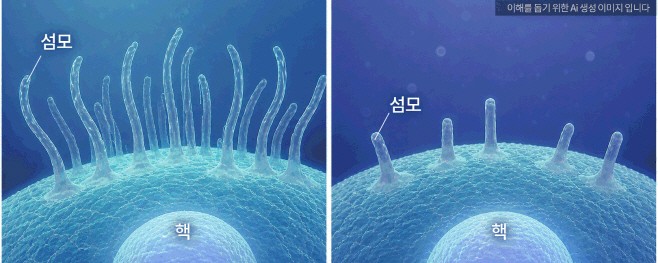 |
| Comparison of cilia length when only one autism-related gene is mutated (left) and when both genes are mutated (right). Cilia formation on the cell surface was significantly reduced when both gene variants were present. /Seoul National University Bundang Hospital |
#autism spectrum disorder #ASD #genetics #Seoul National University Bundang Hospital #Korea University
Copyright by Asiatoday
Most Read
-
1
Kia Sportage outperforms Mazda CX-5 in German auto..

-
2
Houthis launch successive attacks on Saudi airport..

-
3
Saudi Arabia, Iran hold first diplomatic talks to..

-
4
U.S. deploys carrier, 10,000 more troops to Middle..

-
5
Saudi airport in Riyadh struck again, leaving at l..

-
6
Putin's ally visits China on the 8th ahead of APEC..

-
7
Chinese military support and training center opens..

PEOPLE




HEADLINE NEWS

-
Address : In-Young Bldg., 34, Uisadang-daero 1-gil, Yeongdeungpo-gu, Seoul
Copyright by ASIATODAY CO., LTD. All rights resereved