



Hyundai eyes revival in China with electrification strategy
Apr 20, 2026, 08:27 am


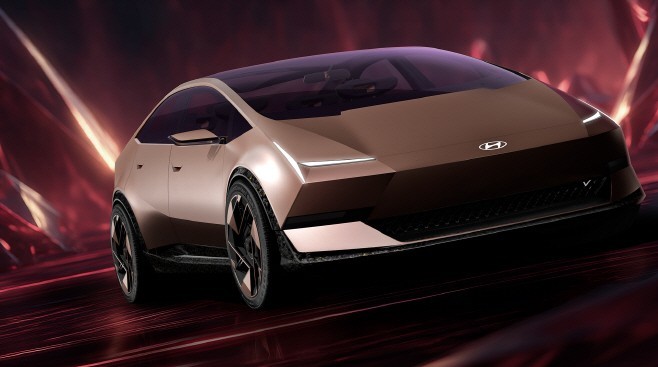 |
| Exterior of Hyundai Motor’s Ioniq “Venus” concept unveiled ahead of Auto China. |
Hyundai Motor Company is stepping up efforts to revive its presence in China, once its largest overseas market, by rolling out an electrification strategy centered on its Ioniq lineup.
Led by Euisun Chung, the automaker is preparing to compete head-on with local electric vehicle giants such as BYD, aiming to reclaim lost ground in the world’s largest EV market.
Hyundai will unveil its China-specific EV strategy at the Auto China 2026 exhibition, opening April 24 at the Beijing International Exhibition Center. The company plans to showcase its Ioniq production models along with concept vehicles, including the Ioniq sedan “Venus” and SUV “Earth,” first revealed earlier this month.
The announcement builds on remarks by President José Muñoz, who said during a shareholder meeting in March that Hyundai would launch 20 new models over the next five years. The Auto China event is expected to provide more concrete details on that roadmap.
For Hyundai Motor Group, a rebound in China is critical. The group once sold nearly 1.8 million vehicles annually in the country, combining Hyundai and Kia sales. However, following the 2017 THAAD-related tensions, sales declined sharply, while local EV brands rapidly expanded. Last year, combined sales fell to around 200,000 units.
Industry watchers are closely monitoring whether Hyundai’s electrification strategy — centered on the Ioniq brand — can reverse the trend. The company is pursuing localization efforts, including partnerships with Chinese autonomous driving firms and the introduction of EREV (extended-range electric vehicle) models tailored to local demand.
China remains a key market for Hyundai as it seeks to catch up with global rivals like Toyota Motor Corporation and Volkswagen Group. Chung personally visited the Shanghai Motor Show last year to assess market conditions, underscoring the strategic importance of the region.
Moon Hak-hoon, a professor of future electric vehicles at Osan University, said, “Localized strategies and expanding Ioniq sales will be key in China. Securing price competitiveness through local production will help Hyundai respond not only in the domestic market but also globally against Chinese EV makers. However, given the scale of the market, it will not be an easy battle.”
#Hyundai Motor #China market #Ioniq #EV strategy #Auto China 2026
Copyright by Asiatoday
Most Read
-
1
Kia Sportage outperforms Mazda CX-5 in German auto..

-
2
Houthis launch successive attacks on Saudi airport..

-
3
Saudi Arabia, Iran hold first diplomatic talks to..

-
4
U.S. deploys carrier, 10,000 more troops to Middle..

-
5
Saudi airport in Riyadh struck again, leaving at l..

-
6
Putin's ally visits China on the 8th ahead of APEC..

-
7
Chinese military support and training center opens..

PEOPLE





HEADLINE NEWS

-
Address : In-Young Bldg., 34, Uisadang-daero 1-gil, Yeongdeungpo-gu, Seoul
Copyright by ASIATODAY CO., LTD. All rights resereved