



Trump signals deal optimism amid sanctions pressure
Apr 16, 2026, 09:08 am


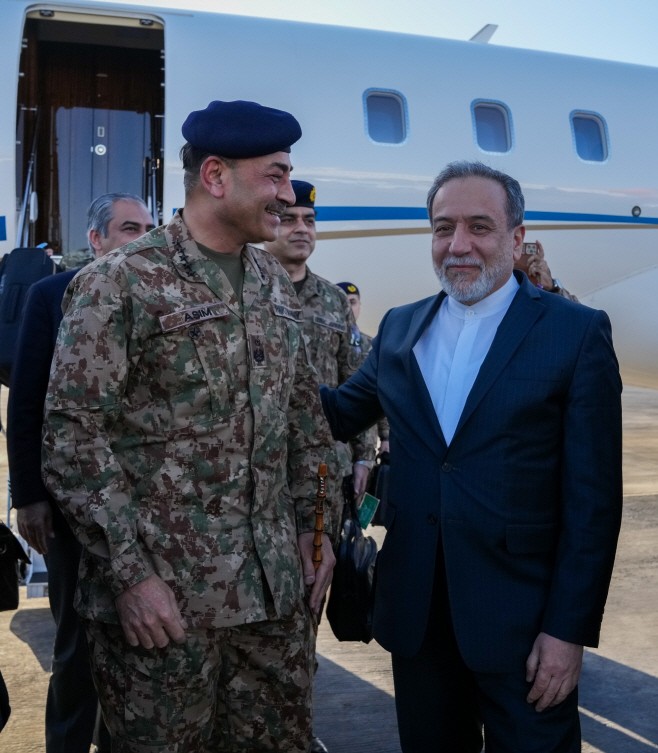 |
| Pakistan Army Chief Asim Munir arrives in Tehran on April 15 and is welcomed by Iranian Foreign Minister Abbas Araghchi. / Iran Foreign Ministry Telegram·EPA-Yonhap |
US President Donald Trump on April 15 expressed optimism that a deal to end the conflict with Iran could be reached by the end of April, even as sanctions and economic pressure on Tehran continue to intensify.
The White House also maintained a positive outlook on negotiations, while uncertainty remains over whether the current ceasefire will be extended.
Mixed Signals on Ceasefire Extension and Deal Prospects
Trump said in a phone interview with Sky News that a deal with Iran before King Charles III’s visit to Washington (April 27–30) was “possible. Very possible,” adding, “They’ve been hit pretty hard.”
He had earlier told Fox Business that the war was “almost over” and nearing conclusion, and said in an ABC interview that he did not believe an extension of the ceasefire would be necessary.
The United States and Iran agreed on a two-week ceasefire starting April 7, set to expire on April 21. While Bloomberg and The Wall Street Journal reported that both sides were considering a two-week extension, a U.S. official said the extension “is not guaranteed and has not been agreed upon.”
White House Press Secretary Karoline Leavitt said reports of a formal request to extend the ceasefire were inaccurate, adding, “Talks are productive and ongoing,” and emphasizing that accepting Trump’s demands would be “clearly in Iran’s best interest.”
She also noted that a second round of talks would likely take place in Islamabad, Pakistan, the same location as previous negotiations.
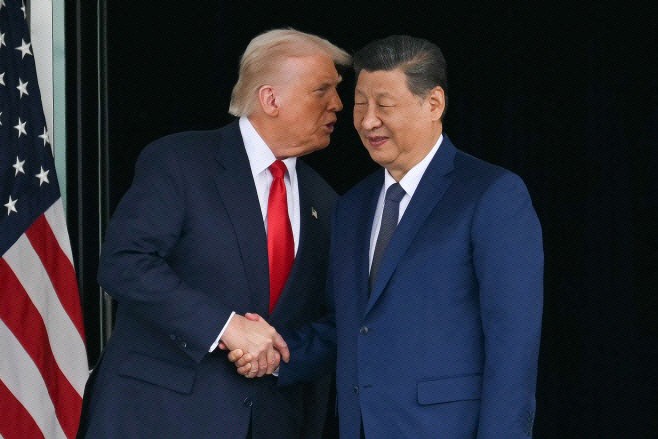 |
| Donald Trump (left) and Xi Jinping talk as they leave a summit venue after talks at Gimhae International Airport on Oct. 30, 2025. / AFP-Yonhap |
Pressure on China and Iran Intensifies
Trump said he had sent a letter to Chinese President Xi Jinping urging China to halt weapons supplies to Iran, adding that Xi responded that China was not providing such support. Trump later posted on Truth Social that “China has agreed not to send weapons to Iran.”
He had previously warned that countries supplying weapons to Iran could face immediate 50% tariffs.
China, which imports more than 80% of Iran’s exported crude oil, is seen as a key player. Analysts say Washington may be targeting China’s oil imports to pressure Tehran into negotiations.
On the same day, Chinese Foreign Minister Wang Yi said in a call with his Iranian counterpart that “the current situation marks a critical turning point between war and peace, with a window for peace opening.”
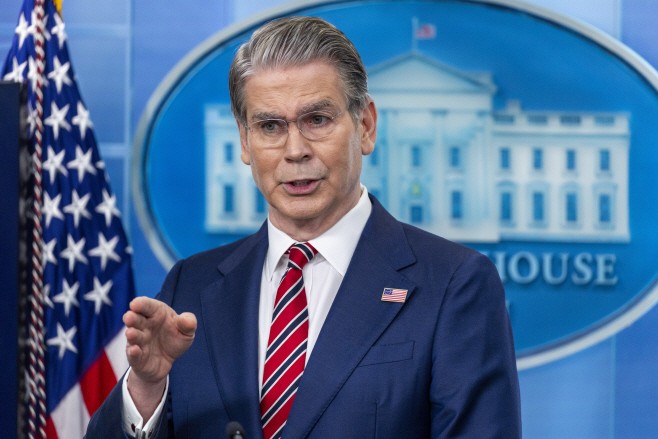 |
| U.S. Treasury Secretary Scott Bessent answers reporters’ questions during a White House briefing in Washington, D.C., on April 15. / EPA-Yonhap |
U.S. Expands Sanctions, Targets Financial Channels
U.S. Treasury Secretary Scott Bessent said two Chinese banks had been warned of potential secondary sanctions if they were found to have processed Iranian funds.
He also confirmed that the U.S. would not renew waivers allowing the purchase of Iranian and Russian oil, with exemptions for Iranian crude set to expire this weekend.
Bessent noted that China has been purchasing more than 90% of Iran’s crude exports, accounting for about 8% of its energy demand, and suggested that disruptions in the Strait of Hormuz could halt those purchases.
The U.S. Treasury’s Office of Foreign Assets Control (OFAC) also imposed sanctions on a network linked to Mohammad Hossein Shamkhani, describing it as the largest single action since the resumption of the Trump administration’s “maximum pressure” campaign.
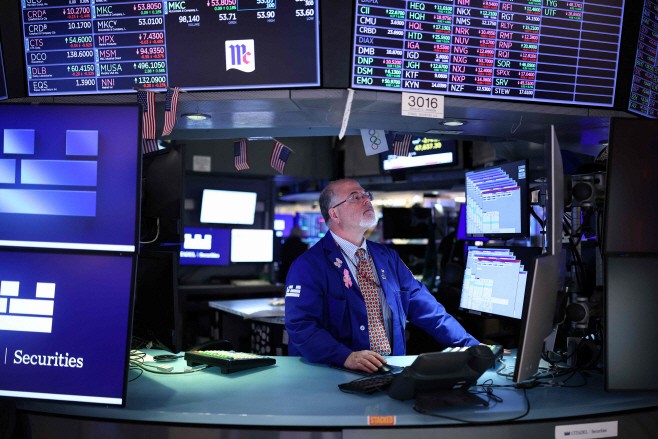 |
| Inside the New York Stock Exchange (NYSE) on April 13. / AFP-Yonhap |
Markets Rally Despite High Oil Prices
Optimism over a potential deal boosted U.S. stock markets. The S&P 500 rose 0.8% to close at 7,022.95, surpassing the 7,000 mark for the first time. The Nasdaq Composite climbed 1.59%, extending its winning streak to 11 sessions.
The S&P 500 has recovered to about 2% above its pre-war level and is up roughly 10% from its March 30 low.
Analysts say markets are increasingly betting that the worst phase of the conflict has passed. However, oil prices remain elevated, with Brent crude closing at $94.93 per barrel, about 33% higher than before the war.
The International Monetary Fund (IMF) has warned that continued disruption in oil markets could slow global growth and intensify inflation, raising the risk of a broader economic downturn.
Still, some analysts remain optimistic. A strategist at Fundstrat noted that “strong corporate earnings growth remains a key driver of equity returns,” calling continued double-digit profit growth “a very positive signal,” even amid high oil prices and geopolitical tensions.
#Donald Trump #US Iran talks #ceasefire deal #sanctions #China banks
Copyright by Asiatoday
Most Read
-
1
Celltrion’s Omlyclo gains ground in major European..

-
2
Trump demands rates fall below 1% as Fed hikes for..

-
3
Trump makes $1 trillion bet ahead of midterm elect..

-
4
Iran resumes ballistic missile production, assembl..

-
5
Samsung Electronics, Mistral AI to jointly develop..

-
6
Trump warns countries not helping U.S. must pay re..

-
7
Apple launches first foldable, 1 million won prici..

PEOPLE






HEADLINE NEWS
- Trump to roll out ‘unprecedented welcome’ for Xi with B-2 bombers, F-22 fighters
- S. Korea, U.S., and Japan form united front on Taiwan and economic coercion..
- Trump administration moves to impose sweeping sanctions on International Cr..
- Xi to make state visit to U.S. Sept. 23-25, dispelling rumors over his heal..

-
Address : In-Young Bldg., 34, Uisadang-daero 1-gil, Yeongdeungpo-gu, Seoul
Copyright by ASIATODAY CO., LTD. All rights resereved