



PPP faces backlash over lack of youth nominations
Apr 10, 2026, 09:17 am


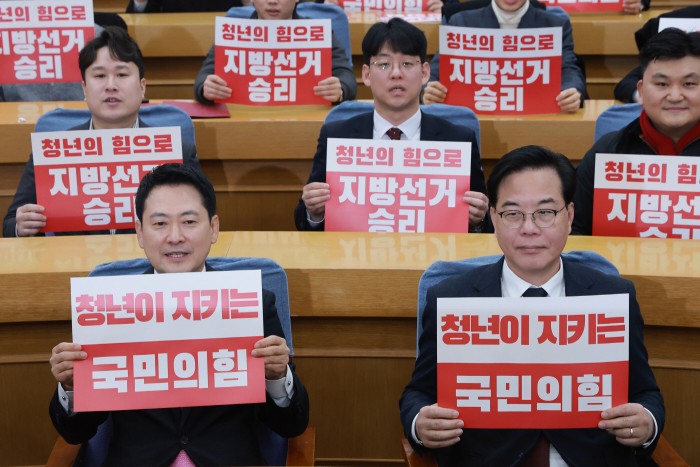 |
| People Power Party leader Jang Dong-hyuk attends a joint launch ceremony of youth organizations at the National Assembly Members’ Office Building on March 17. / Yonhap News |
Despite pledges of “generational change” and “political renewal,” South Korea’s conservative People Power Party (PPP) has been criticized for sidelining young candidates in its nomination process, with incumbents dominating key races.
Amid declining approval ratings, the party’s nomination strategy has leaned heavily on the so-called “incumbent premium,” prompting backlash both inside and outside the party. Critics have even described the situation as a “mass sidelining” of youth candidates.
According to political sources on April 9, youth nominations within the PPP have been limited, aside from a few regional council races in Gyeonggi Province. In major contests—including metropolitan and local government leadership positions and highly competitive constituencies—incumbents have largely secured nominations.
The party recruited 19 young political talents in four rounds, but many have yet to gain visibility. Observers say they are likely to be placed in low-priority proportional representation slots or in districts with little chance of winning.
As the leadership’s pledge to promote young talent appears to have faltered, youth groups and candidates in key regions—including the Seoul metropolitan area and Daegu–North Gyeongsang Province—have voiced strong اعتراض.
A coalition of youth committee leaders from all 17 regions issued a joint statement criticizing the party, saying, “The party promised to actively recruit young talent to achieve generational change, but instead what we are witnessing is a ‘purge’ of youth.”
They also alleged unfair practices, including placing defectors from other parties in top proportional slots and reassigning young candidates to different districts without their consent. “While incumbents were prioritized, young newcomers were pushed down the list or pressured to run in less competitive local council races,” the statement said.
In the Daegu–North Gyeongsang region, youth groups have also called for the implementation of a mandatory youth nomination quota and broader personnel reform. In a statement on March 29, a regional youth organization said, “The nomination committee’s so-called ‘safe choices’ are slowly poisoning Daegu. Citizens are already angry. Only bold decisions—placing fresh and capable young figures at the forefront—can ensure the region’s future.”
Individual candidates have also spoken out. Kim Gyu-nam, a Seoul city council member and the only youth candidate in Songpa District Gap, said at a press conference on April 8, “Not only was there no bonus for youth candidates, but I was even denied the basic opportunity to compete in a primary.”
The growing criticism highlights widening tensions within the PPP over its nomination strategy and raises questions about its commitment to fostering the next generation of political leaders.
#People Power Party #youth politics #nomination controversy #Jang Dong-hyuk
Copyright by Asiatoday
Most Read
-
1
Trump demands rates fall below 1% as Fed hikes for..

-
2
Celltrion seeks rheumatoid arthritis indication ex..

-
3
Chinese e-commerce giants AliExpress, Temu and She..

-
4
Trump warns countries not helping U.S. must pay re..

-
5
Turkish Airlines named main club partner of Liverp..

-
6
China expels No. 2 military official Zhang Youxia..

-
7
Houthi rebels release video claiming downing of Sa..

PEOPLE






-
Address : In-Young Bldg., 34, Uisadang-daero 1-gil, Yeongdeungpo-gu, Seoul
Copyright by ASIATODAY CO., LTD. All rights resereved