



Hyundai reshapes supply chain amid crisis
Apr 09, 2026, 10:28 am


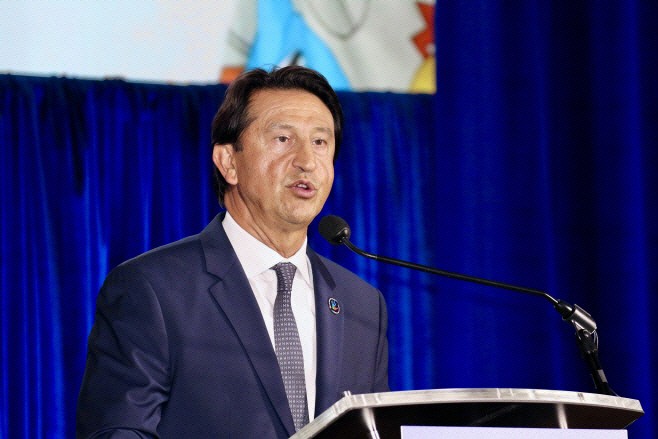 |
| Jose Munoz, CEO of Hyundai Motor, speaks at an event in Washington, D.C.. / Correspondent Haman Joo |
Jose Munoz, CEO of Hyundai Motor, said the company is overhauling its global supply chain in response to disruptions caused by the Iran conflict and the closure of the Strait of Hormuz.
In an interview with Bloomberg on April 8, Munoz said Hyundai had rerouted shipping routes around the Cape of Good Hope instead of using the Strait of Hormuz, acknowledging that the change would significantly increase delivery times.
“We rerouted vessels via the Cape of Good Hope,” he said, adding that the move is part of a broader strategy to protect the company from supply chain shocks, tariffs, and geopolitical tensions.
Munoz noted that Hyundai plans to reduce reliance on shipments from Korea by expanding local sourcing in Europe and restructuring its logistics network.
He also emphasized the growing challenges in supply chain management. “It has never been this difficult,” he said, explaining that the company has shifted from holding annual supply chain meetings to conducting them on a near-weekly basis to respond quickly to disruptions.
Despite a recent drop in oil prices following reports of a U.S.-Iran ceasefire agreement, investors remain concerned about prolonged disruptions in the Strait of Hormuz.
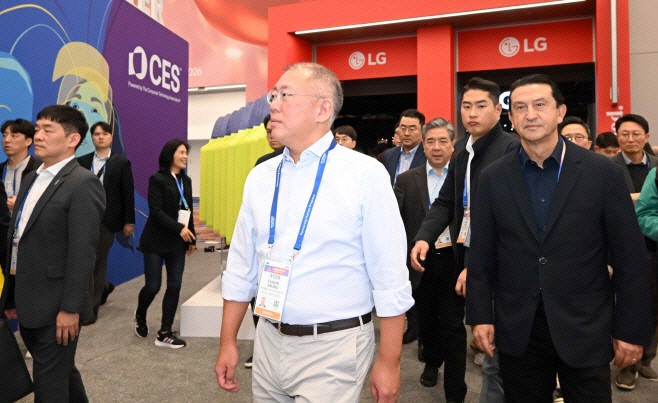 |
| Chung Eui-sun (left) and Jose Munoz tour CES 2026 at the LVCC in Las Vegas on Jan. 6. / Yonhap |
Munoz declared a fundamental shift in global trade dynamics. “Globalization is over. Completely over,” he said, highlighting Hyundai’s transition toward localized supply chains.
In the United States, Hyundai plans to increase production capacity by 300,000 units, aiming for annual output of 1.2 million vehicles by 2030, with 80% of its supply chain localized. The company also intends to expand local sourcing in Europe.
Munoz added that Hyundai is adjusting its electric vehicle strategy to remain flexible amid market uncertainty. The company’s Georgia plant, originally designed for pure EV models such as the Ioniq 5 and 9, will begin producing hybrid vehicles from 2026 and extended-range EVs from 2027.
Hyundai also plans to start producing modified electric vehicles for Waymo robotaxis later this year, with production expected to grow from thousands to tens of thousands over time.
While EV demand may not meet earlier expectations, Munoz said it would continue to grow in the long term. Hyundai has already reported strong growth in electrified vehicle sales in the first quarter despite market volatility in the United States.
#Hyundai Motor #Jose Munoz #supply chain #globalization #Hormuz Strait
Copyright by Asiatoday
Most Read
-
1
Kia Sportage outperforms Mazda CX-5 in German auto..

-
2
Houthis launch successive attacks on Saudi airport..

-
3
Saudi Arabia, Iran hold first diplomatic talks to..

-
4
U.S. deploys carrier, 10,000 more troops to Middle..

-
5
Saudi airport in Riyadh struck again, leaving at l..

-
6
Putin's ally visits China on the 8th ahead of APEC..

-
7
Chinese military support and training center opens..

PEOPLE






HEADLINE NEWS

-
Address : In-Young Bldg., 34, Uisadang-daero 1-gil, Yeongdeungpo-gu, Seoul
Copyright by ASIATODAY CO., LTD. All rights resereved