



Korea secures 50m barrels, supply recovery to take time
Apr 03, 2026, 08:29 am


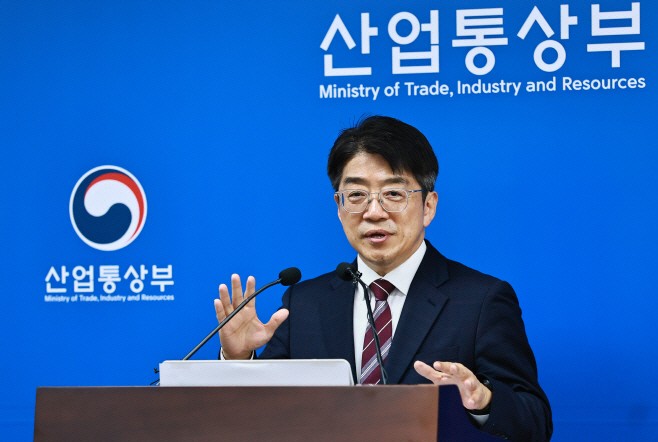 |
| Yang Ki-wook, director-general for industrial resource security at South Korea’s Ministry of Trade, Industry and Energy, holds a daily briefing on the Middle East situation at the ministry’s press room in the Sejong Government Complex on March 24. /Ministry of Trade, Industry and Energy |
South Korea’s Ministry of Trade, Industry and Energy said it has secured around 50 million barrels of alternative crude supply for April, easing immediate concerns over oil shortages amid the Middle East conflict.
Speaking at a daily emergency briefing on April 2, Vice Minister Yang Ki-wook said the volume already exceeds earlier estimates of refinery demand and that additional supply for May is increasing rapidly.
“The pace of securing alternative supplies has slowed slightly in April, but it is expected to accelerate again in May,” Yang said.
The government had initially anticipated about 20 million barrels in demand through its oil reserve swap program. However, actual procurement has significantly surpassed expectations, including additional contracted volumes.
So far, one domestic refinery has signed a contract for about 2 million barrels, with shipments already underway. Discussions with other refiners are ongoing, as companies weigh storage costs and leasing fees.
The ministry also viewed delays in the direct release of strategic oil reserves as a positive sign, indicating that the swap system is functioning effectively. Officials said they will meet commitments made with the International Energy Agency by June 9.
Despite speculation about a possible ceasefire mentioned by Donald Trump, the government warned that supply chain normalization would take considerable time even if hostilities end.
“Even if a ceasefire is declared, safe passage through the Strait of Hormuz will not be immediately guaranteed,” Yang said. “It will also take time for rerouted shipments to reach Korea.”
He added that both oil prices and disrupted supply chains are unlikely to return to pre-war conditions quickly.
The government plans to maintain its current emergency response system even after the conflict ends. Measures such as the oil price cap system will remain in place depending on market conditions.
Meanwhile, the ministry said Australia’s recent move to consider gas export restrictions is unlikely to have a major impact on South Korea. The policy, known as the Australian Domestic Gas Security Mechanism, is aimed at addressing domestic supply shortages, with a final decision expected in May.
#oil supply #Middle East war #South Korea energy #crude oil barrels #supply chain recovery
Copyright by Asiatoday
Most Read
-
1
Trump demands rates fall below 1% as Fed hikes for..

-
2
Celltrion seeks rheumatoid arthritis indication ex..

-
3
Chinese e-commerce giants AliExpress, Temu and She..

-
4
Trump warns countries not helping U.S. must pay re..

-
5
Turkish Airlines named main club partner of Liverp..

-
6
China expels No. 2 military official Zhang Youxia..

-
7
Houthi rebels release video claiming downing of Sa..

PEOPLE







-
Address : In-Young Bldg., 34, Uisadang-daero 1-gil, Yeongdeungpo-gu, Seoul
Copyright by ASIATODAY CO., LTD. All rights resereved