



Korea’s budget nears 800 trillion won as government accelerates active fiscal policy
Mar 31, 2026, 09:34 am


 |
The South Korean government is expected to draw up a budget approaching 800 trillion won next year, signaling a push toward more aggressive fiscal policy focused on future industries and regional investment.
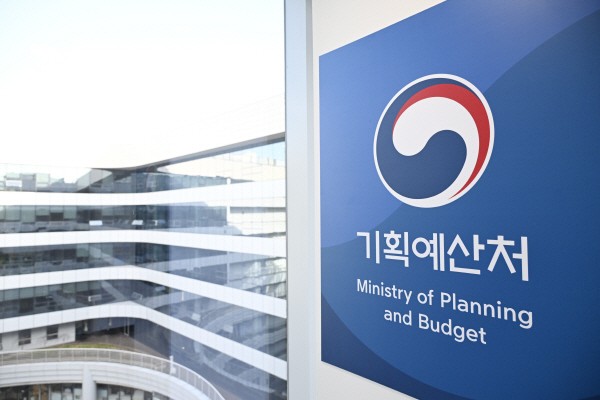
The Ministry of Economy and Budget announced on March 30 that the “2027 budget guidelines” were approved at a Cabinet meeting. The plan emphasizes increased investment in artificial intelligence (AI), carbon neutrality, and balanced regional development.
According to the government’s mid-term fiscal plan released in August last year, total spending for next year is projected to reach 764.4 trillion won, up 5.0% from this year’s 728 trillion won. When a supplementary budget of about 25 trillion won—currently under preparation—is included, total fiscal spending could rise to around 790 trillion won.
However, Cho Yong-beom, head of the budget office, declined to specify the exact size, stating, “At this point, we aim to pursue active fiscal management, as well as sustainable active fiscal management.”
Expanding AI and future growth industries
The government aims to become one of the world’s top three AI powers by expanding AI transformation (AX) across manufacturing and the public sector, while strengthening infrastructure such as data centers.
It also plans to foster advanced strategic industries, including semiconductors, and expand investment in carbon neutrality (K-GX) to secure new growth engines.
Boosting regional development under ‘5 poles, 3 special zones’
Under its “5 poles and 3 special zones” strategy, the government will develop regional industrial hubs and improve living conditions by expanding transportation networks such as railways and roads, as well as education and healthcare infrastructure.
Integrated local governments will receive up to 20 trillion won in fiscal support, alongside efforts to relocate public institutions to regional areas.
Strengthening support for youth and vulnerable groups
The plan also includes expanded investment in public welfare, including youth employment and housing support, measures to address low birth rates, and assistance for small businesses and startups.
In addition, the government will increase spending on safety measures such as industrial accident prevention and disaster response, while reinforcing economic security through advanced power infrastructure and supply chain stabilization.
#South Korea budget #fiscal policy #AI investment #regional development #carbon neutrality
Copyright by Asiatoday
Most Read
-
1
Kia Sportage outperforms Mazda CX-5 in German auto..

-
2
Houthis launch successive attacks on Saudi airport..

-
3
Saudi Arabia, Iran hold first diplomatic talks to..

-
4
U.S. deploys carrier, 10,000 more troops to Middle..

-
5
Saudi airport in Riyadh struck again, leaving at l..

-
6
Putin's ally visits China on the 8th ahead of APEC..

-
7
Chinese military support and training center opens..

PEOPLE






HEADLINE NEWS

-
Address : In-Young Bldg., 34, Uisadang-daero 1-gil, Yeongdeungpo-gu, Seoul
Copyright by ASIATODAY CO., LTD. All rights resereved